
Powering Progress

With CREST Center award, Texas State leads breakthrough research in next-generation semiconductors

The computing inside every cellphone and tablet—as well as electric cars, medical equipment, and even the power grid—is performed by microchips called semiconductors. As their name suggests, semiconductors are materials that can conduct or restrict the flow of electricity, like a switch.  

Most semiconductors are made from silicon. The element works well for low-voltage equipment like phones, but it can’t handle the high voltage and power in technology such as electric cars. Even the chips in phones and cell towers that enable wireless communication must sustain significantly higher power than smartphone computing chips.  

In August, the National Science Foundation announced a $7.5 million investment in Texas State University researchers to advance the development of a different kind of microchip—known as ultrawide bandgap semiconductors—that can handle more energy and empower technologies such as electric vehicles and, one day, U.S. Navy electric vessels.  

“This award shows that NSF recognizes Texas State’s innovative achievements in semiconductor research over the past several years,” says Dr. Edwin Piner, a physics professor and director of the newly formed CREST Center. “Now we have a platform from which even greater research objectives will be reached.”  
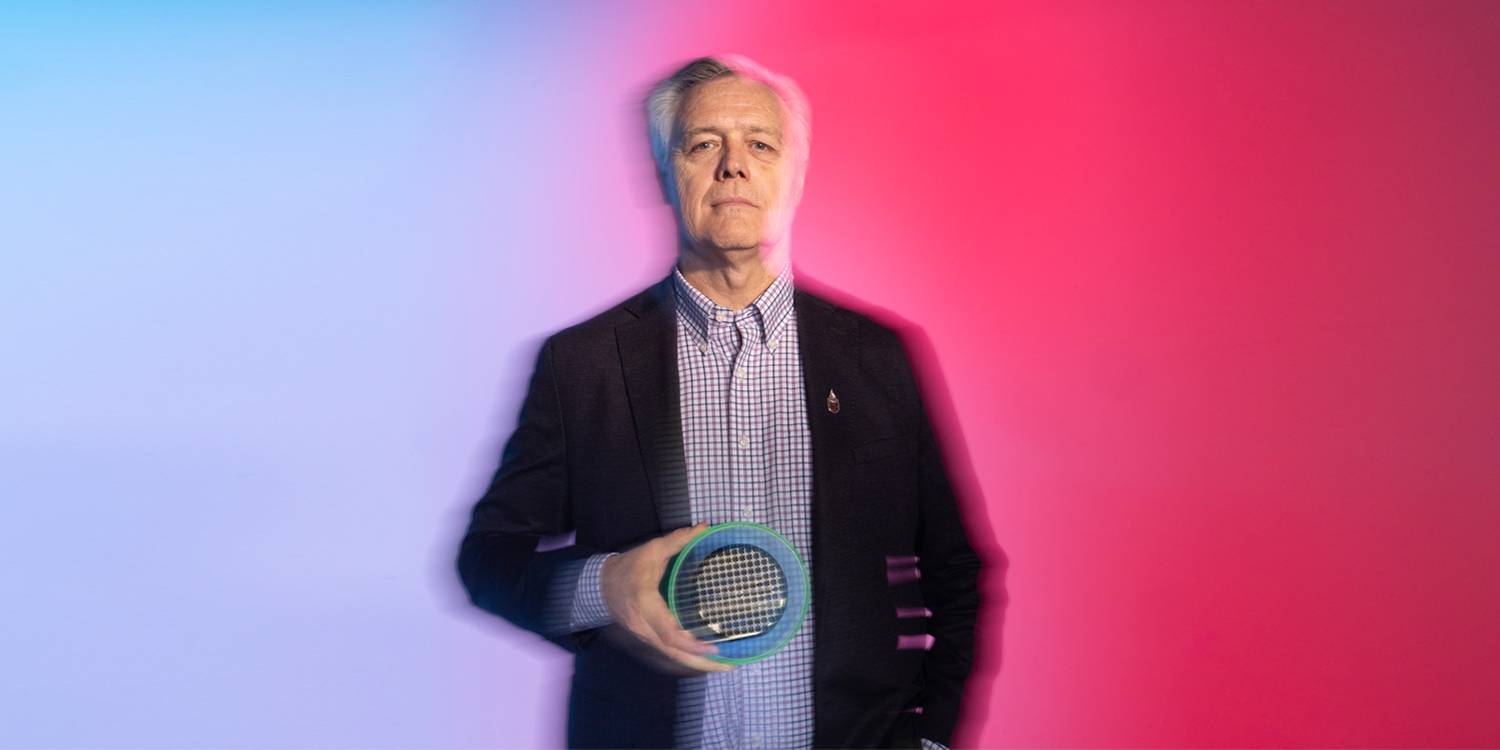
Dr. Piner
Dr. Edwin Piner

The NSF’s CREST awards (Centers of Research Excellence in Science and Technology) support minority-serving institutions like TXST that advance scientific research while encouraging students from all backgrounds to join the STEM workforce. At the TXST CREST Center for Ultrawide Bandgap Semiconductor Device Materials, researchers will grow, analyze, and test combinations of ultrawide bandgap materials to find new semiconductor structures that can successfully operate high-voltage and high-power equipment.  

“That’s the work that’s happening now, around the world, when it comes to the ultrawide bandgaps,” Piner says. “Texas State is now going to be playing a major part.”  

The CREST Center builds on over a decade of TXST investment in the specialized instrumentation and faculty expertise that make the research possible. Ultrawide bandgap semiconductors are similar in behavior to silicon but have a much larger bandgap—the amount of energy required to make a material conduct an electrical current—meaning they can sustain greater voltage and power. While silicon microchips can sustain up to a few hundred volts, ultrawide bandgap semiconductors are able to sustain thousands of volts. 

TXST is the only entity in the country, if not the world, that can produce all four ultrawide bandgap semiconducting materials: diamond, which is a form of carbon; aluminum nitride (and the related high aluminum content aluminum gallium nitride); boron nitride; and gallium oxide. All four are grown in TXST labs that transform gaseous precursors, or starting materials, into thin, solid films of semiconducting materials. Researchers can then experiment with combining them to design and test devices.  

Three co-principal investigators are collaborating on this work. Dr. Damian Valles, associate professor of electrical engineering, brings expertise in artificial intelligence and machine learning to analyze data about potential combinations of semiconducting materials that can be tested in the lab. Dr. Ariful Haque, assistant professor of electrical engineering, fabricates the materials. Dr. Yoichi Miyahara, associate professor of physics, conducts specialized characterization, or measurement, of the materials and shares the data with Valles to inform the next models.  

When TXST faculty members make discoveries with commercial potential, the university’s innovation office, the Materials Application Research Center, and STAR Park will support them in bringing those ideas to market, potentially in collaboration with industry partners. “There’s an intentional innovation and entrepreneurship component to our research center,” Piner says.

The CREST Center not only supports development of the next generation of semiconductor technology. It’s also building the next generation of the industry’s workforce. Nearly $2 million of the grant will fund scholarships, research assistantships, and postdoctoral fellowships for TXST students. Later this spring, the center will connect with an even younger audience by hosting a workshop about semiconductor research for high school teachers and students.  

“The idea is to encourage students to get excited about science and engineering and hopefully apply to Texas State—or to a college somewhere in Texas—and to build a career in that field,” Piner says. 


Robyn Ross

Austin-based independent journalist Robyn Ross has written for many university magazines as well as Texas Monthly and the New York Times.