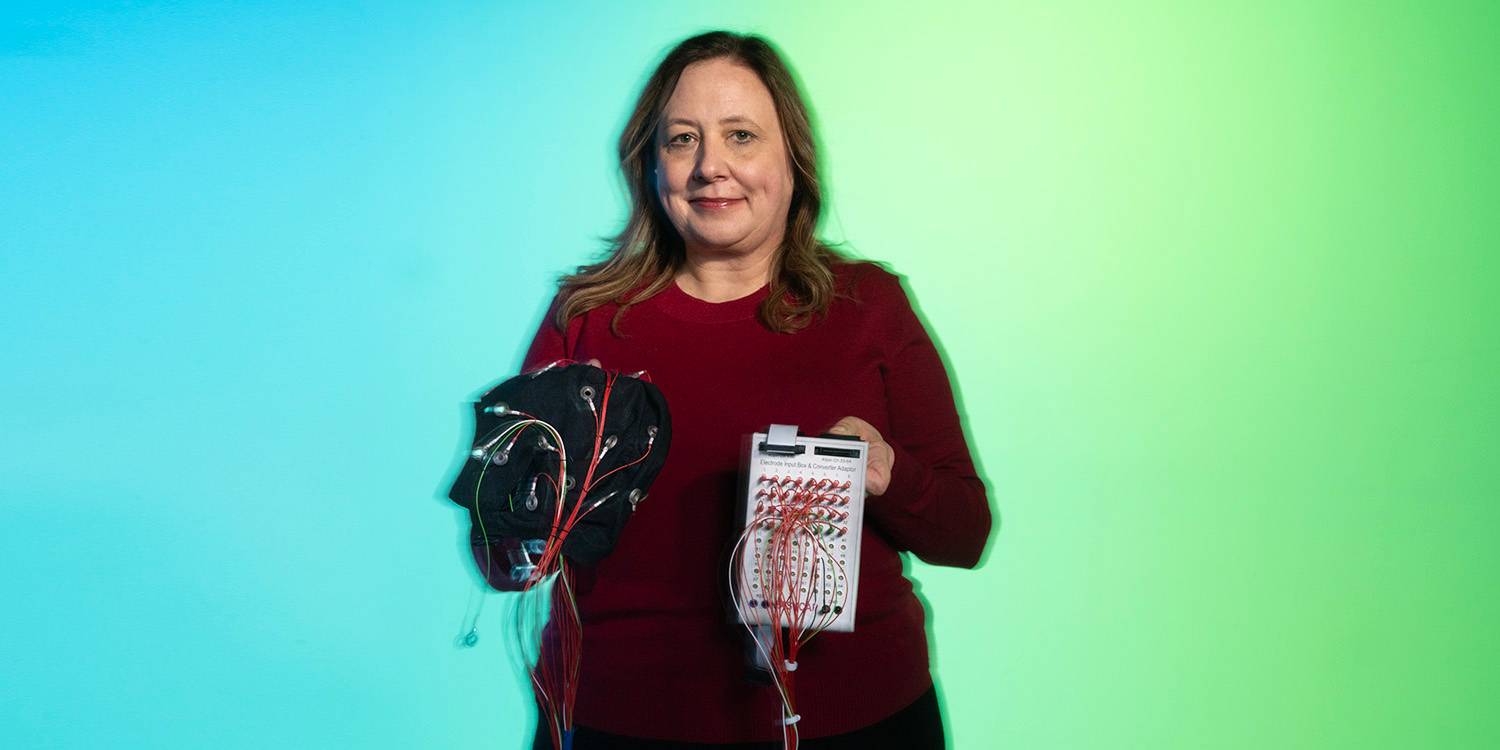

New research and technology are providing tantalizing clues that quality sleep is vital to much more than simply refreshing the body. Dr. Carmen Westerberg, professor in TXST’s Department of Psychology and faculty fellow of the TXST Translational Health Research Center (THRC), has spent more than a decade exploring the links between sleep and cognitive function, including memory.
“Until the 1990s, people just didn’t believe that there was anything special happening during sleep,” Westerberg says. “The conventional wisdom was that we’re resting. But our brain is actually more active when we’re asleep than when we’re awake.”
Advances in medical technology, such as functional MRI brain scanning, have opened new avenues for studying brain function. Studies by Westerberg and others have shown that deep sleep, or “slow-wave” sleep, is particularly important for memory consolidation.
“After you learn something new, that information isn’t just sitting dormant in your brain,” Westerberg says. “It undergoes a consolidation process that creates stable, enduring long-term memory. Our new knowledge is becoming integrated with existing knowledge.”