

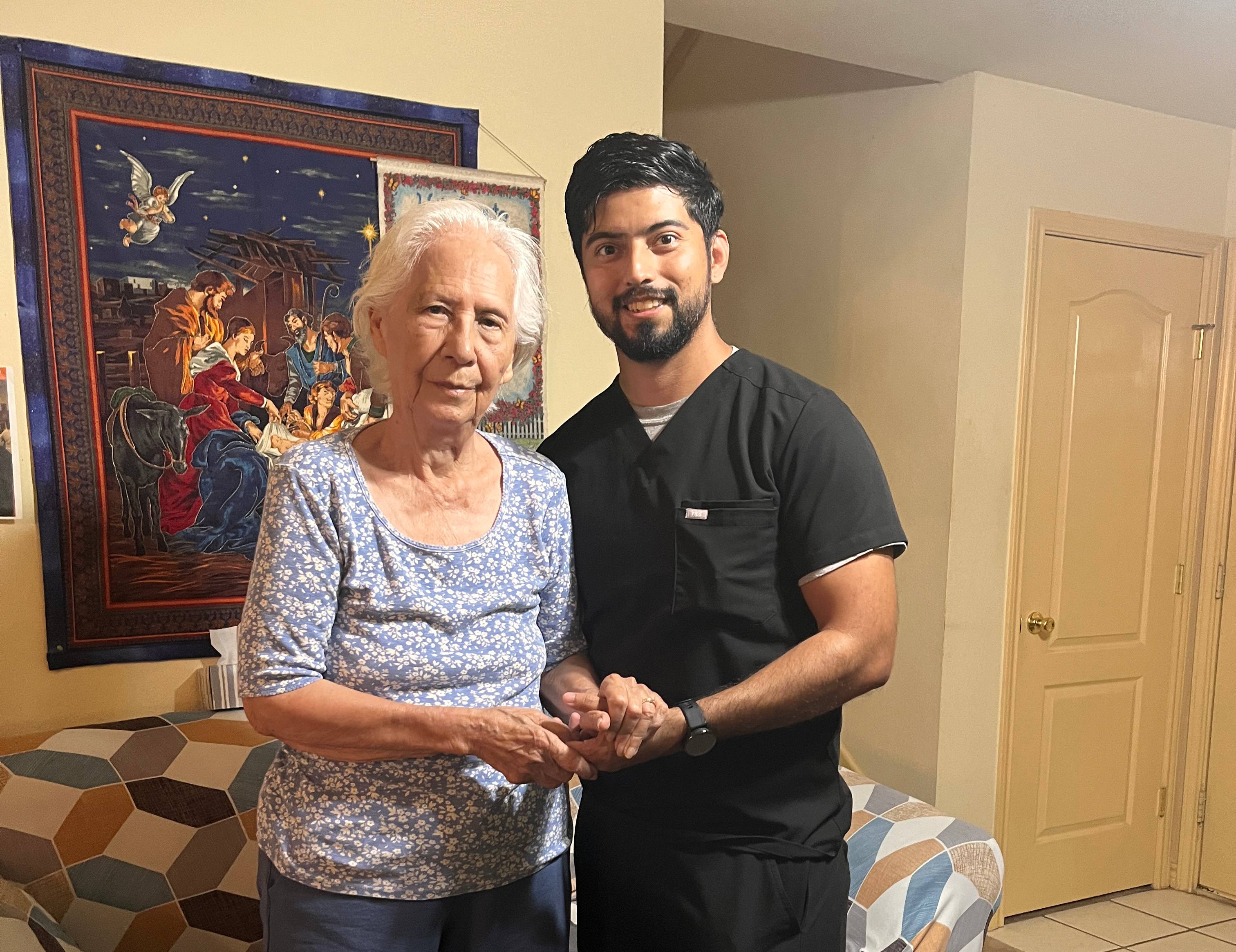
When Jose Hernandez enrolled in Texas State University’s Master of Science in Dementia and Aging Studies program (MSDA), he wanted to learn how to better communicate with the aging individuals he worked with as a physical therapy assistant in his hometown of Laredo.
“I would do my best to provide as good of care as I could, but I didn’t have enough education on the topic to really make good suggestions for the families,” said Hernandez, who graduated in 2022. “That motivated me to take the program, because I needed specialization as a practitioner for a special population of individuals.”
TXST’s Department of Sociology launched the online MSDA program 10 years ago to serve caregivers like Hernandez who are seeking the unique skills they need to work with people living with dementia. It’s part of TXST’s expanding strength in the field of dementia and aging, which is one of the university’s five research pillars.
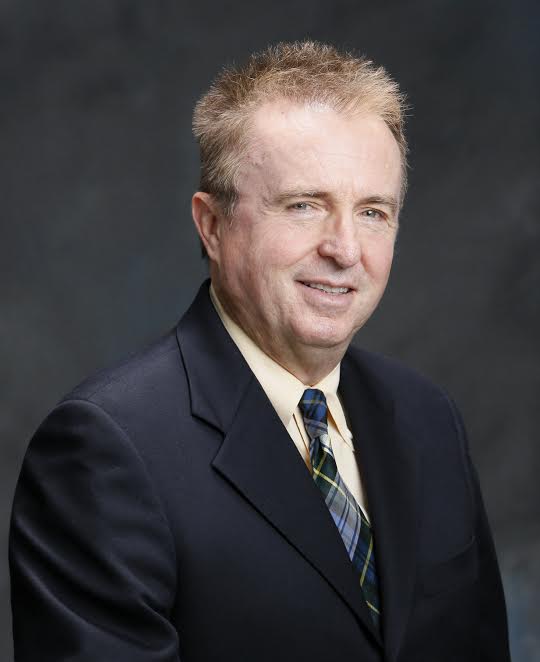
Dr. Chris Johnson, a founder of the MSDA program, said TXST was the first in the nation to offer a 33-hour graduate online degree with different tracks, including a Practitioner Track, a Dementia & Long-Term Care Track, and a Research Track. Europe has 17 such graduate programs, Johnson said.
“Aging and dementia care is one of the fastest-growing job areas, and our students have an advantage over people who get master’s degrees in other healthcare fields,” Johnson said. “Dementia impacts such a large part of the population of home-health and long-term care homes and communities. Hospice directors are interested in the MSDA as well.”
Hernandez said the program introduced him to behavioral and psychological tools, as well as career guidance, that opened a variety of opportunities for him in the field of aging and dementia care.
Since graduating, he started his own company, Chrysalis Aging, and expanded his work beyond physical therapy for older populations to also include support services for aging individuals, their care partners, and end-of-life wellbeing. His services are particularly important on the border, where studies suggest Alzheimer’s rates are higher than in the rest of the state.
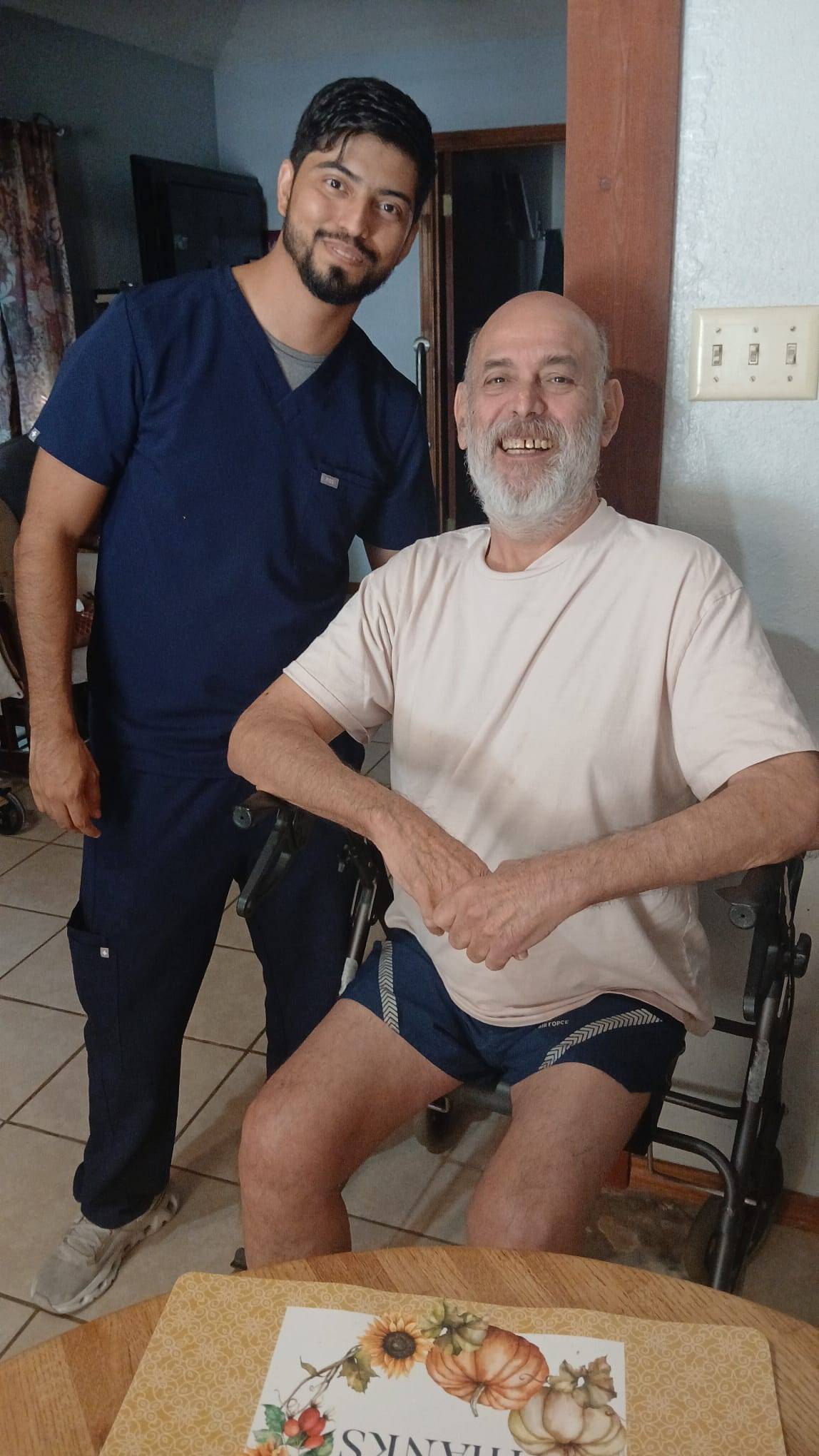
He said class discussions related to end-of-life care were particularly helpful for working in hospice situations.
“We talk about dementia care specifically, and I am able to tailor all that information for families I’m working with,” he said. “The program itself gave me a whole set of tools that I was already needing, but I didn’t realize I needed them.”
Johnson, who lost his mother and brother to dementia, previously spent 25 years at the University of Louisiana, where he served as director of the Institute of Gerontology and developed an online graduate degree program. He also spent 18 months at Stirling University’s Iris Murdoch Dementia Research and Education Centre in Scotland while his wife was getting her doctorate in Dementia Studies. His experiences have shaped the person-centered care techniques that he works to develop in the MSDA program.
He points to a healthcare app he’s developing as one example. He said it’s based on the time-traveling model of dementia care, which theorizes that patients are experiencing a non-linear “trip through time” during their cognitive regression, or temporal disorientation.
He gave the example of an 80-year-old who “time travels” back to the age of 60 and gets confused when looking at themselves in the mirror or seeing their 80-year-old spouse.
“The caregivers who love the person dearly don’t understand time travel and don’t meet them in their time frames,” he said.
Instead, professional and nonprofessional caregivers try to reality-orient the person with Alzheimer’s to the present.
Johnson is teaming up with TXST faculty, including Mylene Queiroz de Farias and Anne Hee Hiong Ngu of the Department of Computer Science, Samuel Van Vleet of the Department of Sociology, Marcelo M. Carvalho of the Ingram School of Engineering, and Amber Titus-Love of the College of Applied Arts to develop the app. Johnson said families and caregivers will be able to use the app to better track what part of the time-traveling journey a patient or loved one who has Alzheimer’s is experiencing.
“By transforming the fragmented life history memories into structured audio-visual narratives, the proposed system we’re developing aims to equip the caregiver with tools to deliver more emotionally responsive and time-appropriate care,” Johnson said.
Meanwhile, for Hernandez, the experience he’s gained through the aging and dementia program is having an impact on the patients he works with. He said he recently walked and danced with a patient in hospice care.
“When that person took a few steps, you could see it in their eyes that they wanted to cry,” he said. “It humbled me to see that little moment of, ‘I walked again after not walking for two years, three years,’ and really helped me feel the weight of my services.”