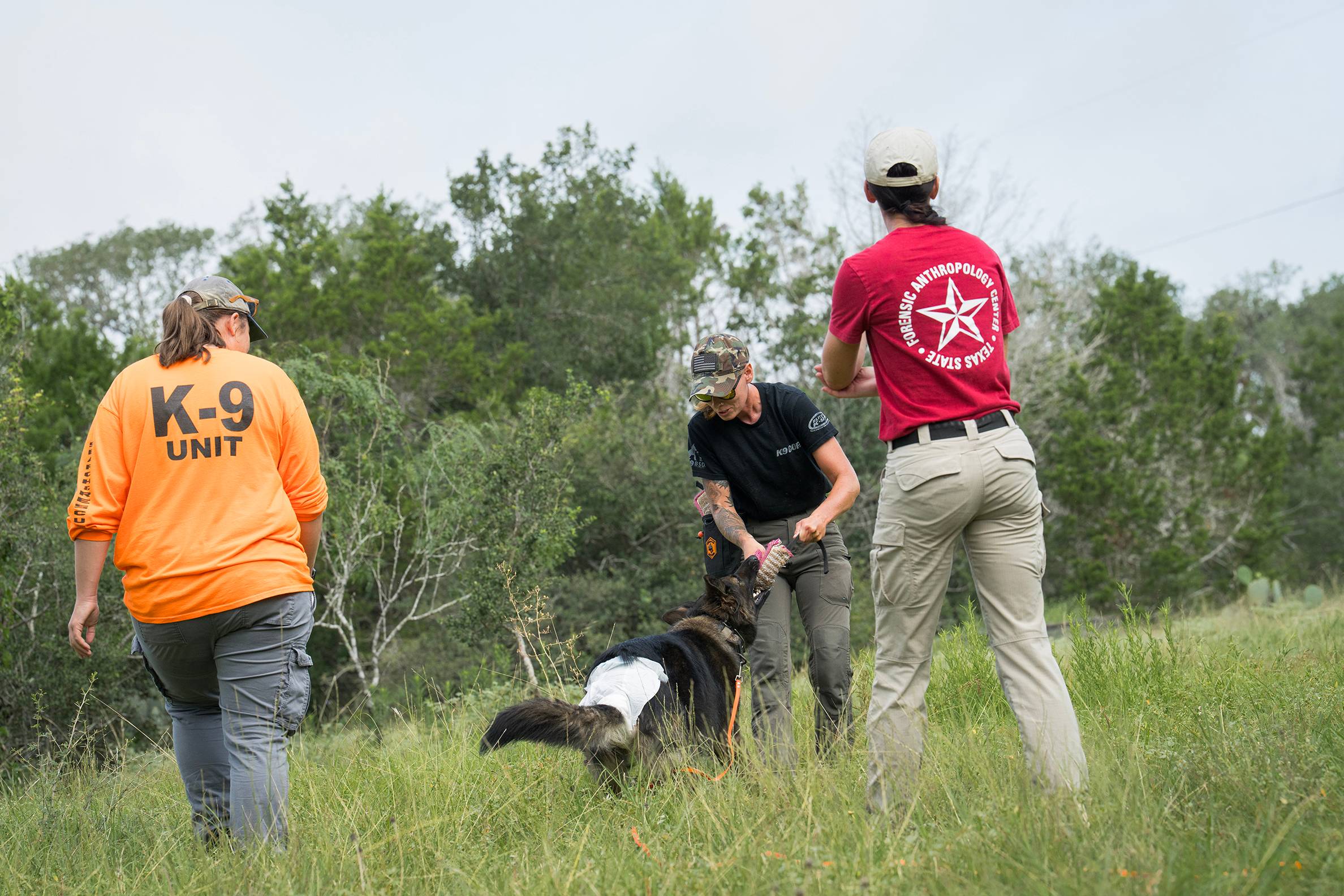
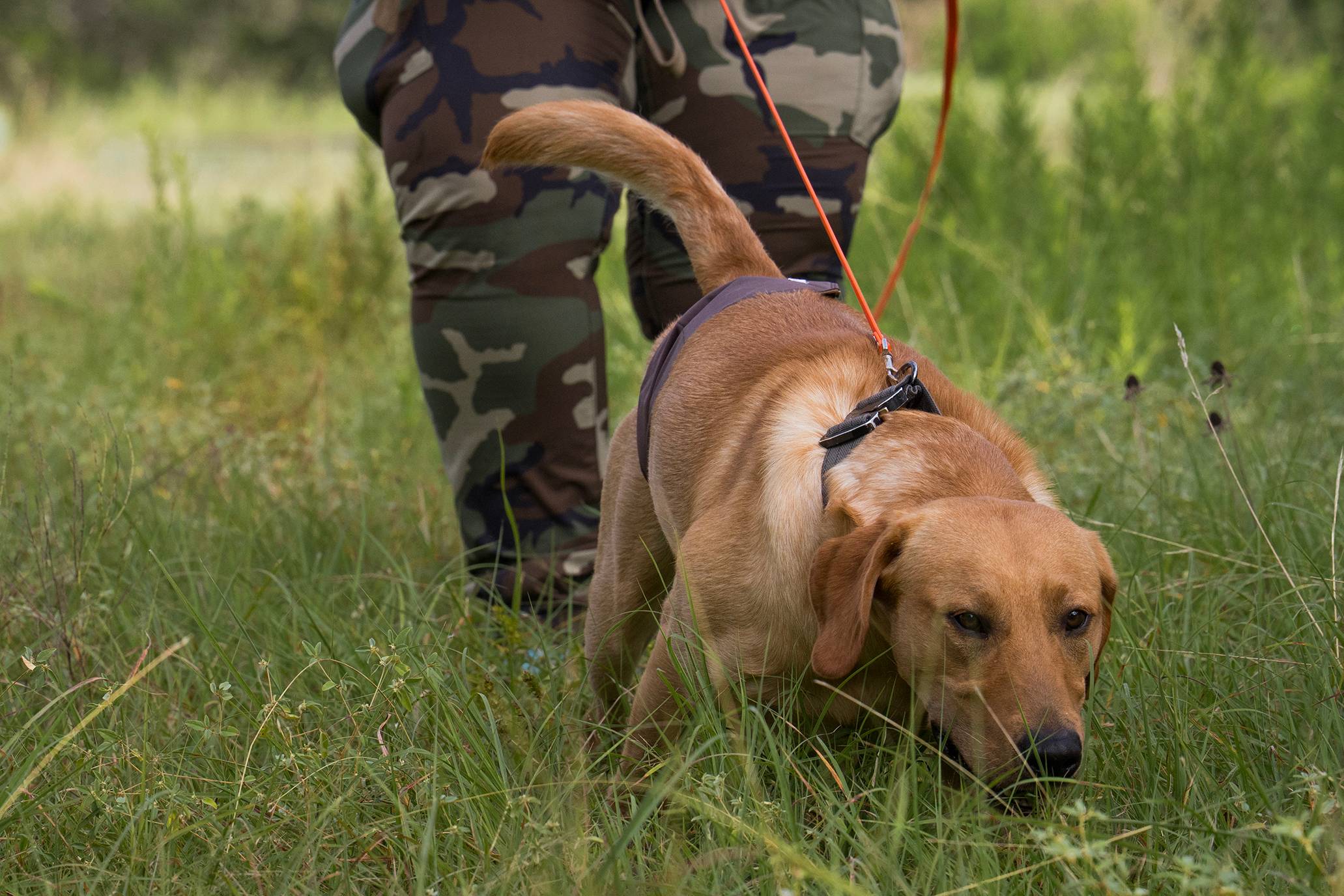
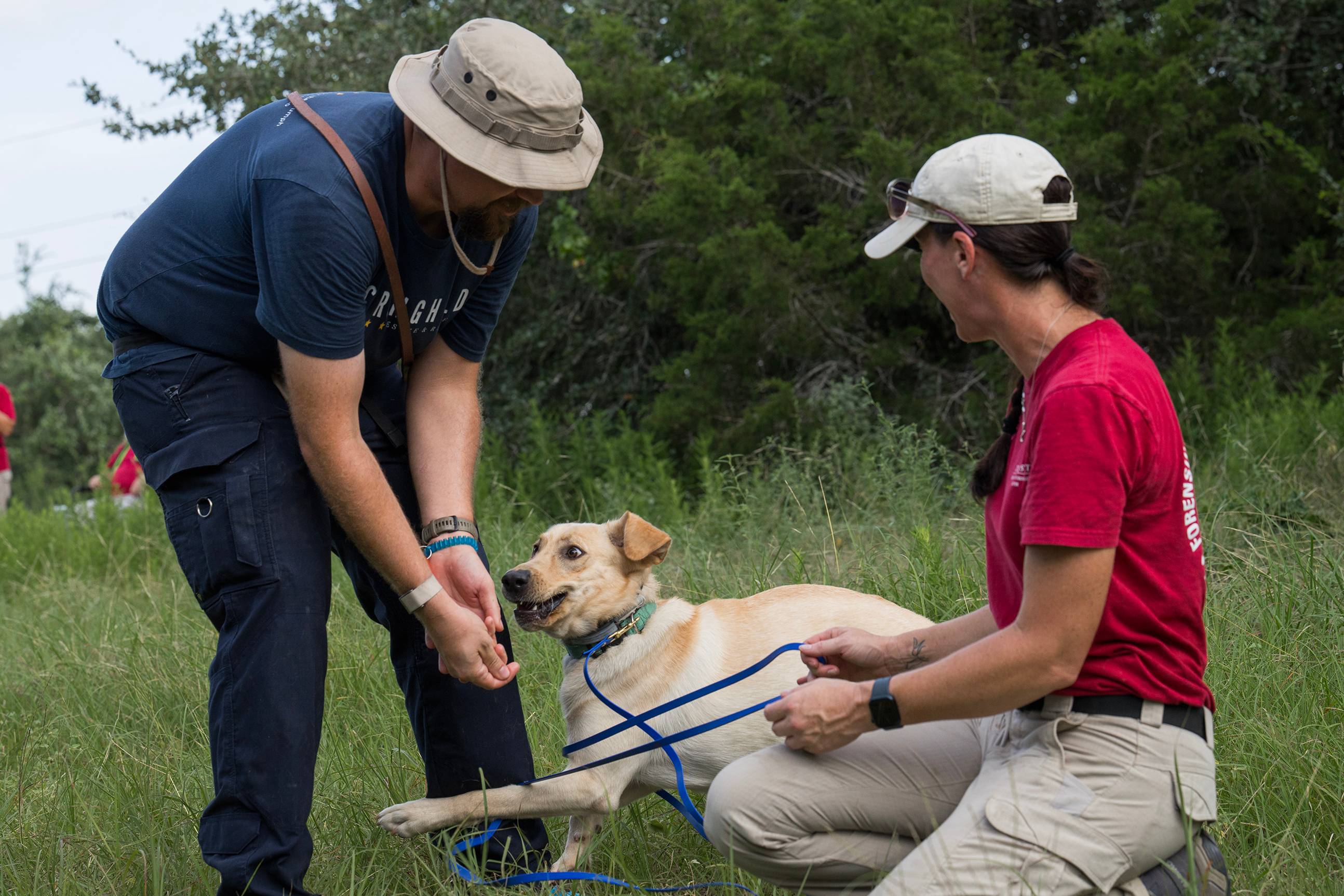
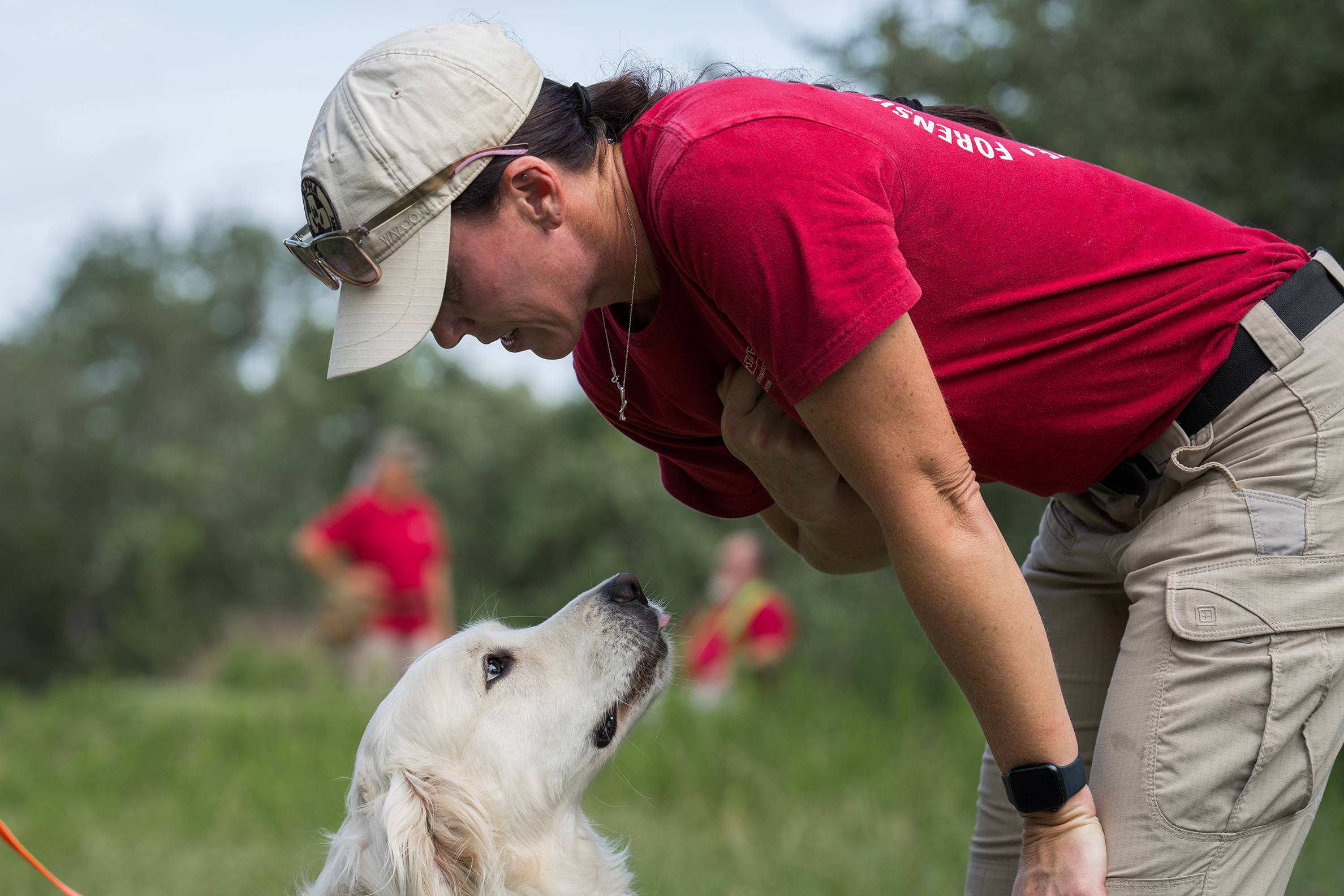
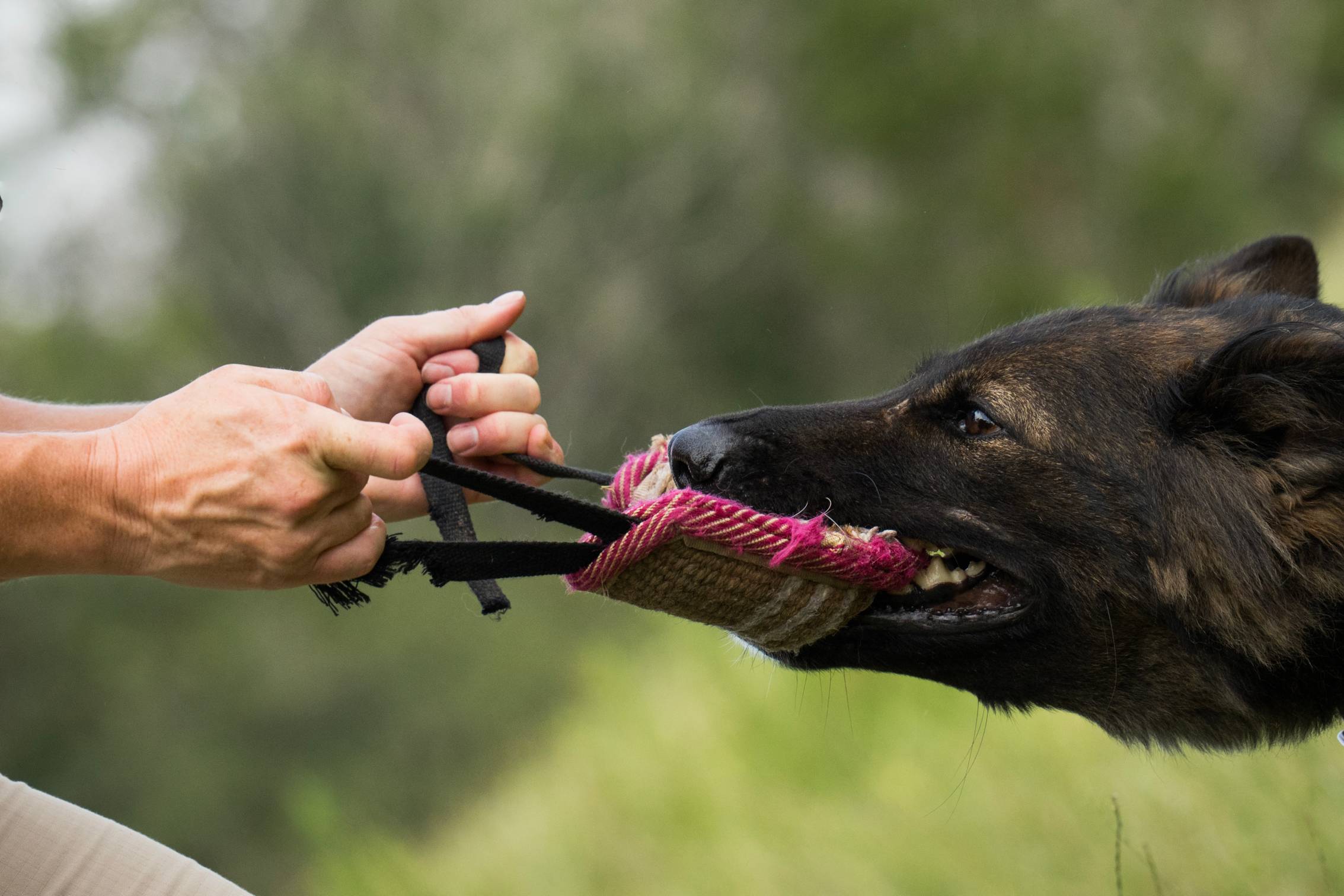
“These dogs have never been exposed to anything like this before,” says Alexander, who’s also a lead instructor for F.I.R.S.T. Detection K9. “It’s new and sometimes overwhelming.”
While sometimes jarring for dogs and their handlers, exposure to whole, fresh human bodies is essential for search and rescue, Alexander says. “A dog who’s only been working little pieces of human tissue won’t recognize a whole body,” he explains. “They’ll walk on past it like it’s not there.”
That’s one thing that makes Texas State so important as a training facility for search-and-rescue dogs. “There’s no place else in the United States that you can have access to more than one body,” Alexander says.
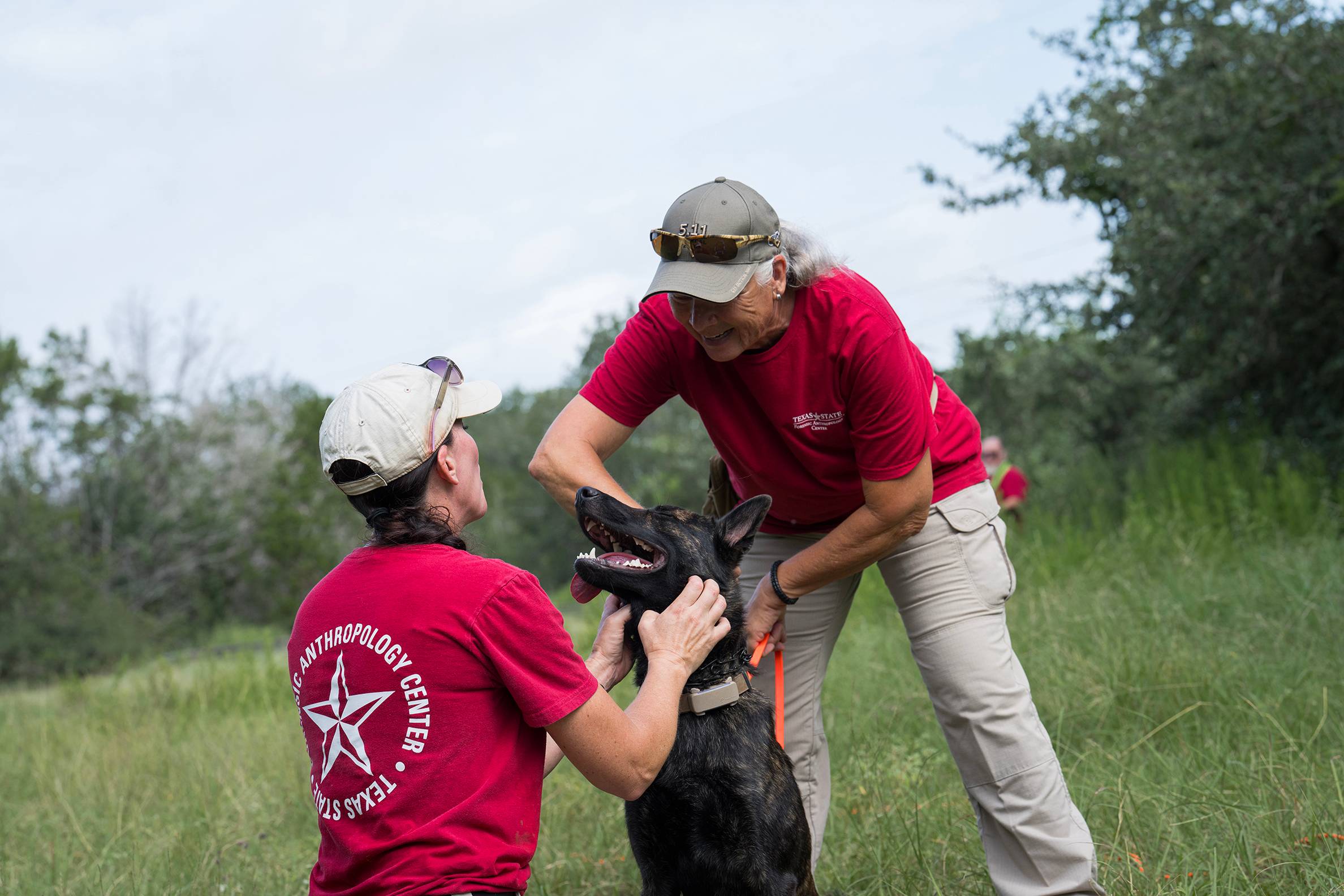
Dogs who have trained at the Forensic Anthropology Research Facility, the largest of its kind in the world, have gone on recovery missions after mudslides, hurricanes, tornadoes, and other disasters, including last summer’s devastating July Fourth Guadalupe River floods. They’ve also searched for missing persons and worked homicide cases.
Dr. Daniel Wescott, an anthropology professor and the director of FACTS, says the Freeman Center body farm is primarily a research center, but it also provides training for search-and-rescue dogs and various branches of law enforcement and military.
“Normally K9s are trained on small pieces of tissue like teeth and placentas, but that’s very different from a real-world scenario,” Wescott says. “We have human remains that are at various stages of decomposition, depending on the training they want to do. We can set them up in more realistic scenarios that you’d be more likely to have in an outdoor scene.”
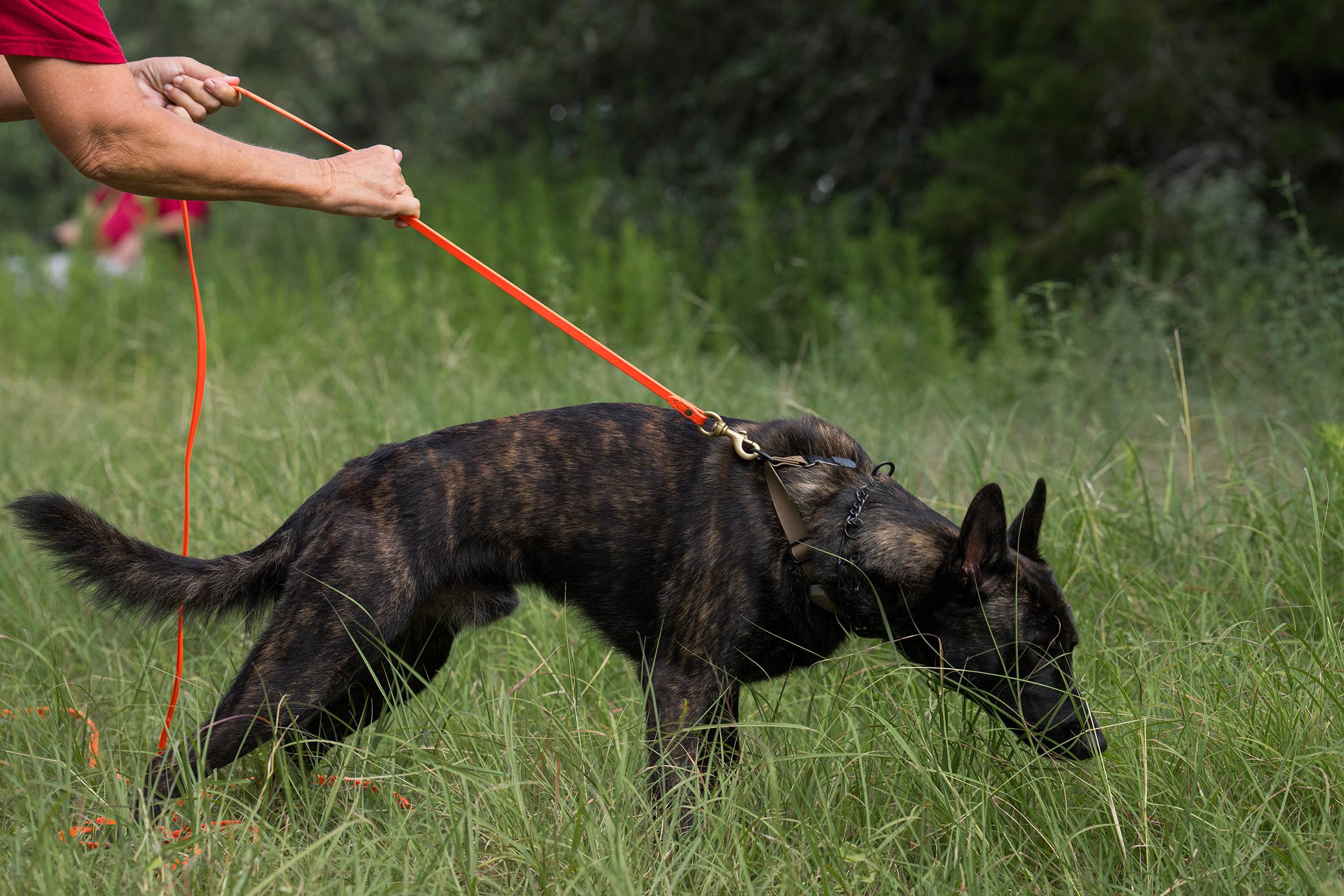
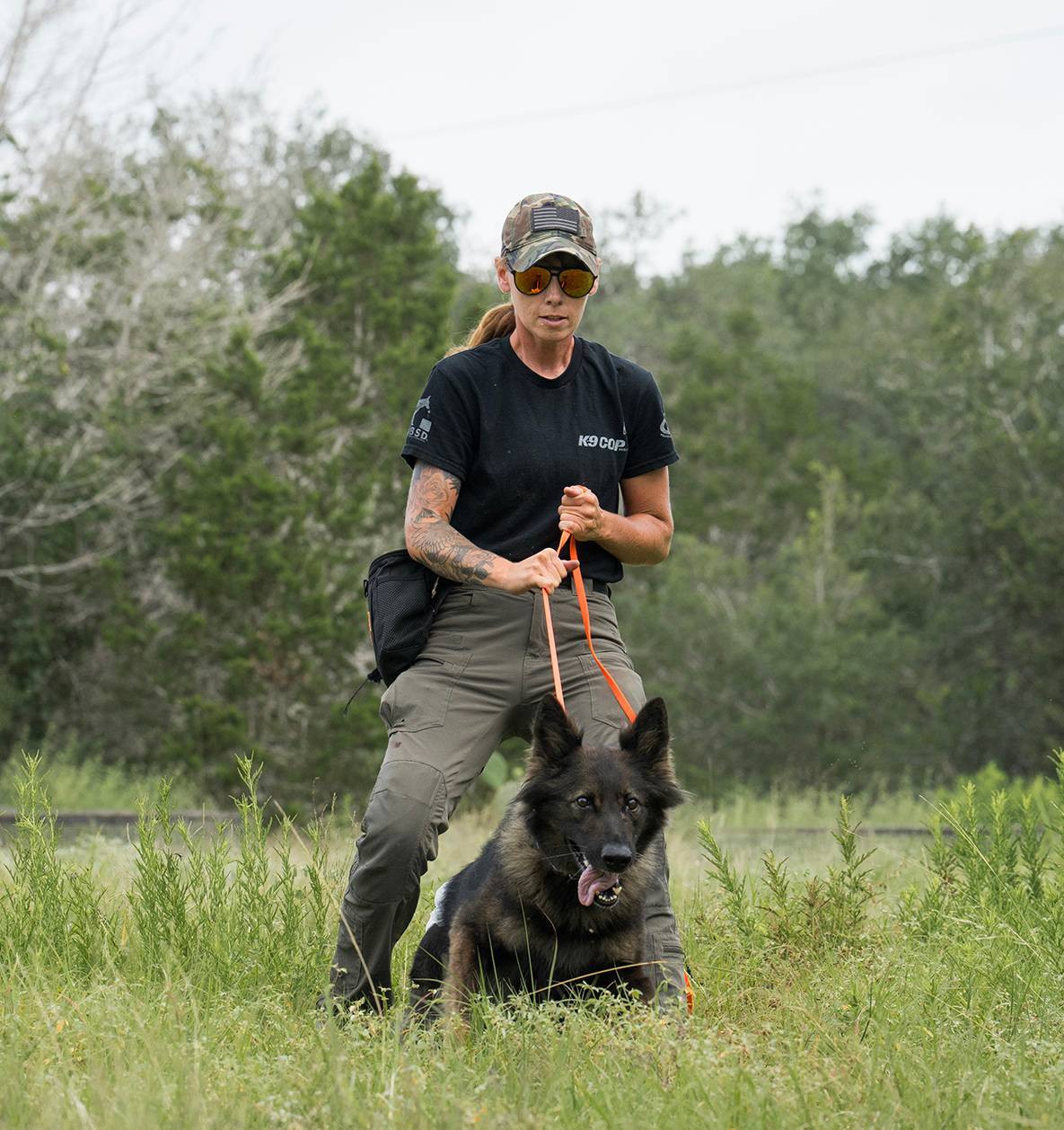
Under gray skies during the seminar in March, handlers and their dogs move through short grass, past prickly pear cacti and stands of oak trees typical of an idyllic Hill Country ranch—if not for the tall double fences surrounding the facility. The hesitant German shepherd is given a reprieve, and the next handler, Chris Westminster, steps forward with her dog, Arely.
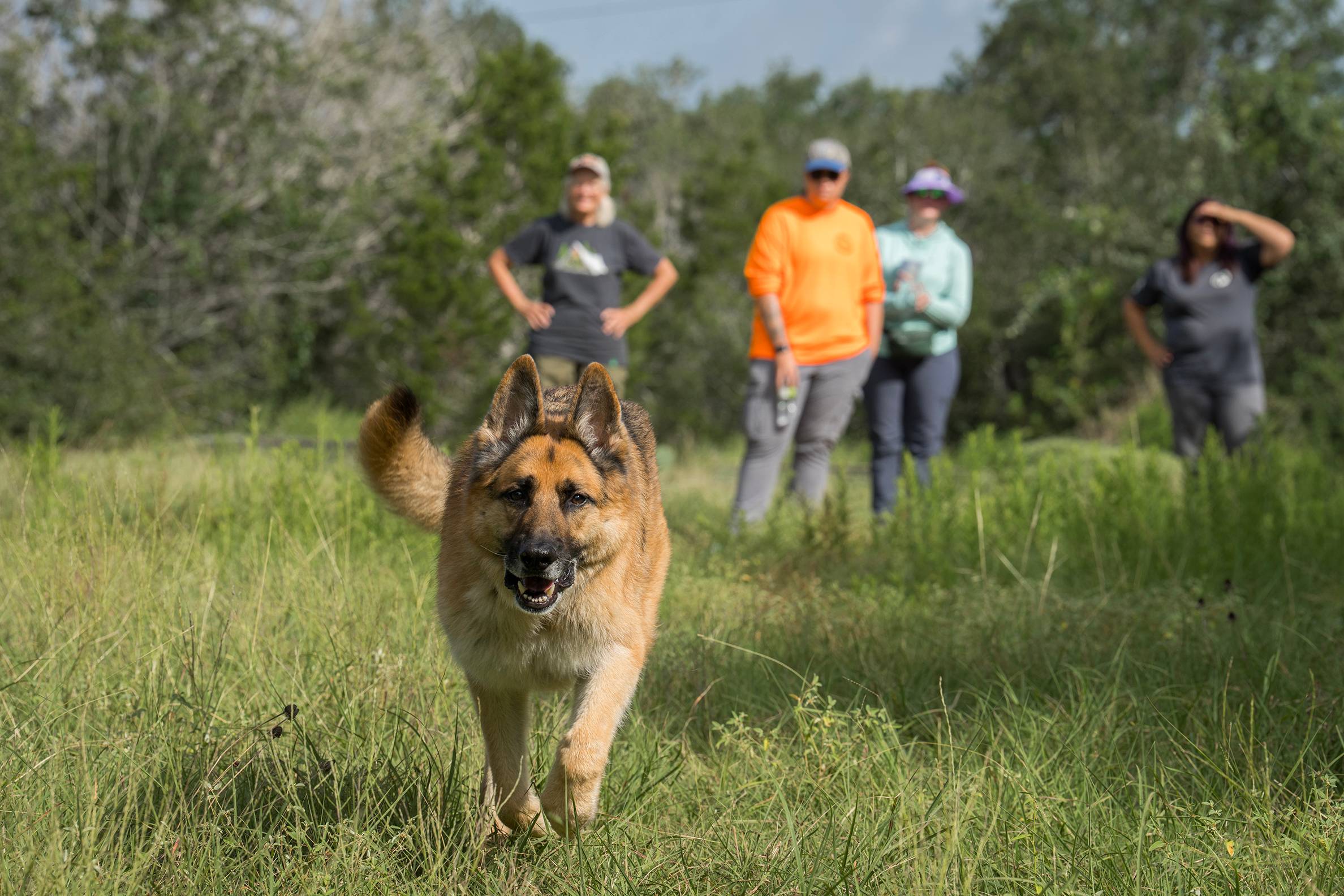
Arely, a German shepherd-Malinois mix, bounds after a toy, seemingly oblivious to the donated remains of an older man who died less than a week earlier.