

Texas State University campus architect Gordon Bohmfalk says developers of the 2025–2035 Campus Master Plan were hard at work on the planning process when they realized Spring Lake deserved a bold reimagining. So, they redoubled their attention to the area and created a distinctive “Spring Lake Vision Plan.”
Reviving Spring Lake
A nature-driven vision honors the past and shapes the future
“We knew we needed to focus on a game plan for Spring Lake. The vision is very much nature-driven and focused on cultural heritage."
Gordon Bohmfalk
The resulting plan outlines a series of projects east of Old Main incorporating Spring Lake, Sewell Park, and the historic fish hatchery ponds. It includes two new interpretive buildings at Spring Lake, new trails throughout the Spring Lake area and linking it to central campus, and traffic controls for pedestrian safety.
The plan calls for the construction of a new water research center, additional exhibition space for The Wittliff Collections, and a new visitor welcome center.
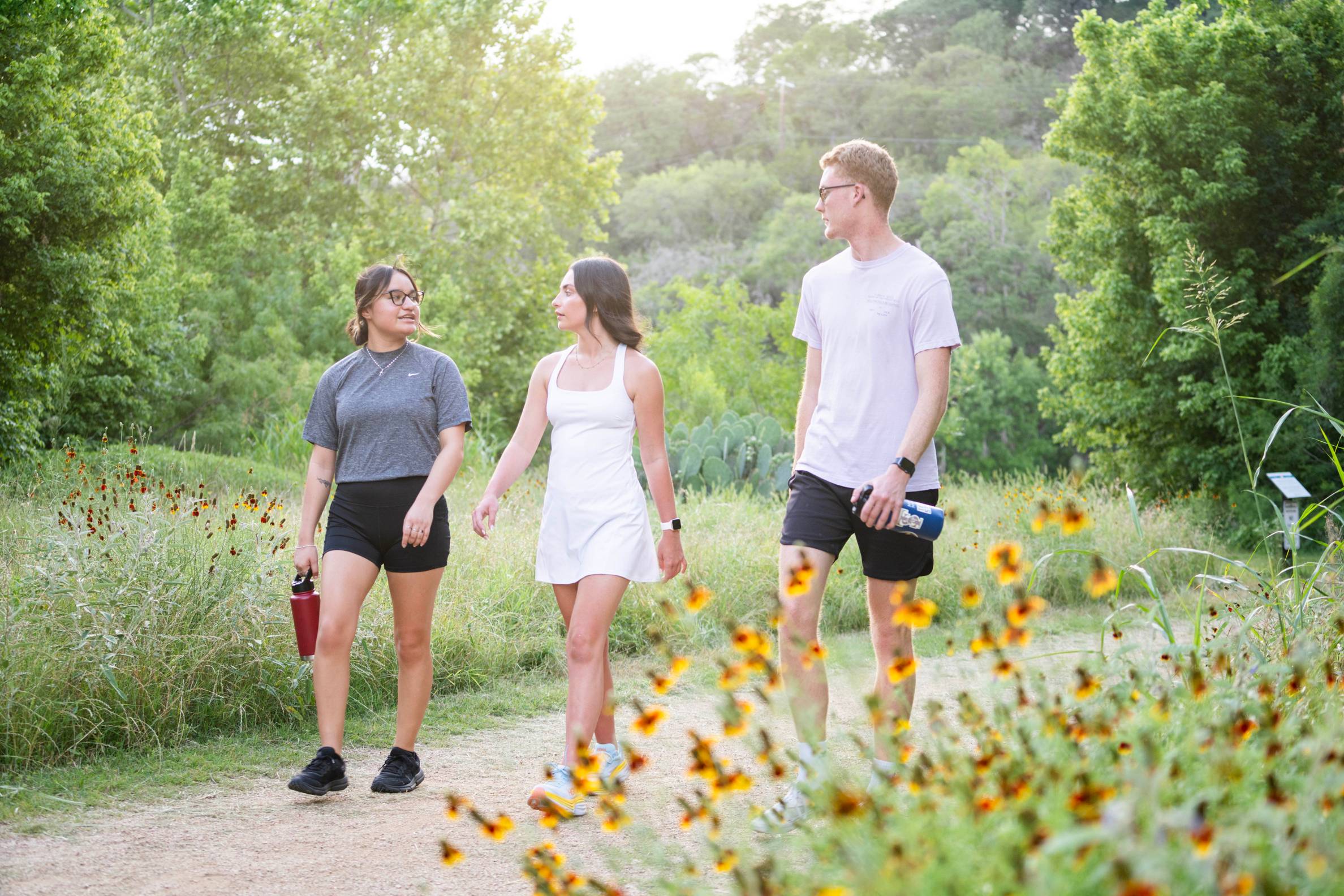
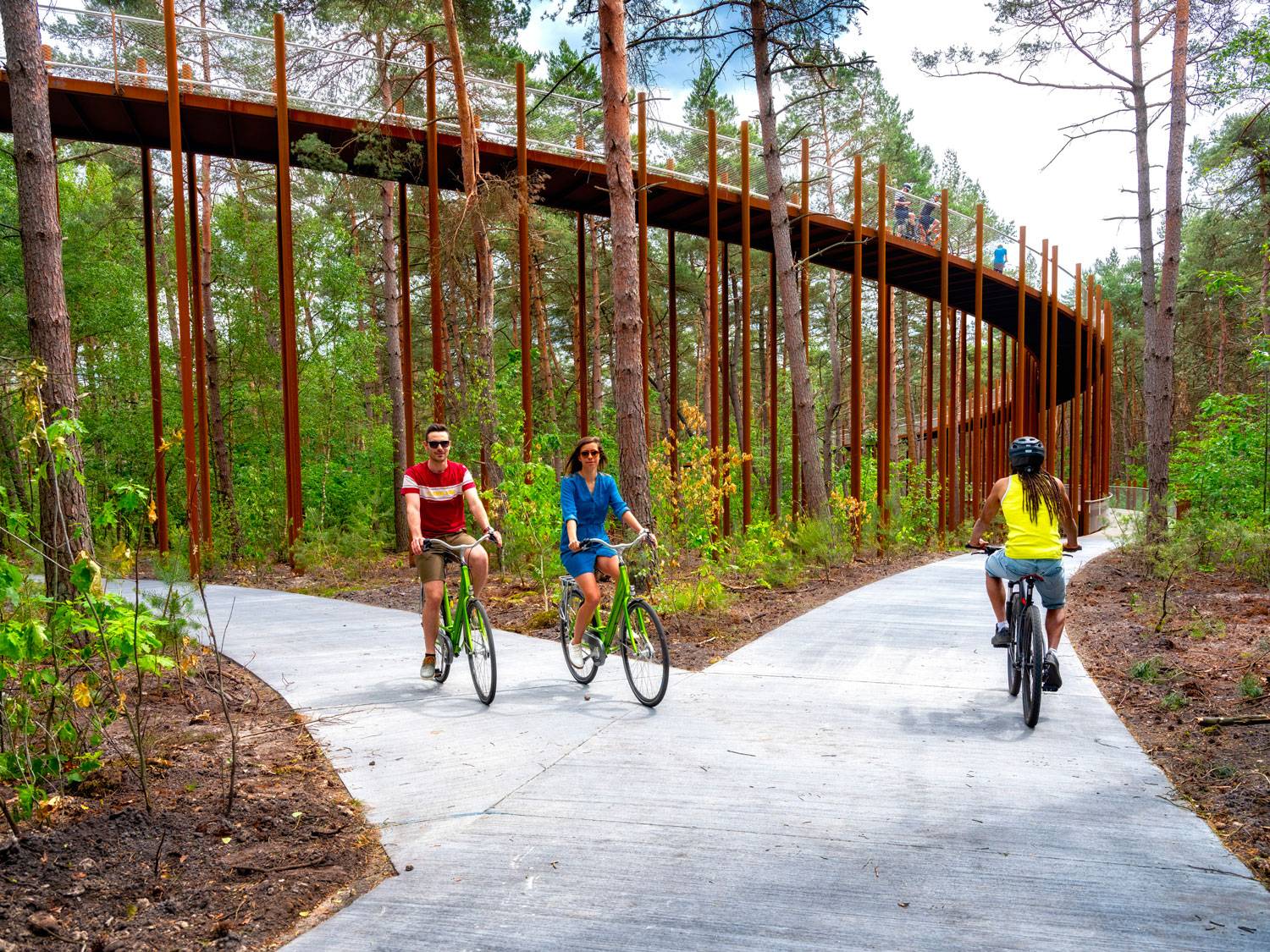
The Spring Lake Vision Plan would limit traffic and enhance trails and interpretation.
Parking would be moved away from Spring Lake to provide more open space, thru traffic would be rerouted, and improvements to Discovery Peninsula would enhance interpretation and ecological preservation. Ed JL Green Road would be closed and replaced with a multiuse hike and bike path connecting Spring Lake with Sewell Park. (The plan does not call for changes to the Meadows Center for Water and the Environment or the glass-bottom boats.)
Sewell Park will remain a recreational spot for sunbathing and swimming, but with the addition of landscape improvements, natural bulkheads on the riverbank, improved access to the water, and a small amphitheater plaza set at a bend of the river.