Texas State University Research Advances Rainwater Harvesting in Texas
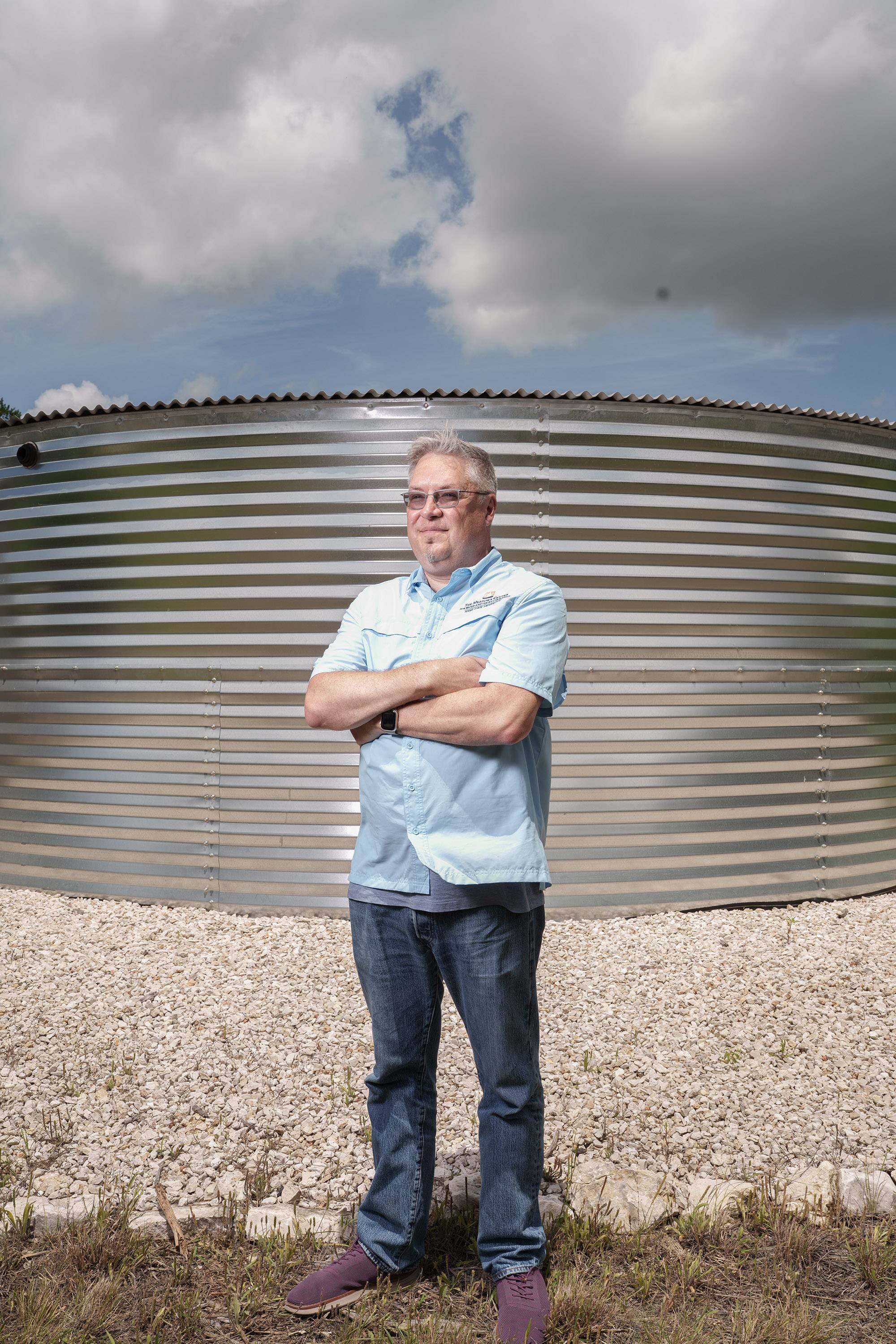
TXST research led by Dr. Robert Mace shows how rainwater harvesting can help Texans protect groundwater resources, withstand drought, and build reliable household water systems.
August 7, 2026
Matt Joyce
TXST research led by Dr. Robert Mace shows how rainwater harvesting can help Texans protect groundwater resources, withstand drought, and build reliable household water systems.
When Texas State University alum Katie Tritsch and her husband built their home southwest of San Marcos, they faced a question familiar to residents of rural Hays County: How would they supply drinking water in an area with no water utility service?
Texas State University alum Katie Tritsch
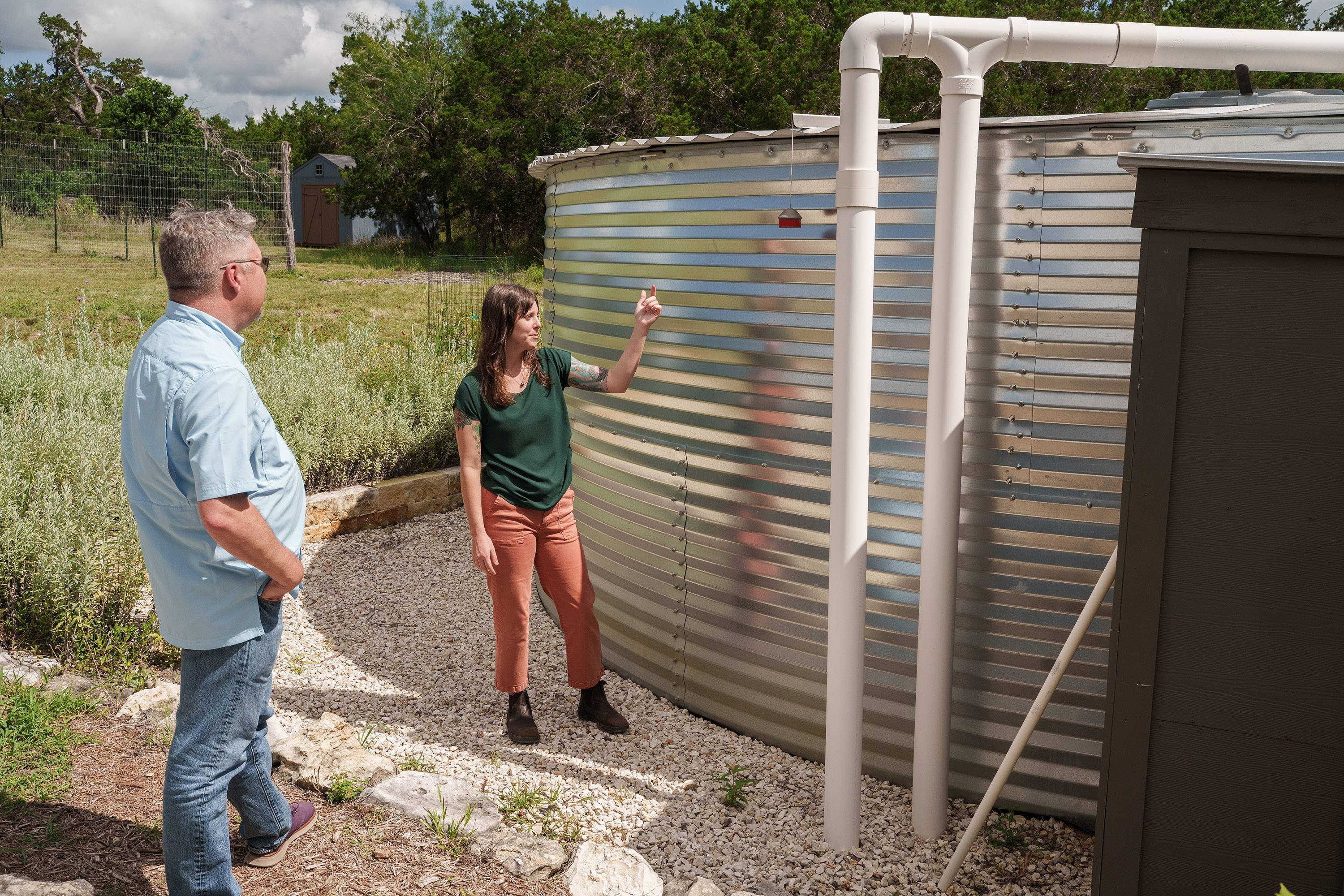
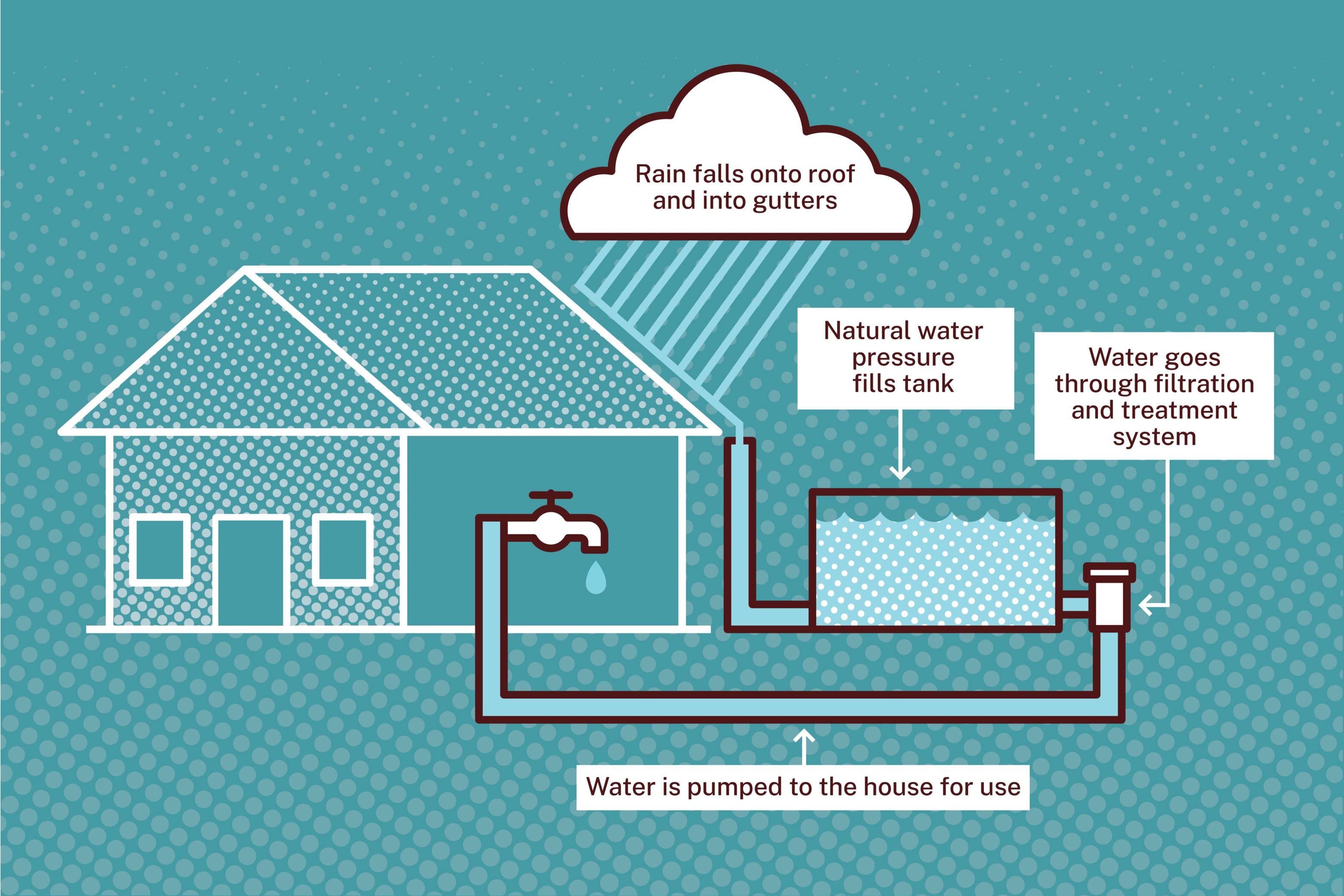
Since the pioneer days, Central Texans have drilled wells to pump water from the Edwards and Trinity aquifers. But population and industry growth are draining aquifers faster than Mother Nature can replenish them, especially during drought. Some homeowners have even seen their wells run dry. For Tritsch, the answer was rainwater: Her family built a system to collect the rain that falls on their roof, store it in a 25,000-gallon tank, and clean it for all of their needs.
“We were interested in rainwater, and we were lucky to be working with a builder who had experience with rainwater-harvesting systems,” Tritsch says. “It was also cheaper to build a rainwater system than it was to dig a well. So rather than extracting water from our groundwater resources, we are capturing it and storing it right here on the landscape where it’s coming down.”
Coauthored by Ricardo O. Briones, a TXST sustainability program graduate who now works for the Texas Commission on Environmental Quality, the report finds that rainwater harvesting can be a reliable water-supply strategy. A Meadows Foundation endowment and the National Oceanic Atmospheric Administration funded their work with grants of about $60,000 and $20,000, respectively, Mace says.
“The biggest misconception about rainwater harvesting is that it’s not reliable,” Mace says. “But it is reliable — you just have to design the system properly.”
Aquifers are easy to overwhelm, he says, which makes rainwater harvesting more sustainable than pumping from wells. “That’s something we’re seeing in the Hill Country. We’re seeing water wells failing, particularly during dry spells, at unprecedented levels.”
A gauge shows the water level in the collection tank.
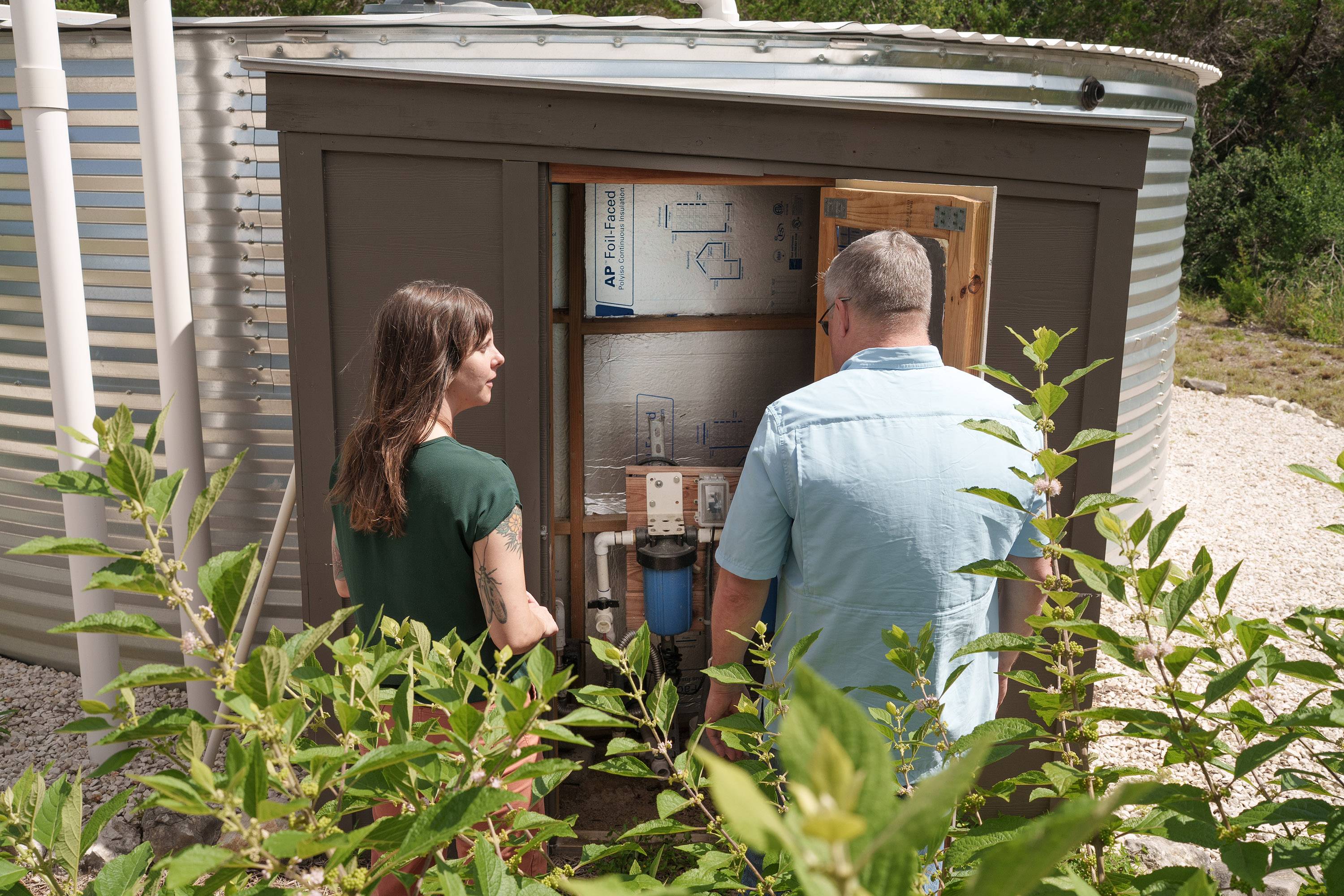
Tritsch’s filtration system is in a shed next to the tank.
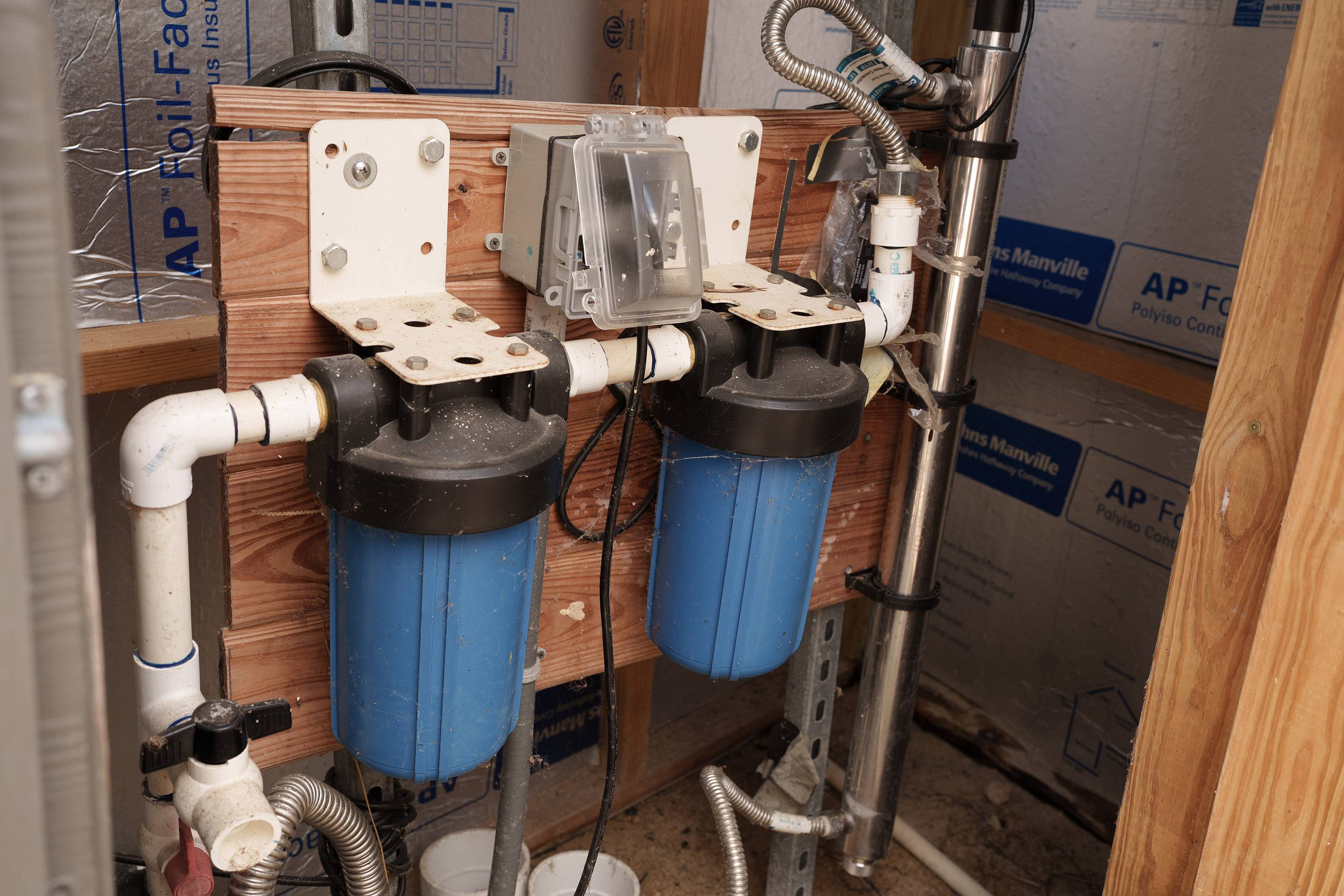
System components include filters, UV purifier, and a pump.
Mace notes that the 2026 Regional Water Plan for the Texas Water Development Board’s South Central Texas Regional Water Planning Area, which includes Hays County, calls for the installation of more than 200,000 rainwater-harvesting systems in Hays County by 2080 at a cost of $150 million.
“That’s because there is no other source of water out here in the Hill Country,” he says. “I’ve seen rainwater harvesting grow as people get more interested, and I’m very hopeful that our study will advance that growth.”
Proper design is critical to a reliable rainwater-harvesting system, Mace says. The RAINFAL tool calculates a set of variables to determine the size of a rainwater system capable of providing water during the worst drought on record. The key variables are water use demand, average daily rainfall over at least 75 years, roof size, and tank size.
“The tank won’t go dry if it’s designed properly,” Mace says. “Our analysis shows that you can do rainwater harvesting in El Paso, Texas, which on average gets less than nine inches of rainfall a year. So you can literally do it anywhere in the state. It’s easier to do where it’s rainier, but you can make it work even in the driest parts of Texas.”
Whole-house rainwater systems can be difficult to construct in cities because most residential lots don’t have enough space for a large tank. But smaller collection systems can supplement household use and landscape irrigation.
Mace’s own rainwater collection projects inspired his recent and ongoing research. At his Austin home, Mace has a 5,000-gallon rainwater collection system that his family uses for outdoor watering. He also installed a whole-house rainwater system at a family cabin in New Mexico.
“I got bit by the rainwater bug,” he says. “There’s something about rainwater harvesting that changes your DNA where you want to do more. You want to catch more, you want to learn more about it, and you want to try and maximize it.”
Mace says he is now working with students to extend his research into industrial use for facilities such as data centers, which require lots of water. He also wants to develop a RAINFAL tool that homeowners in urban areas could use to figure out how to use smaller systems to supplement their water supply for uses such as toilets and laundry.
“It’d be helpful to have a tool that allows folks to properly size the system to provide a reliable supply for those purposes,” he says.
Video: Homeowner Katie Tritsch and Dr. Robert Mace discuss the considerations and benefits of installing a rainwater collection system.
Five years into her life as a rainwater collector, Tritsch says her home has never run out of water, even as the county experiences a severe multiyear drought. She assumed she would have to be careful about water usage, but she and her husband have been able to use water as they would with a utility provider. Their landscaping features native plants that are drought-tolerant, and they designed their collection system to be big enough to irrigate a vegetable garden that’s under construction.
“We pay attention to where the level is and make changes if we need to, but we haven’t noticed that we have to substantially change our behavior,” she says. “Once we get a big storm, the tank fills almost all the way up pretty quickly.”
The system requires some maintenance, Tritsch says, which includes replacing filters, allowing a “first flush” to drain debris after a big rainfall, and replacing the pump when necessary. “It’s relatively easy and not too much to have to do for a regular homeowner,” she says.
And the water tastes great. “It just tastes like water,” she says. “It doesn’t have any of the extra chemical-like flavors that you might get in different municipal water systems.”
For others considering a rainwater system, Tritsch recommends it. She also feels a responsibility as a homeowner in rural Hays County.
“We were given the opportunity to have this property and part of that is the responsibility of managing our natural resources,” she says. “It helps you feel more connected to your water use and to your environment.”
Matt Joyce
Matt Joyce is the Editorial Manager for TXST's Division of Marketing and Communications.