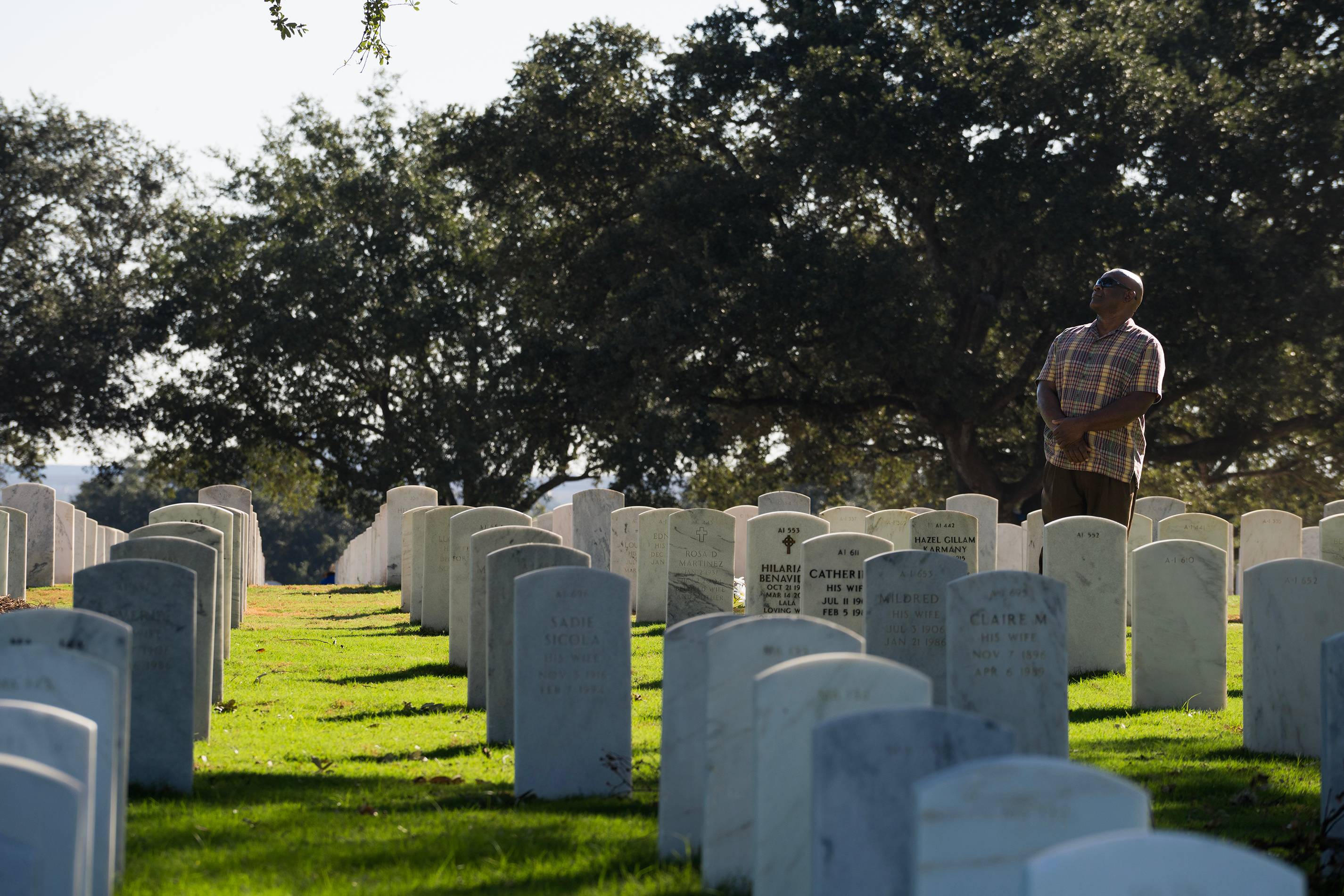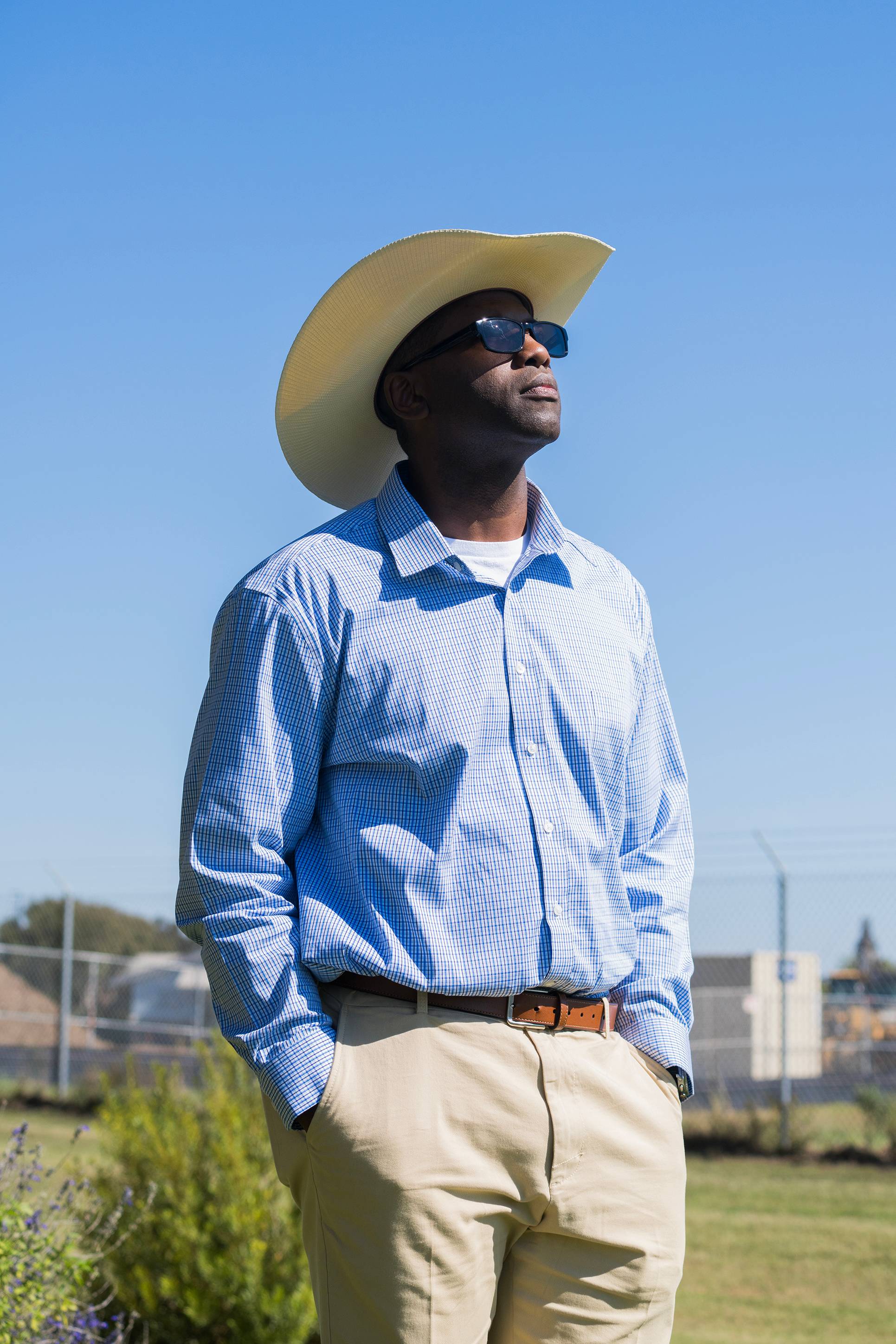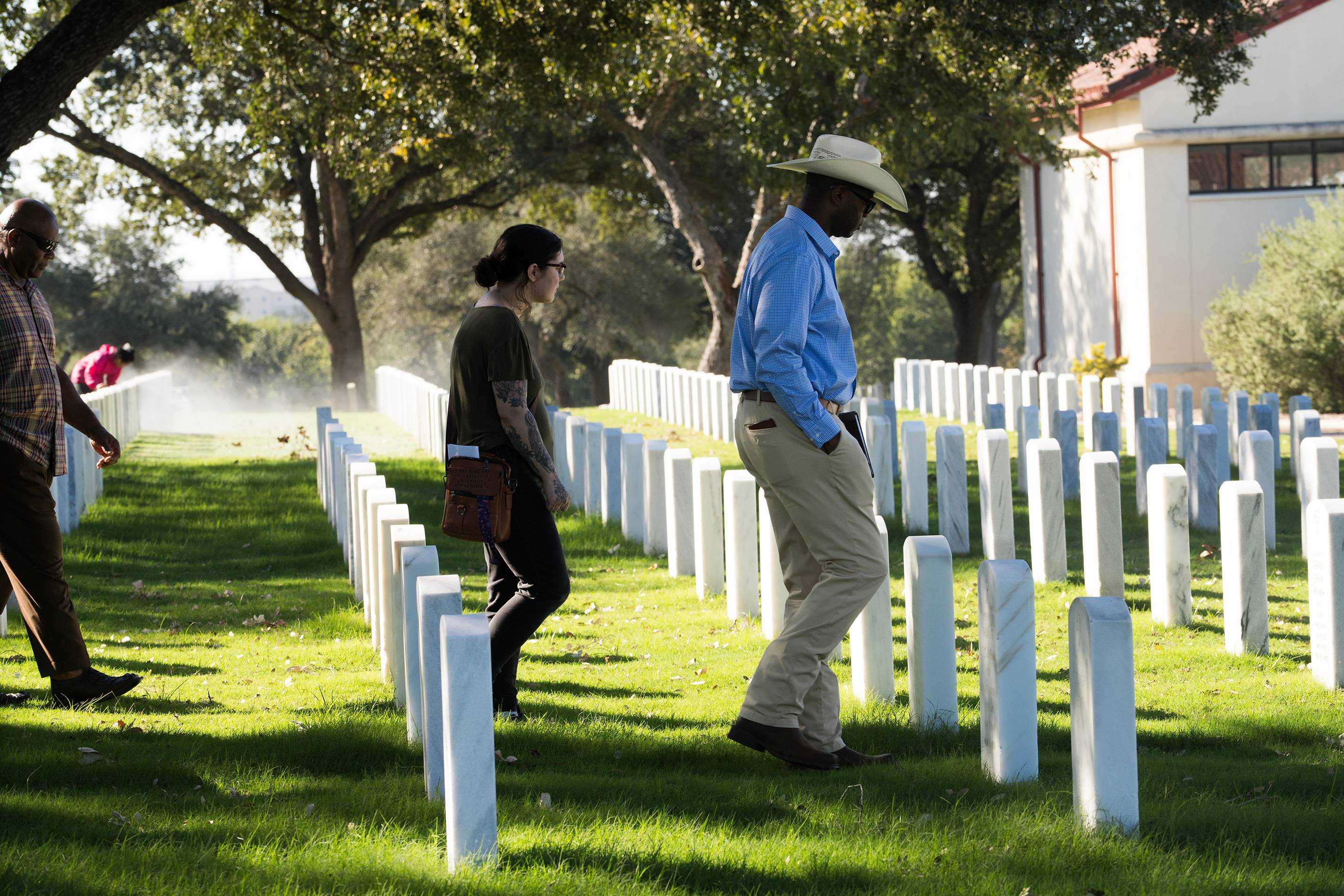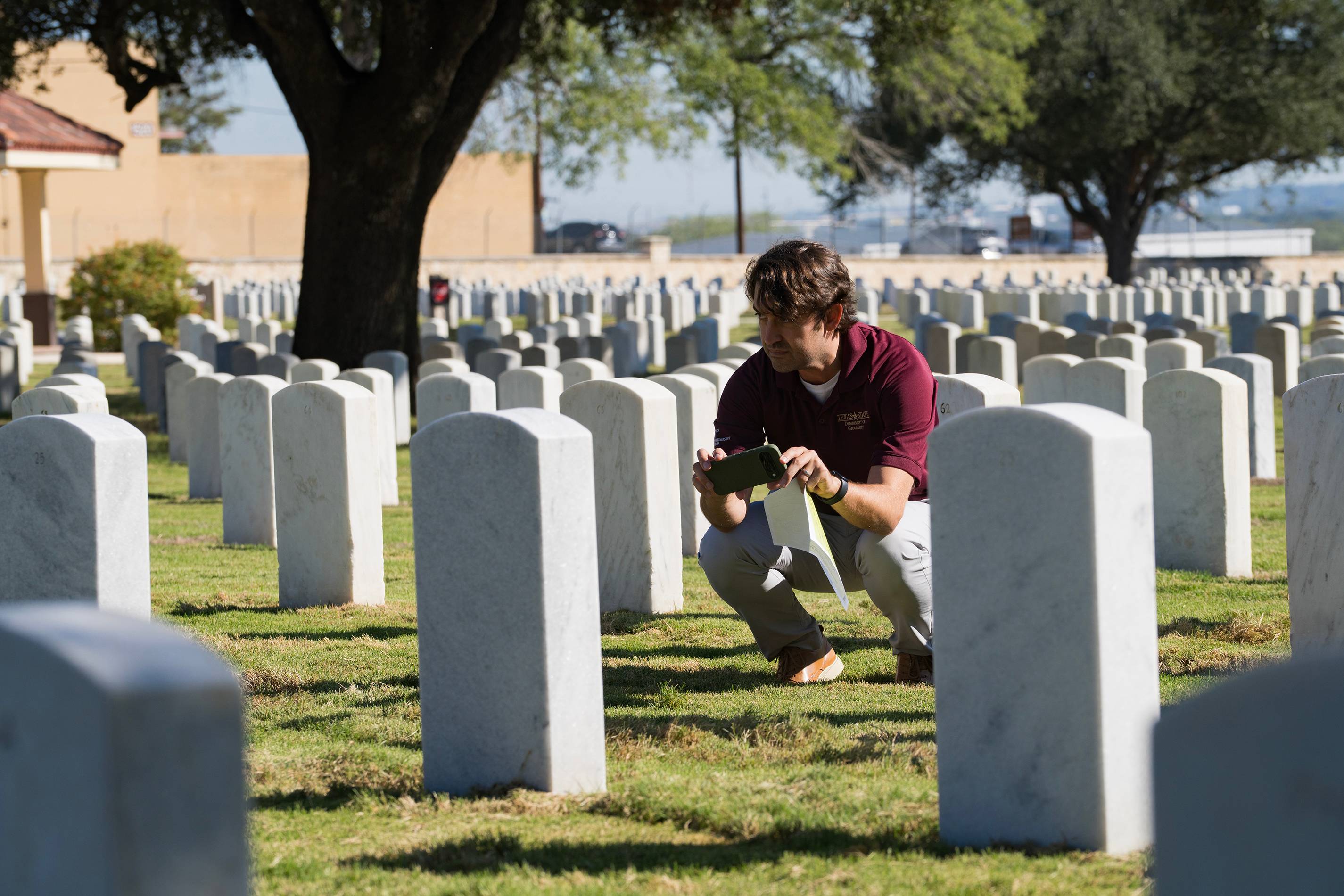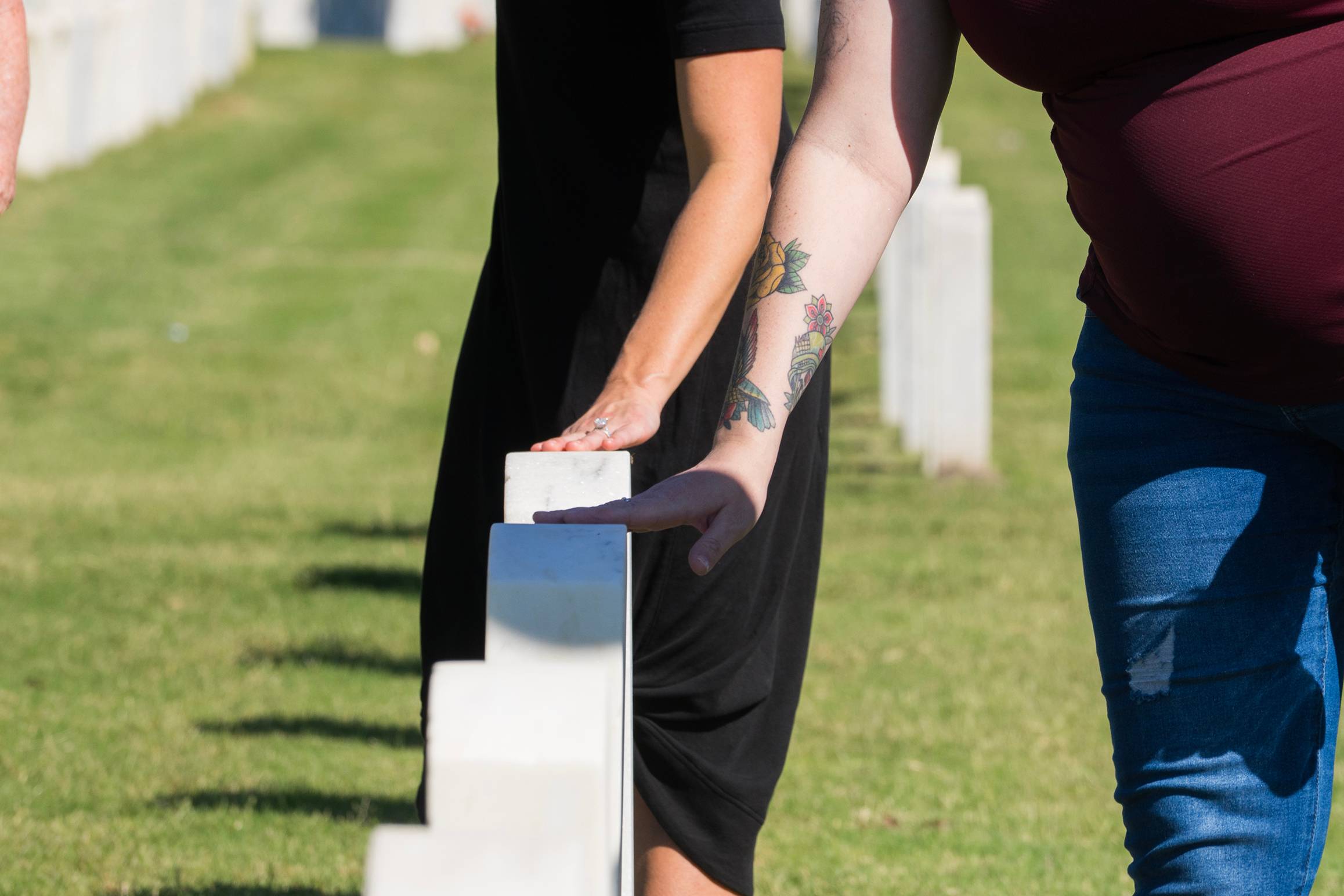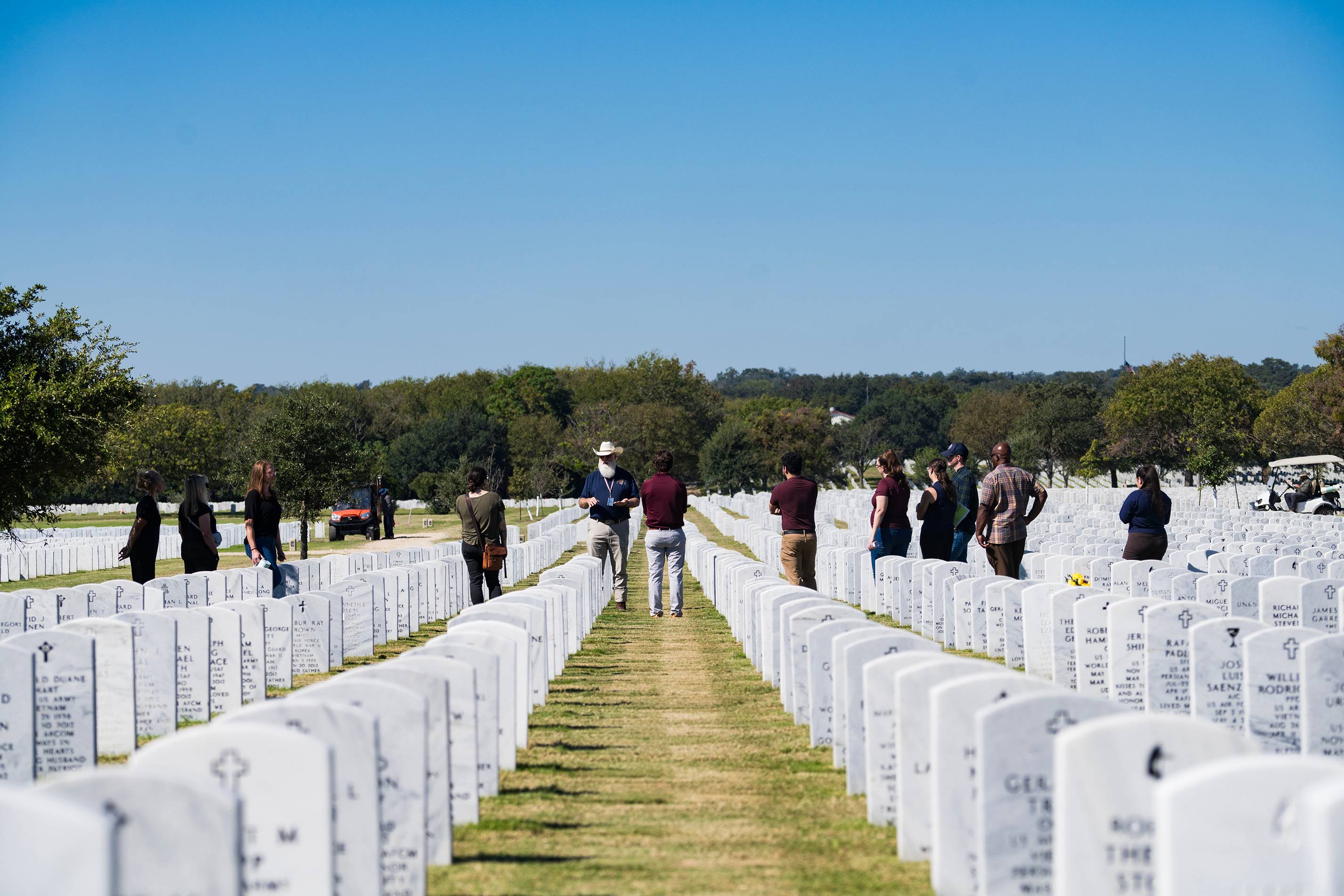

Behind every service record is a human story. While families keep their late veterans' memories alive, Texas State University faculty and students are joining the effort, transforming family interviews and photos into enduring digital history.
Through the Texas Veterans Legacy for Tomorrow (TexVet Legacy) initiative, student veterans are meeting with family members and friends of veterans who are buried at U.S. Department of Veterans Affairs (VA) cemeteries across Texas to share their stories. First launched in 2024 at TXST, the VA recently renewed a $286,985 grant for TXST to continue the work, along with seven other universities, organizations, and foundations across the country.
"Every service member was a family member or someone’s friend first."
Family interviews, which are recorded on camera at Alkek One on the San Marcos Campus, in person in their homes, or through virtual meetings, are uploaded with photos to the Veterans Legacy Memorial and the Texas State University Digital Repository for legacy preservation. The stories may also be used in audio tours at the VA cemeteries where the veterans are buried.
“It’s been very educational and comforting to see how veterans and their family members are respected in this process,” said Dr. Katherine Selber, professor in the School of Social Work, cofounder of the Veteran Advisory Council, and co-principal investigator of the project.
With the new funding, the team will also create 13 Texas Essential Knowledge and Skills-aligned lesson plans for K-12 students, expand its TXST open educational resources page, and widen its teacher network. In 2027, the TexVet Teacher Fellowship Program will host a summer institute to prepare Texas K-12 educators to guide students in researching and preserving the stories of veterans in their communities.
Dr. Kelly Clary, associate professor in the School of Social Work and senior faculty fellow at the Translational Health Research Center, is the grant’s principal investigator. Clary and Selber’s project team includes eight faculty and staff members, external consultants, and a seven-member community advisory board.