Oldest Known Living Texas State University Alum Recalls Student Life in the 1940s

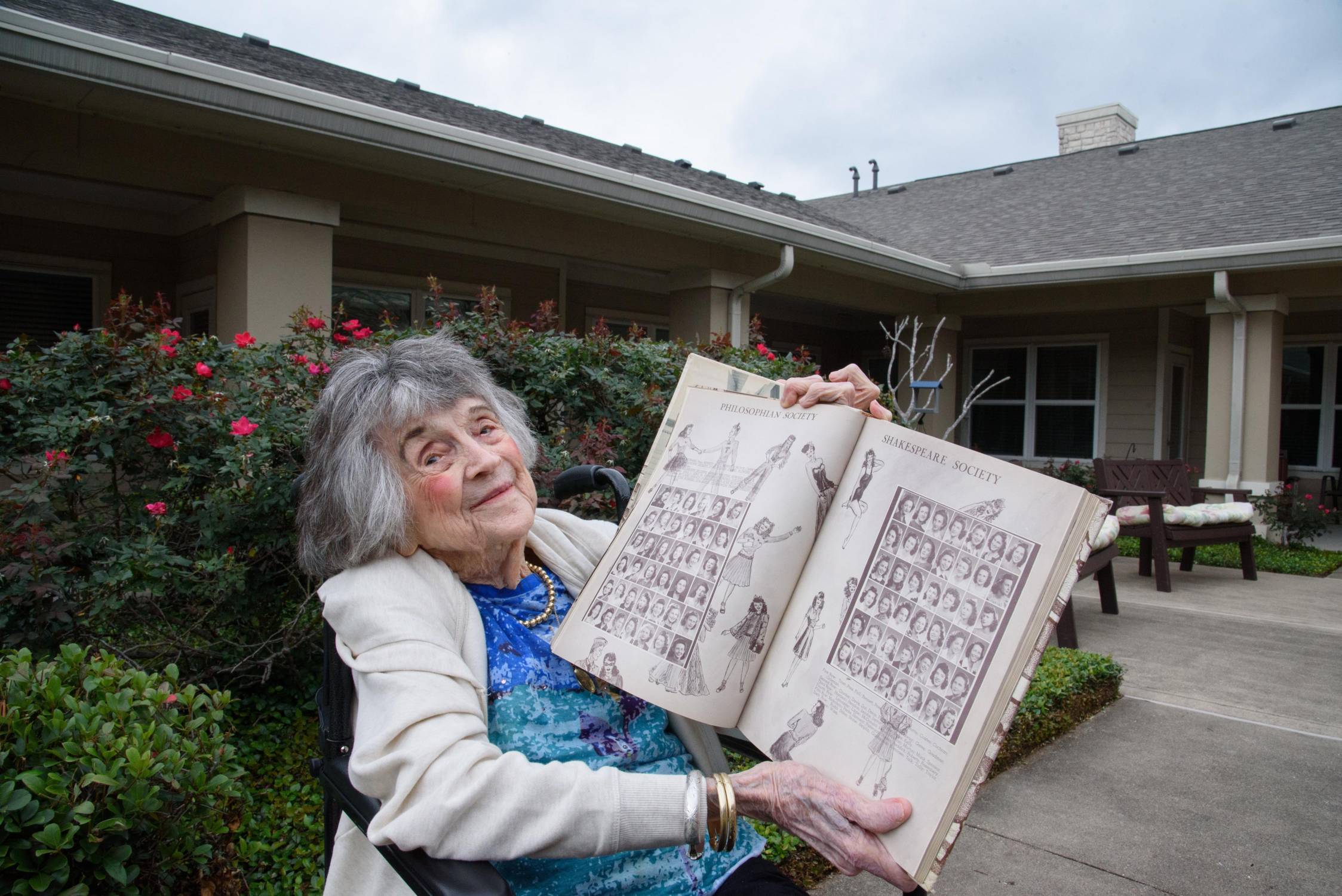
woman in wheelchair holds up yearbook from the 1940s

Janie Strother attended Southwest Texas State Teachers College from 1941 to 1945. The oldest known living TXST alum, she shares her memories of student life, classes, and the impact of World War II. 

Janie Strother says she first reconnected with Texas State University through Facebook, a pastime she embraced during the isolation of Covid lockdowns. She came across a post where alumni were commenting about their graduation years, and she decided to join the conversation.

“I wrote that I was Janie Davis then. I’m a graduate of Texas State, but back then it was Southwest Texas State Teachers College, and I got a BA degree in 1945. And I said, ‘I may very well be the very oldest alumni alive.’”

Janie, who celebrated her 102nd birthday in March, certainly could be TXST’s oldest living alum. The university can’t say definitively that there are no older living Bobcat alums, but that hasn’t dampened excitement over rediscovering Janie.

“She had called to find out how she could become a member of the Alumni Association,” says Holly Hirsch, executive director of TXST Presidential Events & Projects, who happened to answer the phone. “While we were looking up the number for the alumni office, she was telling me a little bit about herself, and I stopped looking for the number and said, ‘Wow, I’ll make sure you get connected with them, but I’d love to just know more about you.’”

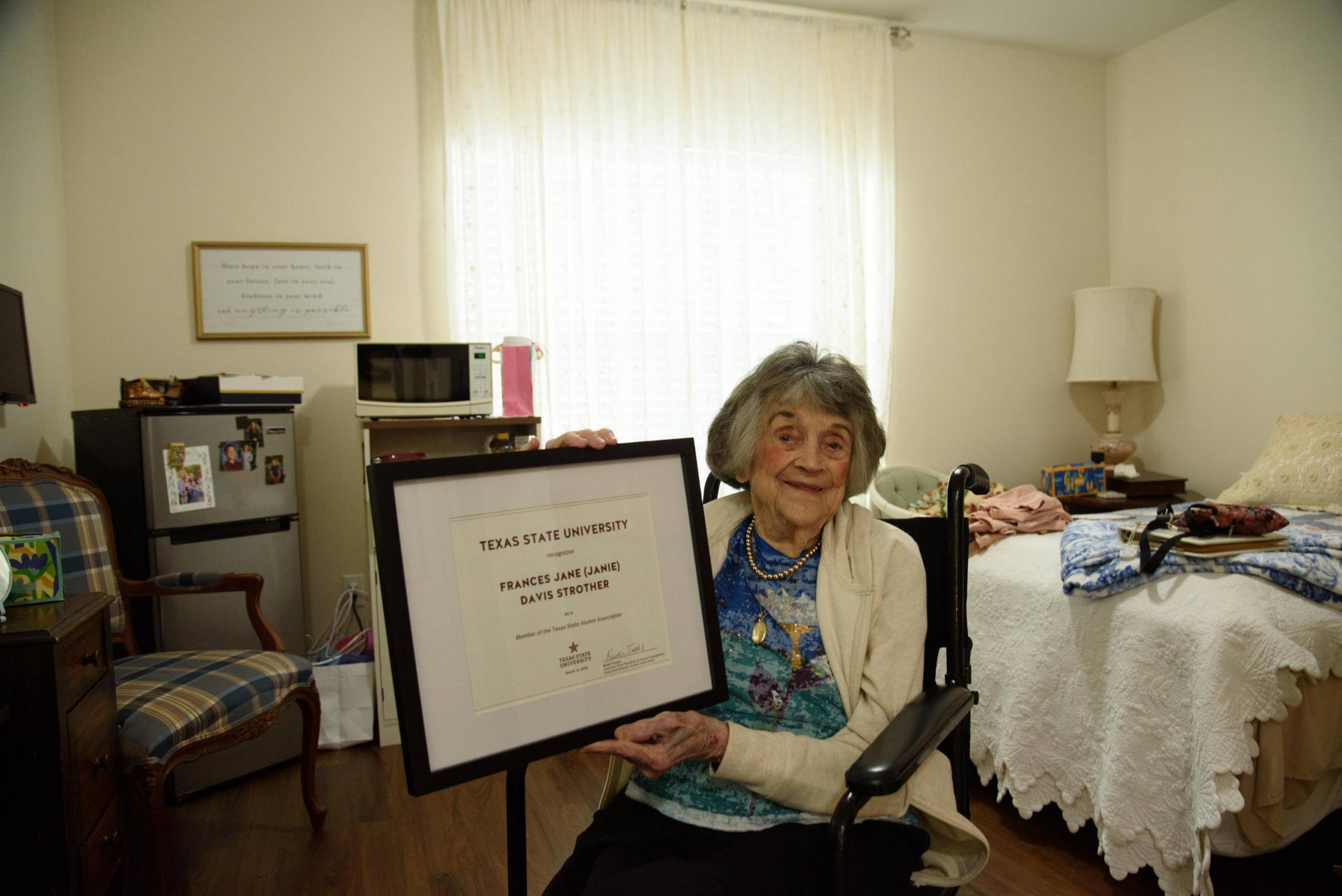
In March, Hirsch visited Janie at her retirement home in League City to present her with a TXST alumni association membership plaque and honor her as the “oldest active alumni association member.” 

elderly woman holding up a certificate in bedroom
Janie & her certificate from the Alumni Association.
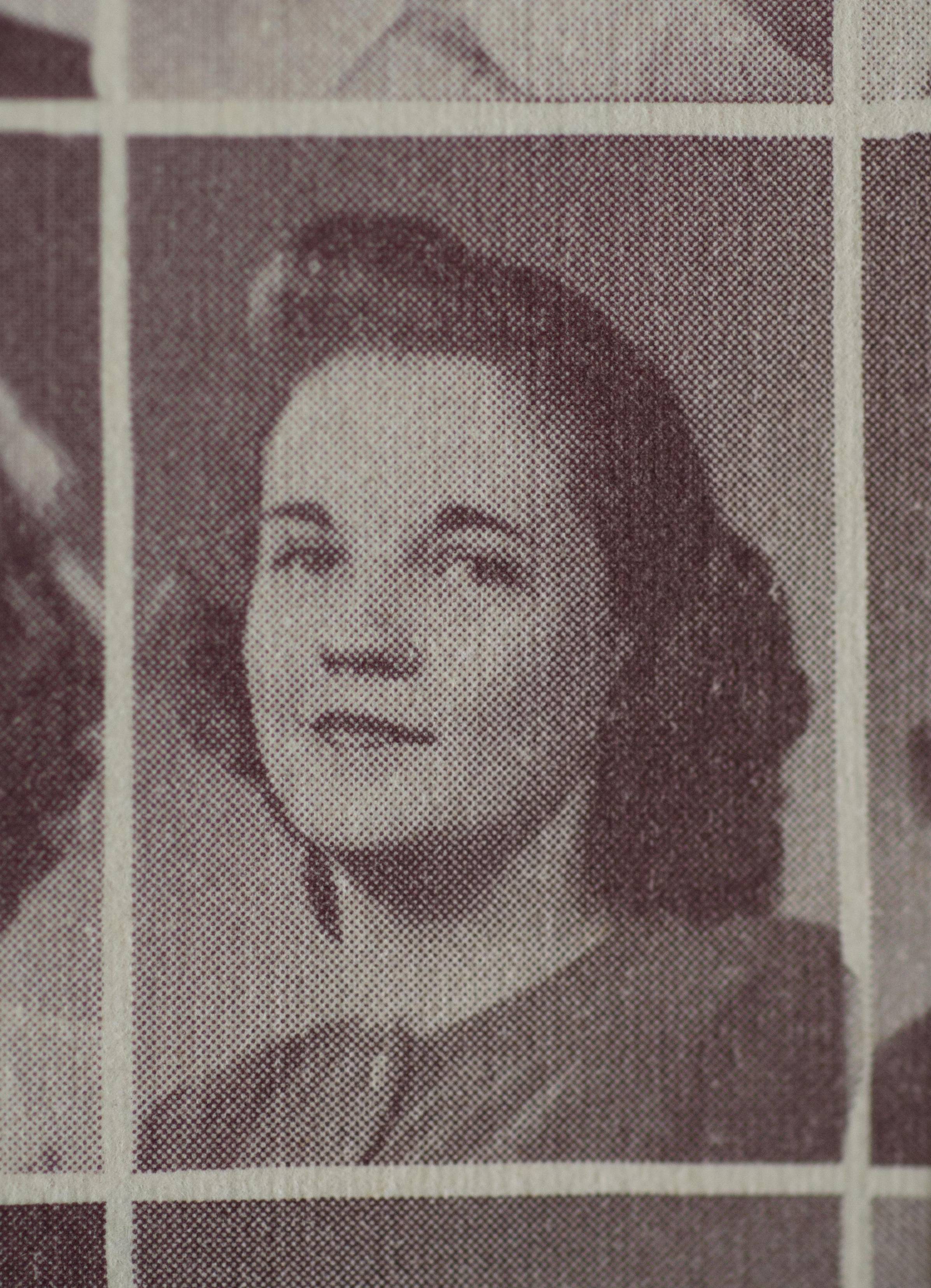
black and white yearbook photo of a woman
Janie's photo in the 1944 Pedagog.

Frances Jane Davis grew up in Taylor during the Great Depression and enrolled in Southwest Texas State Teachers College in 1941. Her college memories are characterized by fun with friends, stern teachers, and the shadow of World War II, which took many of the boys away from campus.  

After graduation, Janie worked as a teacher in Poteet, San Angelo, and then Pasadena. She was married to her husband, Joe Strother, for 61 years before he died in 2009 at the age of 85. The Strothers raised two daughters in Houston, Nancy Jane Thomas and Marijo Tunnell, and Janie now has four grandchildren and eight great-grandchildren.

We also visited Janie in League City to learn more about her experiences as a student at Texas State in the early 1940s. She says her journey to reconnect with TXST has been an engaging diversion at this stage of her life.

“It’s just been fun,” she says. “It’s given me something to do besides hearing somebody say, ‘Oh, my back hurts!’” 


Why did you decide to attend Southwest Texas State Teachers College?

Well, for one thing, it wasn’t too far from my home in Taylor, and it seemed to be less expensive than some of the other schools around. It wasn’t as large as it is today. I understand it’s huge now. But I didn’t know anyone there. I had to make all new friends.  

Did you know that you wanted to be a teacher?

No, I just put it down. I knew I didn’t want to be a nurse, and I don’t know what else there was. It was Southwest Texas State Teachers College, so I thought, “Well, I’ll try that.” I had to put something down.  

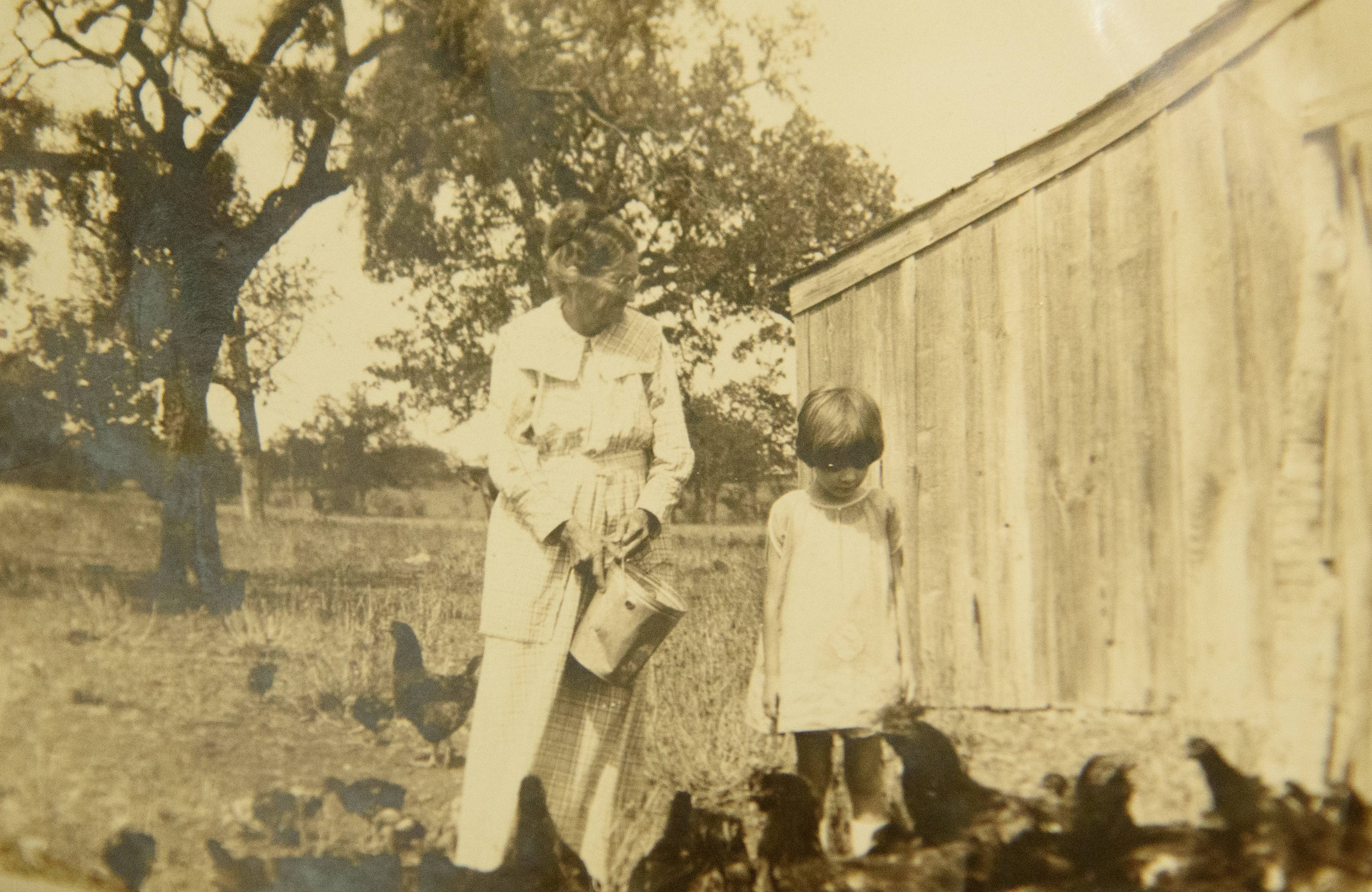
sepia photo of young child feeding chickens with older woman
A young Janie with her grandmother at her grandparents' homestead in Richland Springs, near San Saba.

What was San Marcos like when you were a student?

Well, all the boys who had registered for school in the fall of 1941, when the war started, they all left. There were no boys on campus anywhere. But San Marcos was flooded with servicemen from a detachment outside of San Marcos [the San Marcos Army Airfield]. And there were literary societies [precursors of sororities]. I was Shakespearian. We gave some money when we had it for the food bank or the underprivileged. And just mostly we got together and well, like I say, there were no boys on campus to go to have dances and things. And the other dates came from servicemen, but you didn’t know who Joe was from James or Andrew or somebody else. They were not in their home state. They were just over in San Marcos, looking around, seeing what was there. If you went out with them on a date, you double-dated with somebody, so there was at least another couple in the car.  

We would go over to Landa Park in New Braunfels and go to Austin, but not a lot because I didn’t have a car. I didn’t have a car the whole four years. I had to get rides some way. Swimming in the San Marcos River was fairly common. I understand they jump in the river now with their cap and gown on. 

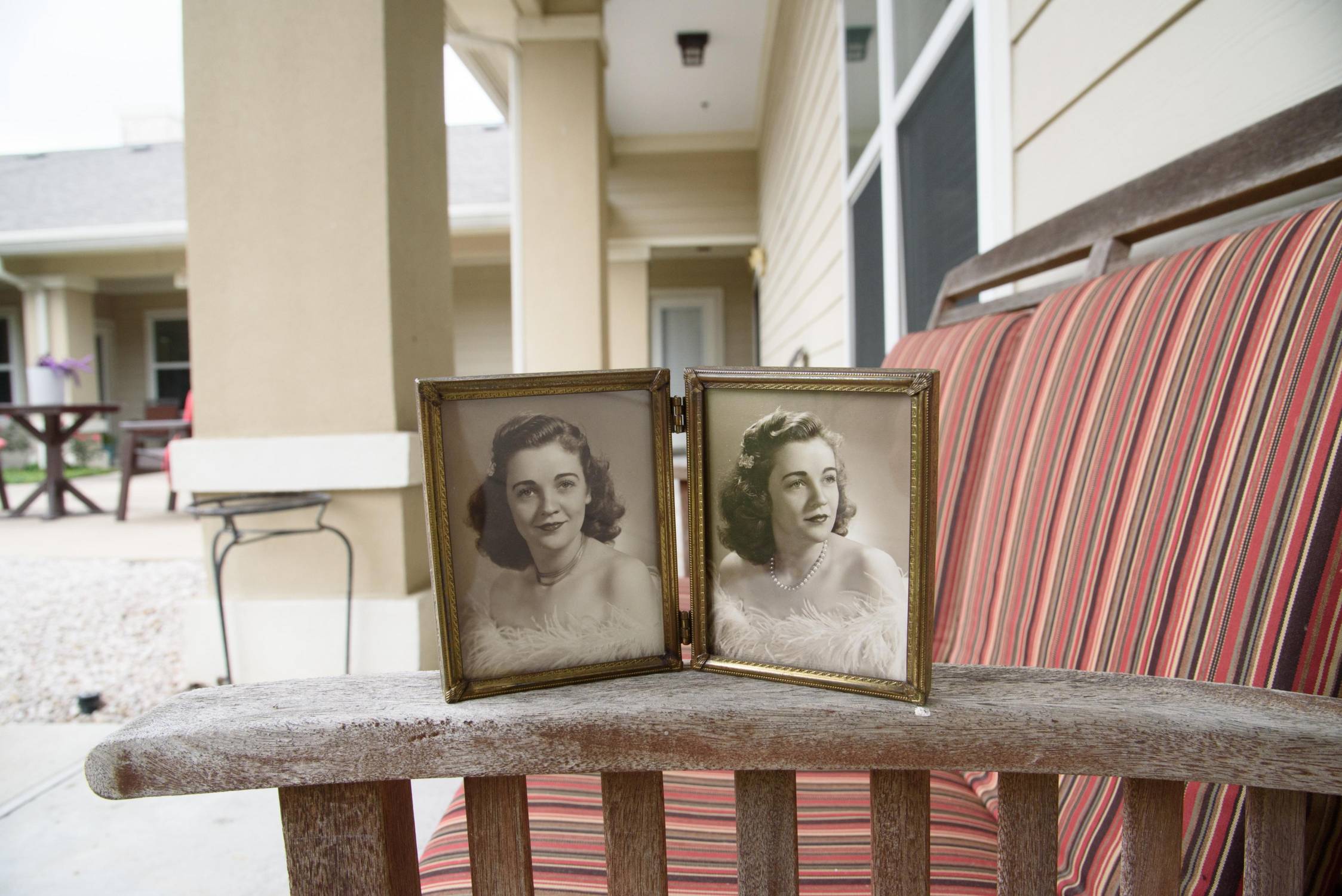
two old black and white photos of woman from the 1940s in a frame. it is sitting on the arm of an outdoor couch
Janie Strother's 1948 engagement portraits.

You were in college during World War II. What do you remember about Pearl Harbor?

I was in San Antonio on December 7, 1941. I had a suitemate at Sayers Hall named Vernice Flowers, and her uncle was president of Texas State then. His name was J. G. Flowers. I’d gone home with her for the weekend, and she said, “Don’t you want to go to downtown San Antonio and shop around and eat lunch and maybe see a movie?” Oh sure. So we’d eaten lunch and shopped around and then decided to go to a movie. And all of a sudden, the movie went black, blank, dark. And then the lights came on. And there was an announcement that said Pearl Harbor had just been bombed, and would all the servicemen in this theater arise and report to their bases immediately. So, Vernice and I were there just sitting there when everybody made their exit from the building. It was very quiet, very solemn. And Vernice and I said, “Well, I guess we better go back to college.”

Someone mentioned that you once got in trouble for caroling in the residence hall?

It was the night before we were to leave for a three-week winter vacation. I was actually graduating. We decided to sing Christmas carols through Sayers Hall. Nobody would have thought of alcohol or anything like that, but we went to the grocery store late that afternoon and got ginger ale, Cokes, 7UP, and some chips and dip. So we had a little party before we started this caroling, and we went from floor to floor doing Christmas carols. We started out with religious ones, spiritual, “O Little Town of Bethlehem,” “Joy to the World.” And then we got ramped up with “Santa Clause is Coming to Town,” and we sang through all the floors. And this one girl reported us for disturbing the peace and keeping them from sleeping the night before they were to go home. We all had to be out of Sayers Hall by a certain time the next day, up and packed and ready to leave for the Christmas holiday. And so we had to write a letter of apology to the dean of women, Ms. Brogdon, to get back into school. I was graduating anyway, but my parents said I should go ahead and write it.

What were some of your favorite classes in college?

I had a teaching practice class with Miss Fisher. The class was an eighth grade English class that was on campus. Miss Fisher never married and wore her hair back in a little bun on the back of her head. And when I would be somewhere where I could find a hairnet—they were hard to find—I would get one for her. And one day when she was sick, I took over her class with the help of her coworker, and we taught the eighth-graders. I made my only A in college under her, because I think she liked the fact that I thought of her and brought her the hairnets she couldn’t find. And I worked really hard. That was the last half of my junior year.

How did you find your first teaching job in Poteet?

Real easy. The superintendent of schools’ mother and my mother were good friends. And she told my mother that her son, Dewey Brown, superintendent of schools in Poteet at that time, would be looking for some teachers to fill out the spring semester starting in January. And so my mother said, “Well, Janie just graduated this month, December.” And I really liked it, teaching third grade. 

After teaching in Poteet for a semester, Janie returned home to Taylor and then took a teaching job in San Angelo.

I taught at San Angelo for a couple years and met the sister of my husband. We went to the same Sunday school class and church together, and she kept talking about this brother of hers. I was home in Taylor, and Mary asked me if I’d like to meet her brother. And I said, “Yes, I guess so.” Well, the rest is history—61 years, two daughters, four grandchildren, and eight great-grandchildren. 

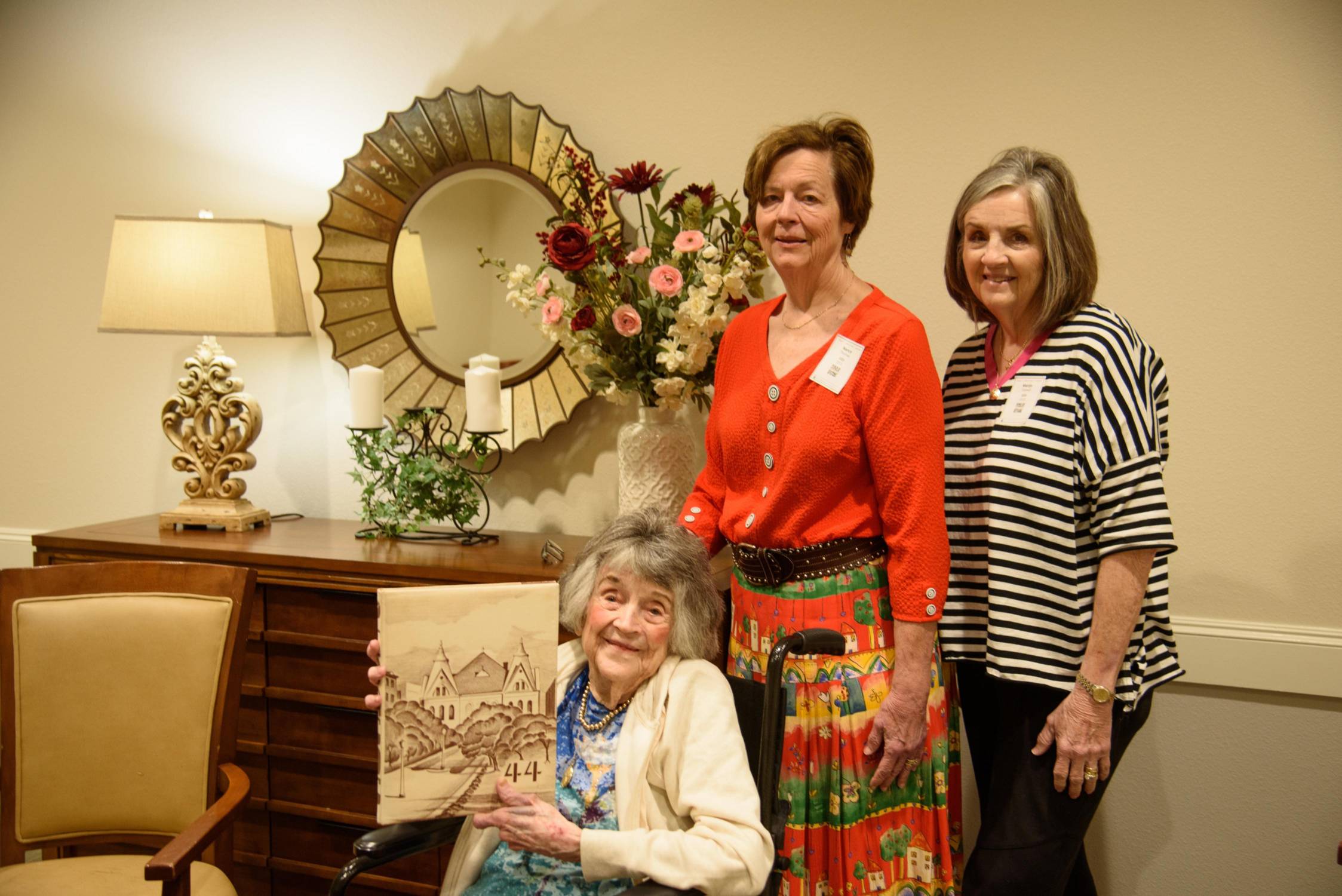
elderly woman in wheel chair holds up a yearbook from 1944 while two women stand behind her smiling
Janie & her daughters, Nancy Jane Thomas and Marijo Tunnell.

What are you most proud of in your life?

There’s a lot. My daughters and my grandchildren. I’ve tried to be a really good grandmother, and now it’s great-grandmother because I’ve lived so long. And my two grandsons were here when I first started on this journey [to reconnect with TXST]. They were here and they really urged me to go forth with this.

Why do you think you’ve lived longer than most people?

I knew you were going to say that because I’ve been asked it before. I really didn’t do anything special. I ate junk food. I drank out of the water hose in the yard. One thing I didn’t do was smoke. I didn’t even try it because one day my mother said, “We have to have a serious talk, Janie.” I said, “Okay, what is it?” “I’m going to plead with you and ask you not to ever smoke cigarettes.” It was nothing about health reasons. She said, “It’s just plain trashy, Janie. Trashy.” I rolled my eyes and lifted my shoulders, but I never did smoke. And there’s another thing: I try to stay connected with people and still have a lot of friends. Gratitude is important for everyone. 


Matt Joyce

Matt Joyce is the Editorial Manager for TXST's Division of Marketing and Communications.