Marise McDermott Takes the Helm of The Wittliff Collections, Spearheads New Cultural Center for Spring Lake
Newly appointed Wittliff Director Marise McDermott leads a $40M expansion of The Wittliff Collections, including a Spring Lake cultural center to serve as TXST’s “front door” with exhibits
April 20, 2026
Wes Ferguson
Newly appointed Wittliff Director Marise McDermott leads a $40M expansion of The Wittliff Collections, including a Spring Lake cultural center to serve as TXST’s “front door” with exhibits
When university officials hired Marise McDermott as executive director of The Wittliff Collections this March, her primary assignment was clear.
“Get this done—that was the directive,” she says.
McDermott’s marching orders are to spearhead an ambitious plan to fund, design, and construct a $40 million offshoot of The Wittliff Collections near Spring Lake. Tucked amid enormous oak trees, with an expansive, second-floor view of the lake, the cultural center would sit northeast of the Meadows Center for Water and the Environment and capture the “spirit of place” that has inspired generations of writers, photographers, and other artists whose archives are housed by The Wittliff Collections.
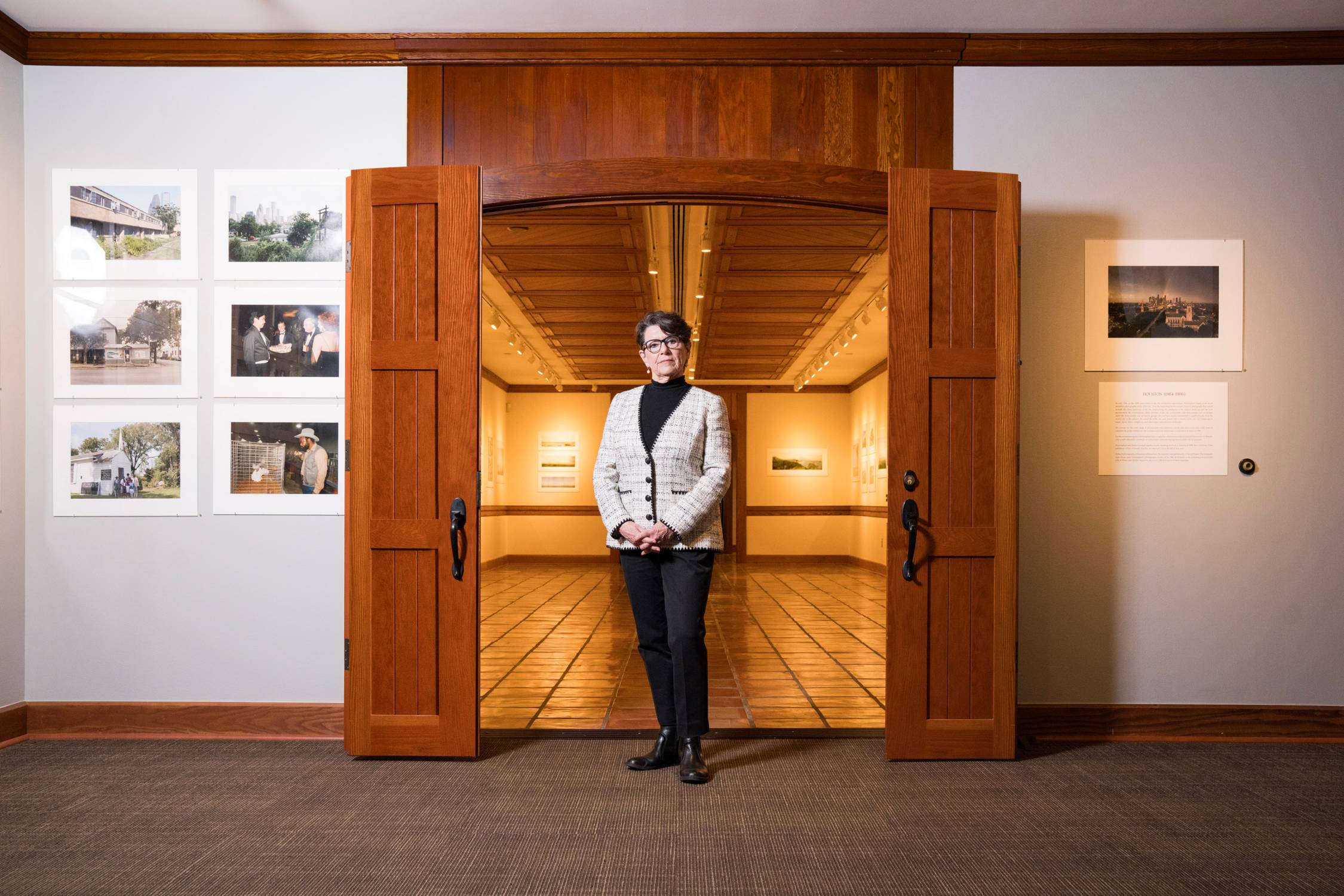
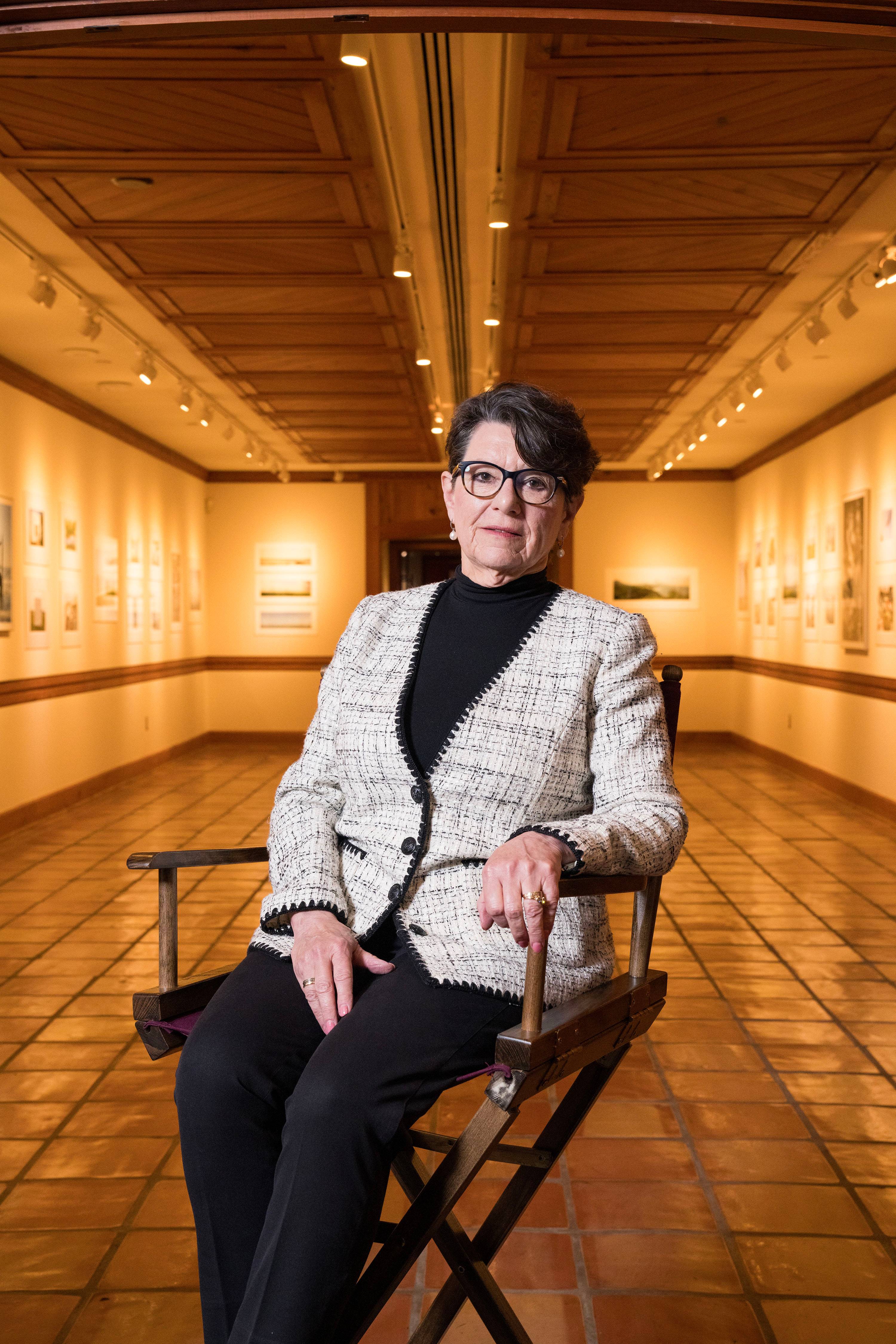
Marise McDermott at The Wittliff Collections.
Although the project is still in the “pre-concept” phase, McDermott envisions a cultural center that would nearly triple the size of the collections, which are located on the seventh floor of Alkek Library. The Wittliff cultural center would share the facility with a new welcome center that’s called for in TXST’s 2025-2035 Campus Master Plan.
“This will be the front door of the university,” McDermott says. “It will be a destination.”
Plans for the complex include a theater for concerts and panels, outdoor spaces, and interactive exhibits that celebrate the collections’ most iconic writers and artists. “The building itself will be a response to the creative minds and works we’ll display and the voices we’ll share,” McDermott says. “The criteria is, ‘What are people interested in? What do they want to engage with?’”
McDermott, previously the president and CEO of The Witte Museum in San Antonio, also wants to develop museum-style exhibits that are more multidimensional and interactive, incorporating technology. An exhibit on Cormac McCarthy, for example, might pair materials from his research and manuscripts with a movie clip and maybe even a hologram of the author.
“The most important thing is to animate the creative work we have,” she says. “I think it’s going to be mind-blowing.”
The new cultural center at Spring Lake would supplement rather than replace the current Wittliff Collections archive and gallery space, which are housed on the seventh floor of the Alkek Library.
“There will always be these intimate galleries here,” McDermott says.
Adding the satellite location at Spring Lake, with ample parking, will help The Wittliff Collections engage with members of the public, from local schoolkids to TXST parents who are in town for graduation or a football game.
“It will be a creative portal where we can engage with all ages,” says McDermott, citing The Wittliff Collections’ vision to connect and ignite “the spark of creativity in all of us.”
Capital campaigns are nothing new to McDermott, who grew up in New York but moved to Texas when she was 22, first working as a journalist in San Angelo and later in Austin and San Antonio. Her father, John McDermott, was a celebrated philosopher and professor who taught for more than four decades at Texas A&M.
During her 20 years at the helm of The Witte Museum, one of San Antonio’s flagship institutions, McDermott led a decade-long, $120 million campaign to expand and transform the museum complex.
“Marise is the best fundraiser in town, period,” former San Antonio Mayor Phil Hardberger told the San Antonio Express-News in 2017.
The campaign was enormously successful, sparking a cultural renaissance along the San Antonio River Walk north of downtown. The museum, which had faced financial troubles, also balanced its budget during McDermott’s first two years, and visitor numbers eventually more than tripled. McDermott also was instrumental in The Witte’s acquisition of the White Shaman Preserve, which protects a treasure of prehistoric rock art in the Lower Pecos River Canyonlands.
McDermott left The Witte in 2023 but remains its president emeritus, and she is completing a book that commemorates The Witte’s 100th anniversary this year.
Sam Pfiester, who chairs The Wittliff Collections Advisory Council, recruited McDermott to the Advisory Council when he found out she was stepping down from the Witte. He said her proven record and experience at the museum will help propel The Wittliff to become the premier cultural center of the Southwest, Texas, and Mexico.
“She’s the dynamic leader The Wittliff has needed,” Pfiester says.
McDermott says she has no plans to alter the direction of the collections. She describes herself as a lifelong learner and says she will rely on The Wittliff’s curators to shape and grow the archives.
“I’m a generalist, and they are the specialists in their fields,” she says. “I yield the floor to these experts. I’m just going to make sure they are in a bountiful space for their work.”
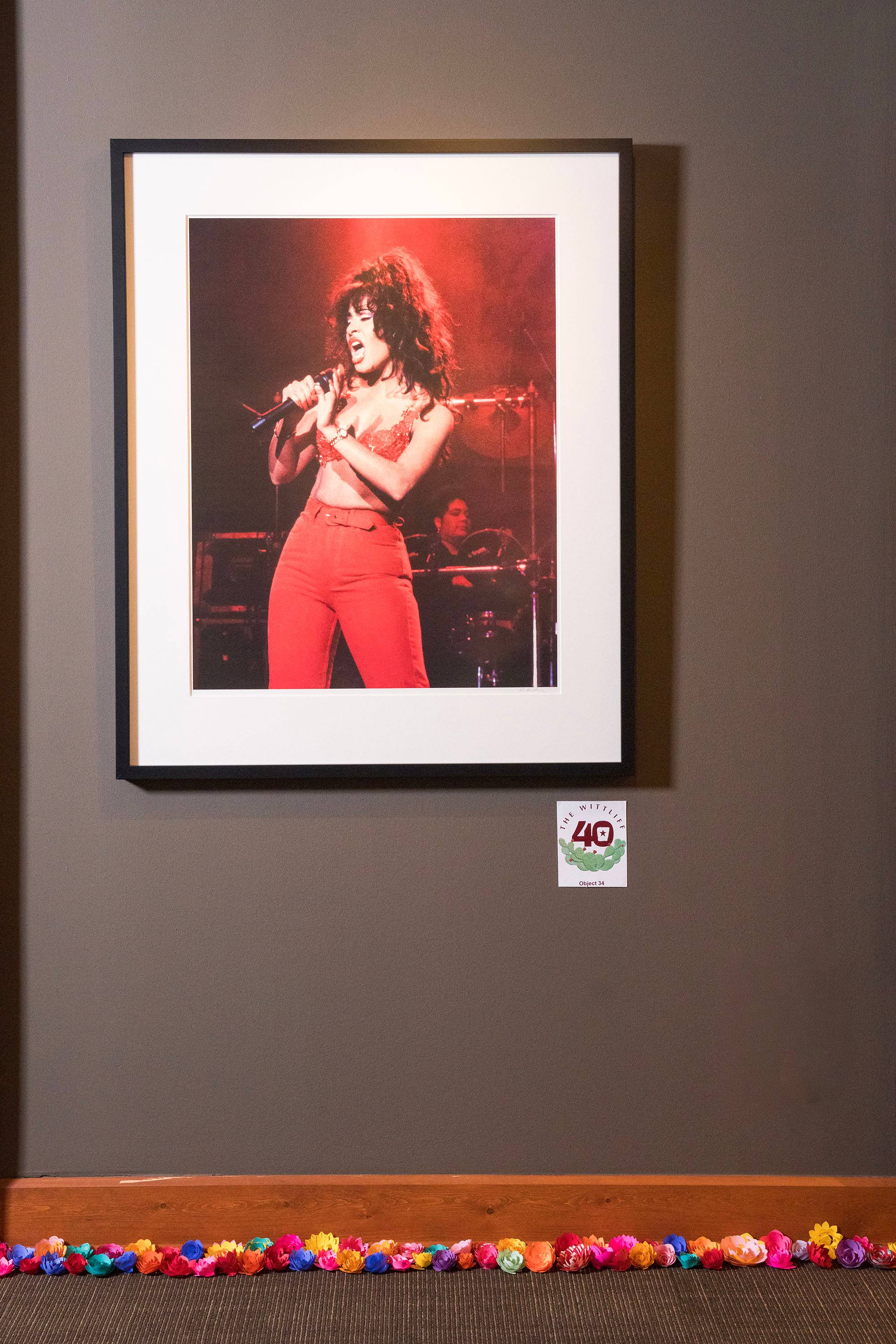
Part of the Selena exhibit on display at The Wittliff Collections.
McDermott hopes the process of identifying the cultural icons who best resonate with the public—those who will be the subject of displays in the new cultural center at Spring Lake—will help curators when they determine which direction the collections should take, and which archives they should pursue.
“We need to look for the passionate narrators who are part of the zeitgeist,” she says. “How do we tap into that and bring it here?”
Another goal of McDermott’s is for The Wittliff to collaborate more with scholars across campus and to foster a more curriculum-integrated space that draws TXST students to the archive.
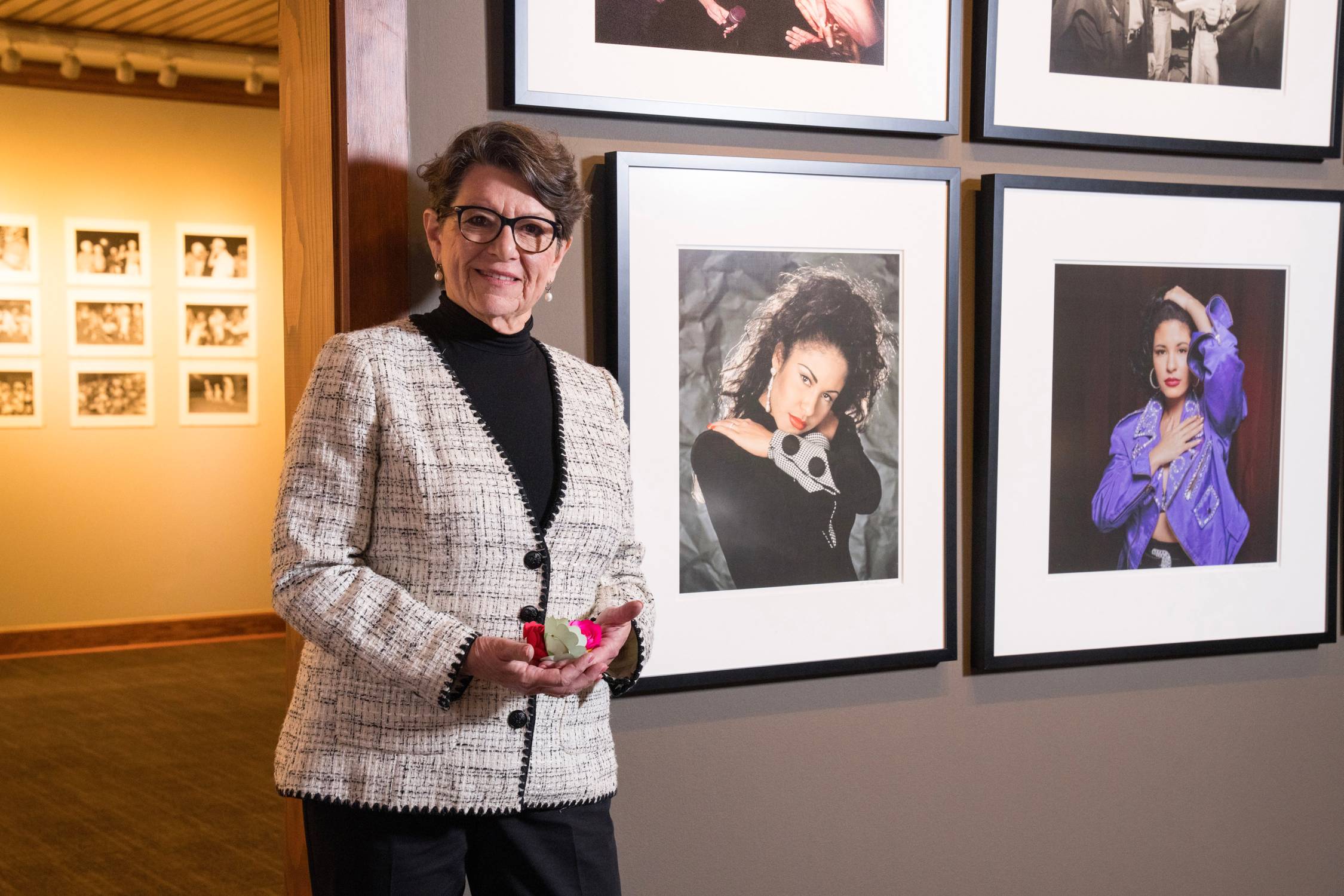
During a recent stroll through a Wittliff gallery, which is celebrating its 40th anniversary this year, McDermott pointed to a particularly popular exhibition, The Selena Effect, with artifacts and touchstones from the life and career of Selena. Students had been “spontaneously engaging” with the Selena exhibit, McDermott noted. Some of the students even left ofrendas to the beloved singer, treating it less as an exhibit than a public shrine.
McDermott was pleased.
Marise McDermott at The Selena Effect, holding paper flowers that students have made and left at the exhibit in honor of Selena.
“This tiny exhibit has had a huge impact,” she says. “It’s so fascinating that Selena is such an important cultural icon for people who weren’t even born when she died. That is, to me, a concrete example of how we have to keep listening and asking what urgency is out there for cultural experience, and Selena is an answer, without a doubt.”
For the new cultural center and “front porch” at Spring Lake, Texas State University has allocated $20 million. It’s up to McDermott—working in partnership with University Advancement and The Wittliff Collections Advisory Council—to match the university’s contribution, a campaign that she expects to take two years. The campaign is scheduled to begin in May. “We have to raise quite a bit of money,” she says, “but we will do it.”
Wes Ferguson
Wes Ferguson is a Central Texas-based freelance writer who authors books and magazine articles. He’s also the founder of Free Range Productions, a studio that makes documentary podcasts.