
Creative Horizons

TXST’s Master Plan looks to elevate the arts with new and improved facilities

Creative energy simmers across the Texas State University San Marcos Campus. Step into the Music Building and you could find a mariachi rehearsal, while down the hall, tuba students practice their scales. Across campus at the Theatre Center, budding actors rehearse their lines as their classmates design an innovative backdrop for an upcoming musical.  

As TXST’s arts programs grow, the 2025–2035 Campus Master Plan envisions new and upgraded facilities for various arts programs. This includes several significant projects: the construction of a new Music Building, the renovation of the existing Music Building, the restoration of the Theatre Center, and new space for The Wittliff Collections.  

“We have very selective programs that are highly regarded, and just like athletics, how do we recruit? We show them our facilities,” says Dr. John Fleming, dean of the College of Fine Arts and Communication. “We like to equate these facilities to science labs. Our faculty and students are doing their research in these labs, exploring scene design, costume design, lighting design, and so these facilities matter when you’re trying to recruit top talent.”  

The proposed new 85,000-square-foot Music Building would replace the School of Music’s current home, which was built in 1956 to serve as a gym and renovated into the Music Building in 1982. The Master Plan calls for the new Music Building to be situated in the Concho Green area of campus near the Performing Arts Center, which opened in 2014, and the Theatre Center.  

The School of Music has grown over the years to employ 90 faculty members who teach over 550 music majors and facilitate more than 30 ensembles. Designs for the new building feature labs, classrooms, faculty offices, practice rooms, instrument maintenance and storage space, technical studios, a student lounge, and dedicated rehearsal space for the various music programs.  

“Our music program is outstanding,” Fleming says. “But the facilities don’t reflect the quality of our students and faculty. This new building is critical to give them the environment they deserve.”  
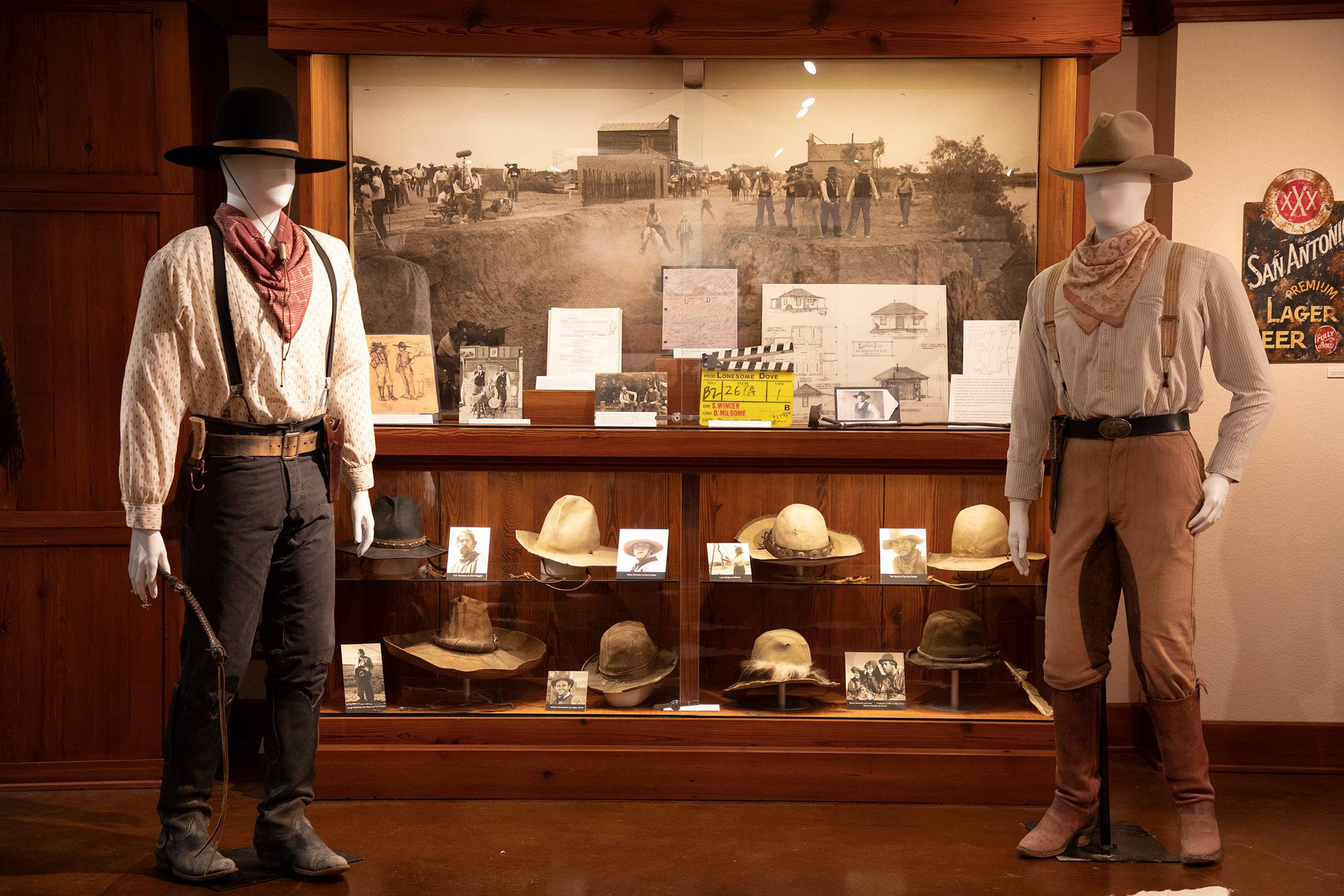
cowboy hats in a glass display at a museum
Lonesome Dove display at The Wittliff Collections
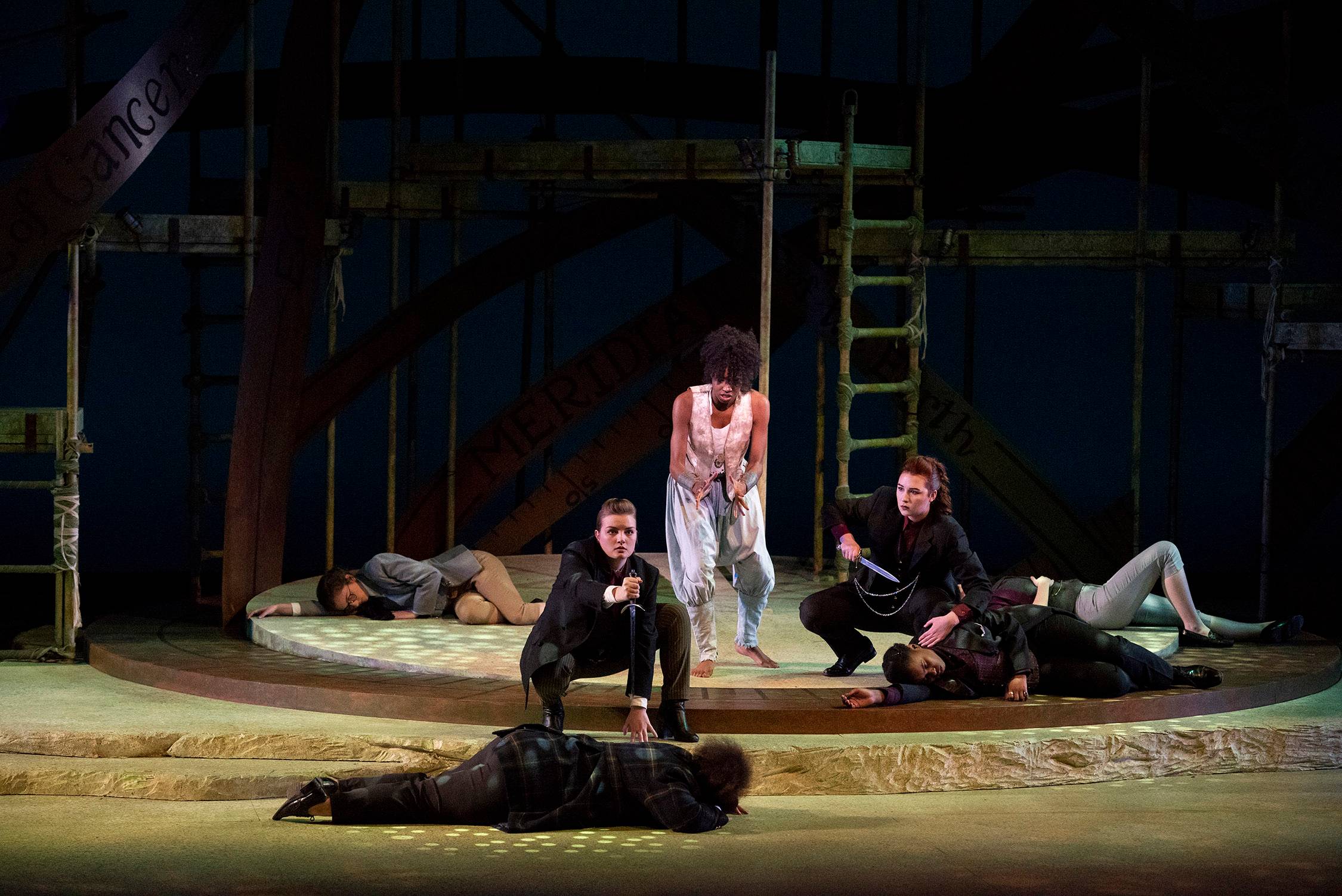
actors performing on stage
A student production at the Theatre Center

Near the proposed new Music Building, the Theatre Center has been an iconic feature of campus since 1970: The distinctive round two-story red glazed-brick building rises from a wetlands pond, with students accessing the building by crossing sidewalk bridges.  

The Theatre Center houses classes for the theatre and film programs. For the last two years, The Hollywood Reporter has named the TXST theatre program one of the best drama schools in the world thanks in large part to alumni success on Broadway.   

“We have very selective programs that are highly regarded, and just like athletics, how do we recruit? We show them our facilities."

To attract top-notch students into the School of Theatre, Dance, and Film—which has nearly doubled in size over the past decade to 1,125 students—TXST plans to renovate the center with versatile spaces for meetings, workshops, classes, costume and design shops, and multiple theatres.  

“We really need to gut the whole thing and redo it the right way,” says Eric Algoe, TXST’s chief financial officer and executive vice president for operations. “It’s not easy to get public funding for art spaces, so we need to lean more on philanthropy and other sources. It’s hard, but our vision, and the quality of our programs, is amazing.”  

The Wittliff Collections is also in the Master Plan discussion. Located on the seventh floor of Alkek Library, The Wittliff archives and chronicles literature, music, photography, and filmmaking of Texas and the Southwest. A portion of The Wittliff will continue to live at Alkek, but university officials also want to display its collections in a place that’s more accessible to the public. That proposed gallery addition will be part of a new university exhibition space included in designs for a Welcome Center at Spring Lake.  

“We want a more public-facing and publicly accessible experience for all of the university's treasures,” Algoe says. “Spring Lake makes a lot of sense because we bring, for example, thousands of schoolchildren through there every year to learn about our precious water resources and to ride the glass-bottom boats. By co-locating The Wittliff Collections and the Meadows Center at Spring Lake, the museum and the collections could make an amazing destination for tourists, researchers, and other visitors.” 


Edward Sanchez

Edward Sanchez is a writer for TXST's Division of Marketing and Communications.