
Poet Carrie Fountain Brings Generations of Southwestern Storytelling to The Wittliff Collections

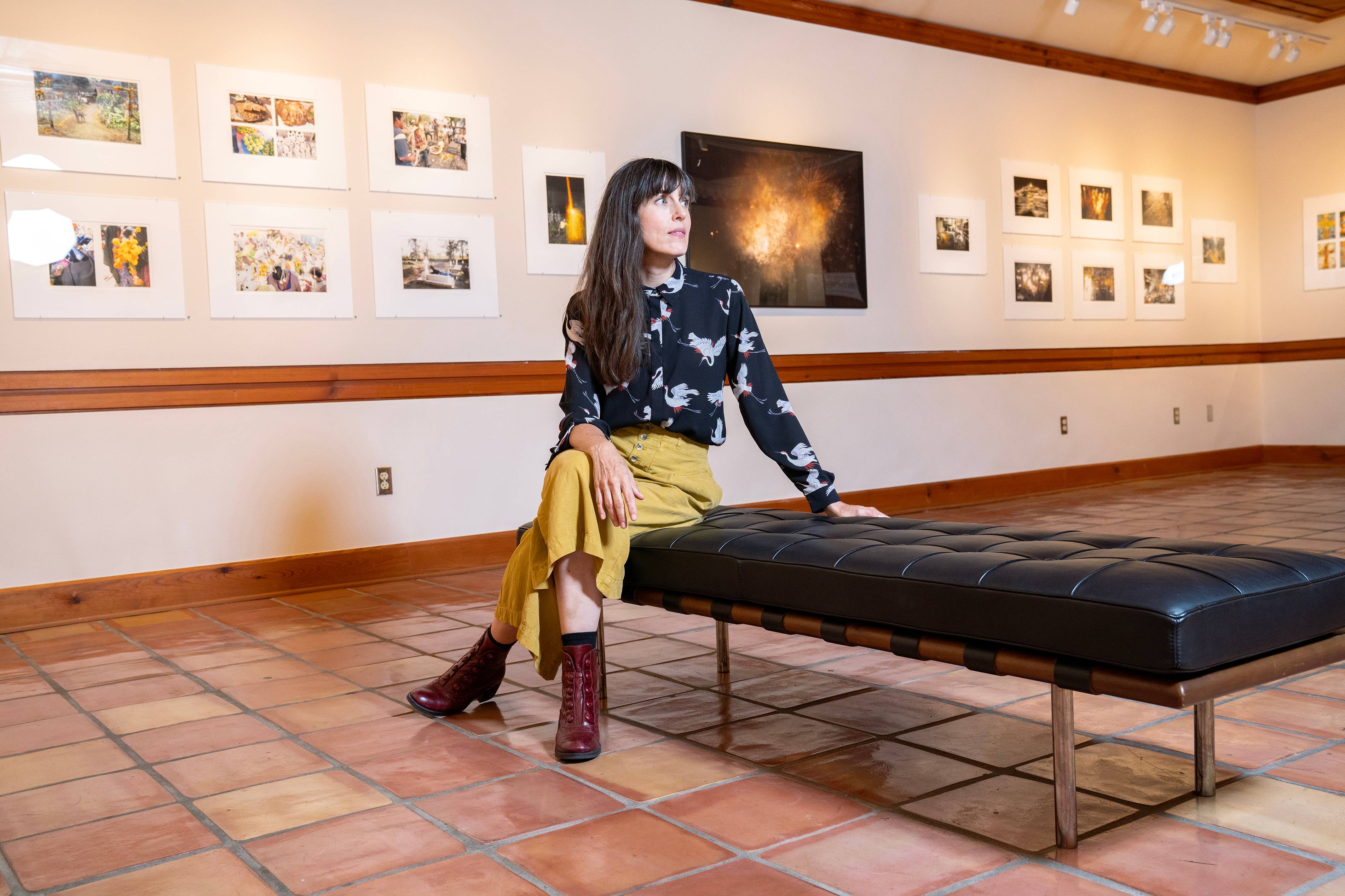
carrie fountain sits on a leather bench in a large art gallery. she is looking off to the left

A novelist and past Poet Laureate of Texas, Fountain aims to expand the scope and reach of the literary archives.

Celebrated poet, writer, and editor Carrie Fountain started her new role as the literary curator of The Wittliff Collections just last year. But as the child of a family whose roots go back generations in southeastern New Mexico, she’s been immersed in stories for her entire life.

Fountain relates the saga of Colonel Albert Jennings Fountain, a famed lawman and politician—and her great-great-great-grandfather. In 1896, Colonel Fountain and his 8-year-old son, Henry, vanished from a remote wagon trail near White Sands, New Mexico.  

A former Texas state senator and New Mexico state representative, Colonel Fountain also was a Union Army veteran, journalist, and attorney who once represented Billy the Kid. But he made powerful enemies by investigating and prosecuting cattle rustlers in nearby Lincoln County. He was journeying from Lincoln toward his home in Mesilla with Henry when someone ambushed their wagon. Left behind were two pools of blood and a mystery that’s haunted the desert for nearly 130 years.

"Their bodies were never found," Carrie says.

Carrie Fountain, who joined The Wittliff Collections as literary curator in June, has lived and worked in Austin for more than two decades and was the 2019 Poet Laureate of Texas. But she traces her New Mexico heritage much further back, to the 1500s, and she grew up 45 miles north of El Paso in the historic village of Mesilla. For nearly a century, her family has owned the El Patio bar on Mesilla’s central plaza, around the block from the Fountain Theatre, founded in 1905 by one of her relatives.

Fountain says her family’s legacy, and its place in the broader history of the region, has attuned her to her new role at The Wittliff, where she’s responsible for acquiring and presenting the archives of writers who define the culture of Texas and the Southwest through their storytelling. 
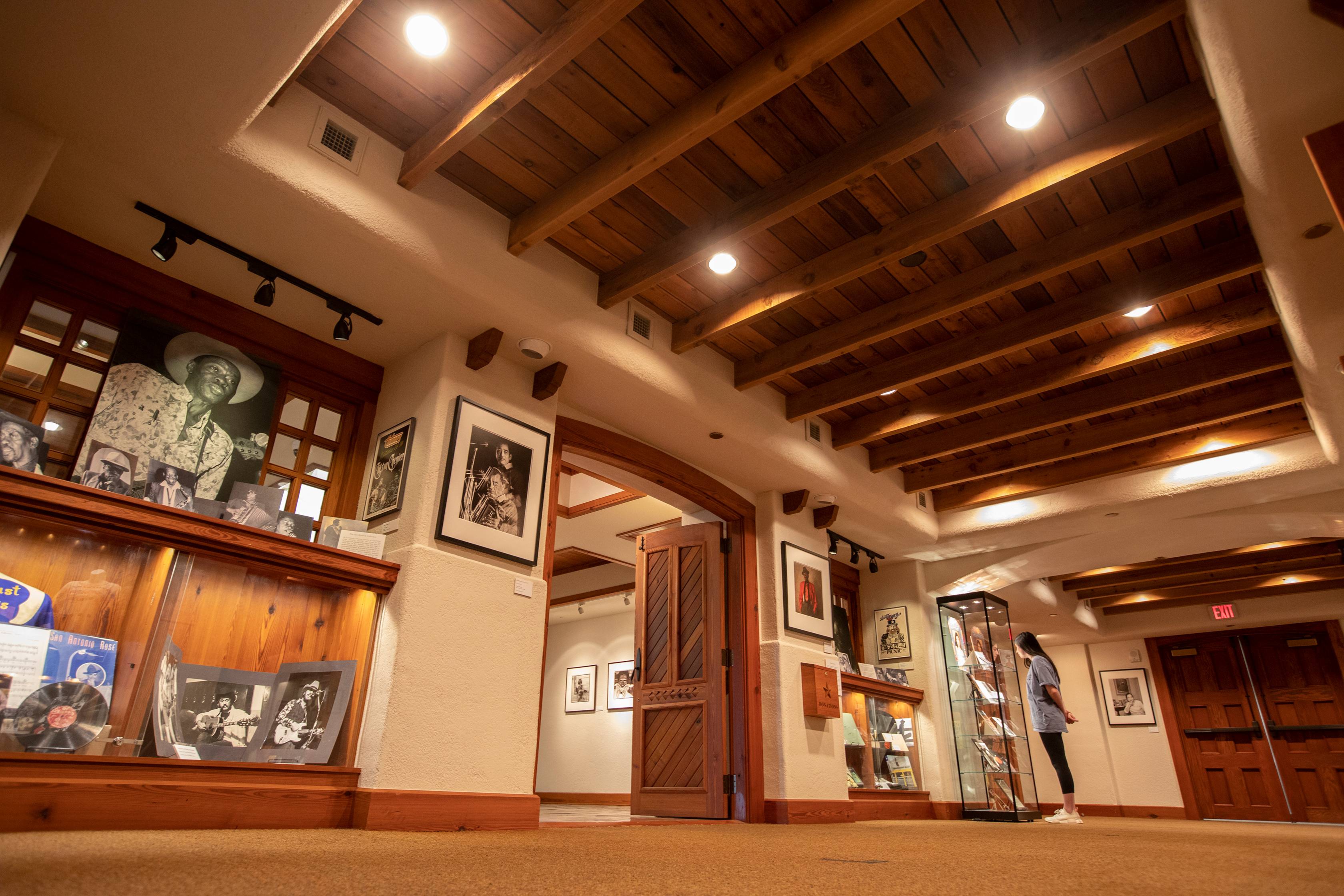
view of multiple showcases in the wittliff collections.
The Wittliff is on the seventh floor of Alkek Library.
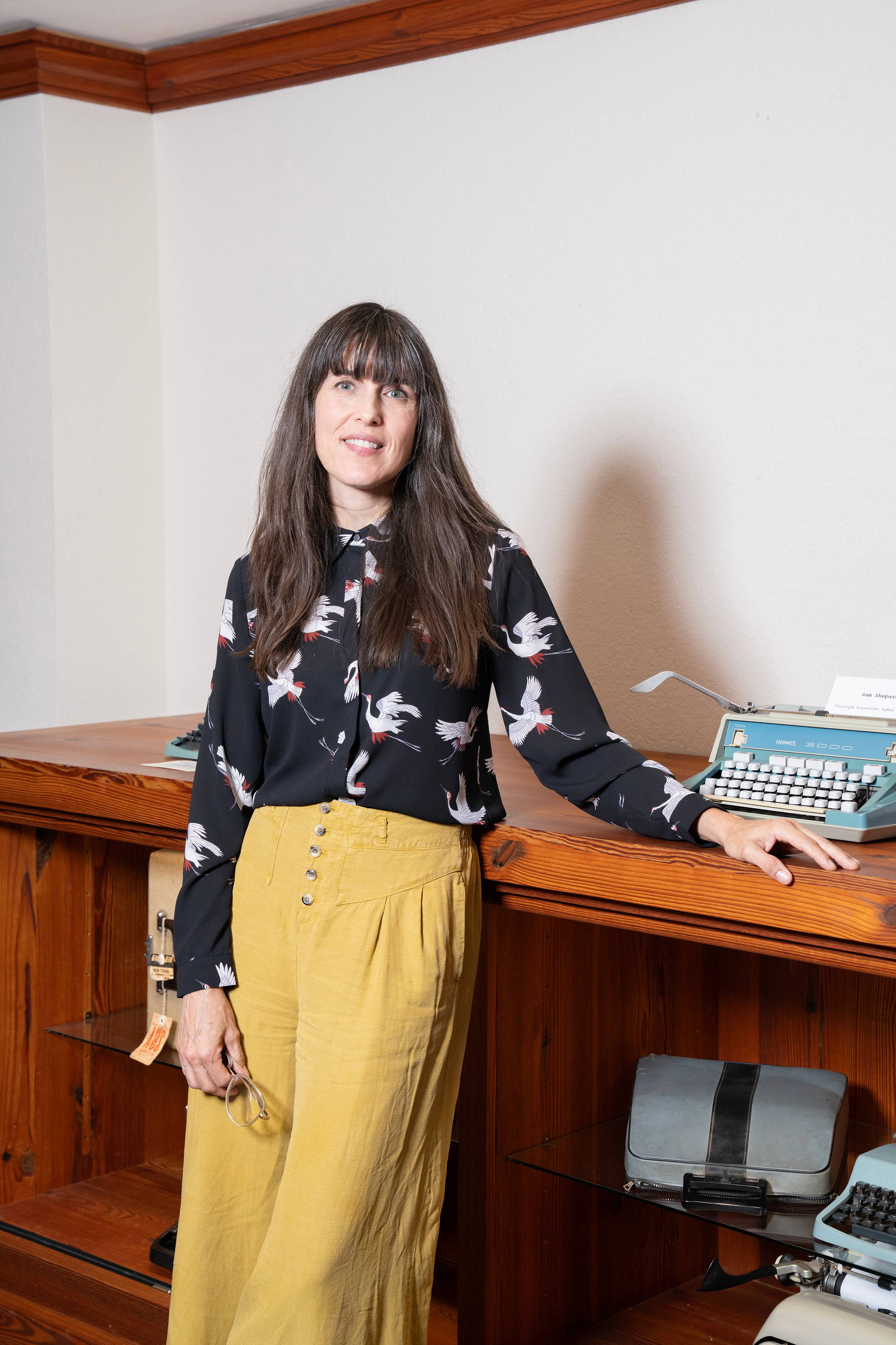
Carrie Fountain leans against a book case holding vintage typewriters
Carrie Fountain

“I grew up with a real sense of history, recordkeeping, remembering, and telling the story of our family, so I come to the idea of a literary legacy as the same thing,” Fountain says. “A writer’s papers can tell the story of their development as a writer, but also, their papers tell the story of the time and the dynamics in which they’re writing.” 

David Coleman, the director of The Wittliff Collections, describes Fountain as “the perfect combination of deep Southwestern roots, lengthy teaching experience, and remarkable energy and passion for Southwestern literature.” He sees her arrival as the natural evolution of The Wittliff.  

In its early days, The Wittliff relied on co-founder Bill Wittliff and his vast network of friends and colleagues to make early acquisitions from such Lone Star luminaries as J. Frank Dobie (“The Father of Texas Literature”), Larry McMurtry, John Graves, and a passel of Texas Monthly journalists. The scope of the collections expanded under literary curator Steven L. Davis, who retired in 2024 after 27 years at The Wittliff.  

Davis, also a noted writer, led efforts to widen the spectrum of writers whose works are kept by The Wittliff, bringing in such acclaimed authors as Sandra Cisneros, John Rechy, and Benjamin Alire Sáenz, the first Latino to win the prestigious PEN/Faulkner Book Award for Fiction.

Davis says he’s excited to see where Fountain takes the collection. “We had several conversations after she took over, and I couldn’t be more impressed with her vision and energy,” Davis says. “She’s a superstar talent.” 

Fountain has published several volumes of poetry, a young adult novel, and a children’s book. Coleman anticipates that she will further develop The Wittliff’s TV and film, theater, and poetry archives.  

Fountain says she’s particularly excited to work at a place that holds the papers of the late Cormac McCarthy, one of America’s most celebrated novelists. As a teenager, Fountain worked at a Mesilla bookstore frequented by McCarthy, who lived in El Paso.  

“You weren’t supposed to say his name,” Fountain recalls, “and you certainly weren’t supposed to ask him to sign books or anything like that.”

Finally, one day, the old woman who owned the bookstore introduced her to McCarthy. To Fountain’s surprise, he was excited to meet her. “He was like, ‘Oh my gosh, Fountain! Whose daughter are you?’” It turns out McCarthy had a keen interest in the Fountains and their family lore.  

She told McCarthy her dad was the one who owns the bar.

“Oh, I love him,” McCarthy replied. “I go and talk to him all the time. I’m really fascinated about the colonel.”

McCarthy would later write about Colonel Fountain in Cities of the Plain, a book whose materials are kept by The Wittliff Collections in boxes 69 through 78 of the Cormac McCarthy Papers.

Given her ties to New Mexico, it’s no surprise Fountain is already turning more of her attention beyond the Texas state lines.  

“My goal is to be more representative of other movements in the Southwestern literary landscape. What are the thematic focuses of other writers outside of Texas?” she says, noting that she hopes to cultivate relationships and establish trust with more women and writers of color, including Native Americans. “It’s a big deal to say to someone, you’re not going to be on this planet forever, and we want the honor of taking up and maintaining your literary legacy after you’re gone.” 


Wes Ferguson

Wes Ferguson is a Central Texas-based freelance writer who authors books and magazine articles. He’s also the founder of Free Range Productions, a studio that makes documentary podcasts.