As a fourth-grade science teacher, Texas State University alum Ashley Lister takes her students outdoors for a lesson about organisms and environments. One student represents the sun, while others form circles around the sun, making a web of food producers, consumers, and decomposers.
“And what would happen if we took the sun away?” Lister asks, prompting the students to flop to the ground as the web collapses from lack of energy.
“Everything revolves around the sun,” she adds, “and getting kids up on their feet and moving is a great way to get them to see this in a different way and understand it.”
Lister, a 2024 graduate and a first-year teacher at KIPP Paseo Primary in Austin, learned this teaching activity when she was a part-time student worker at The Meadows Center for Water and the Environment. Located at Spring Lake on the San Marcos Campus, the Meadows Center promotes water sustainability through research, stewardship, innovation, and education. That includes providing a unique training ground for future science teachers like Lister.
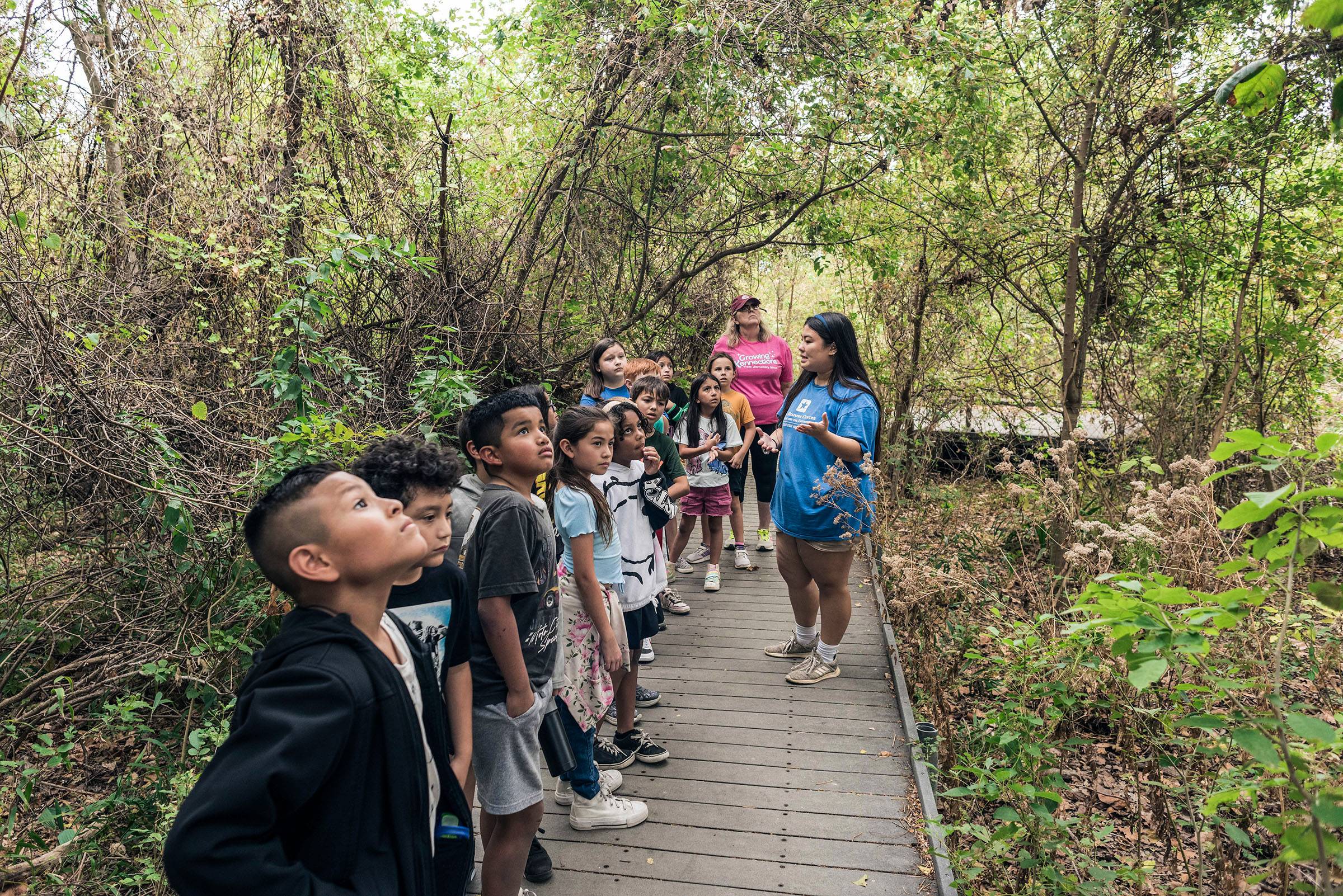
The Meadows Center hums with activity most of the year as yellow school buses come and go, dropping off students to explore Spring Lake’s nature trails, glass-bottom boats, and educational exhibits. In total, the center welcomes about 25,000 schoolchildren annually—most of them on field trips with pre-K through 12th-grade classes from across Central Texas.
The Meadows Center offers visiting teachers a menu of field trip tours, based on grade level and activity preferences. All of the educational programs are aligned with the state’s Texas Essential Knowledge and Skills (TEKS) standards, notes Bess Price, education manager at the Meadows Center.
Student employees work as environmental interpreters, leading field trips and driving the glass-bottom boats. “We love when we get education majors who are wanting to be either early elementary teachers or middle school teachers,” Price says. “They’re always incredible interpreters, and they gain valuable experience working with students in an informal learning setting.”
Lister started college as an education major but ultimately graduated with an English degree, though she intended to become a teacher. She counts her job at the Meadows Center as one of the best decisions of her college career.
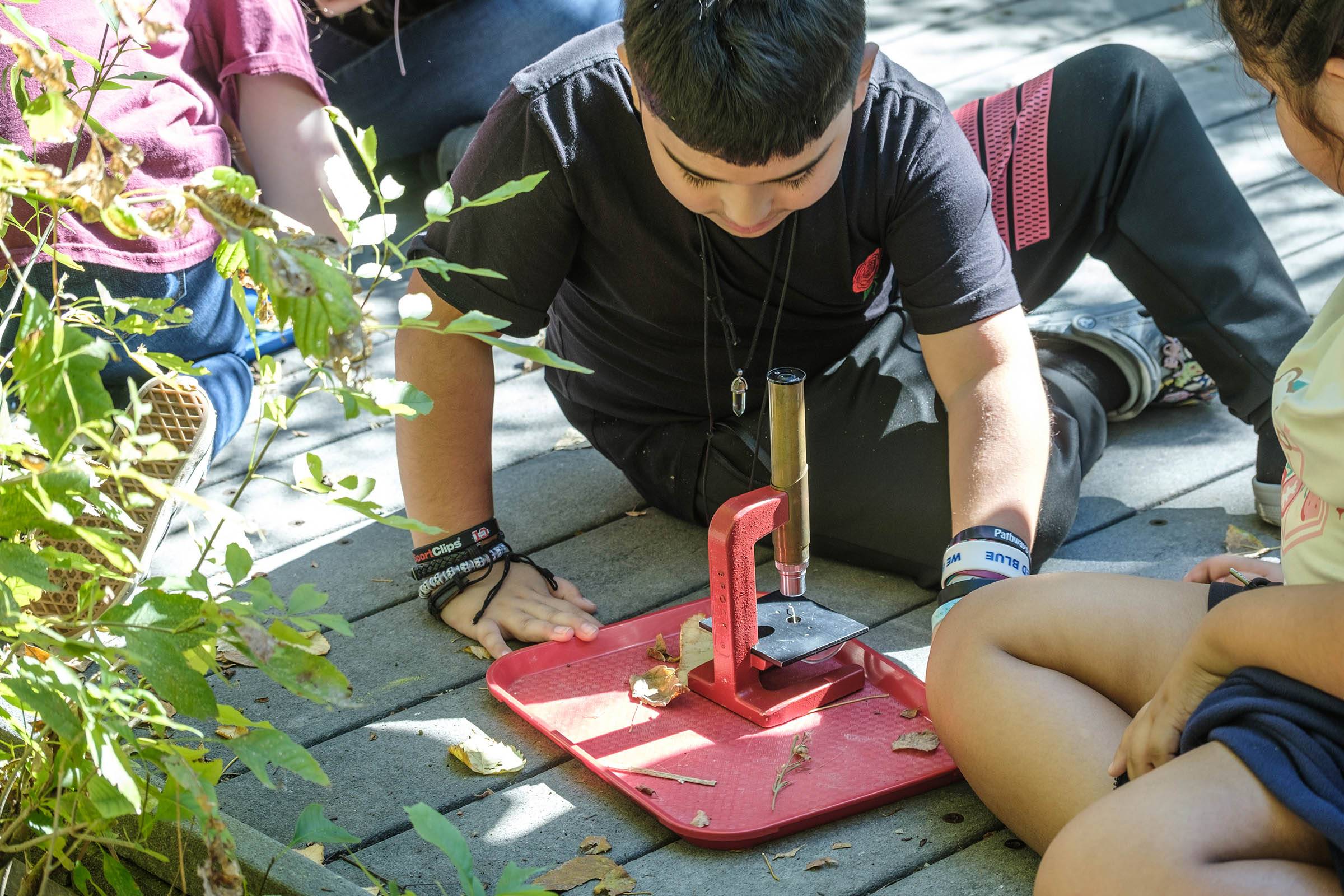
Student examines water organisms
“This is a great way to get hands-on experience before you graduate and to learn what grade levels you’d want to work with, because you work with all ages,” she says. “I always thought I’d want to work with older kids, but I ended up working in elementary school, which is fantastic.”
And she picked up a few tricks of the trade along the way.
“When you’re a teacher, you’re constantly delivering new information, especially with fourth graders,” she says. “You have to get creative with it. When you’re driving a glass-bottom boat and pointing out things, you’re multitasking constantly. Working in classrooms is kind of like that, except you’re on land.”
We love when we get education majors who are wanting to be either early elementary teachers or middle school teachers. They’re always incredible interpreters, and they gain valuable experience working with students in an informal learning setting.
Bess Price
Education manager at the Meadows Center
Creating Curriculum
Price says she invites pre-service teachers—education majors who are training to be teachers—to help her develop new curriculum for visiting schoolchildren. The curriculum could be for the center’s field trip tours, Family Fun Days, or other events.
A 2015 TXST graduate, Price worked as a Meadows Center interpreter herself when she was a student. She credits her experience with building the confidence she needed to excel as an eighth-grade science teacher. After five years of teaching, she returned to TXST to earn a master’s degree in sustainability studies, which led to her job as the Meadows Center’s education manager.
Meadows Center staff and students demonstrate an art project
“I really wanted to get back into the university environment and try to capture college students’ interests early on in teaching science,” she says, “and to shape some of the techniques that they might be able to access once they get into the classroom.”
Carrie Sheffield, an elementary education major, has participated in curriculum development as part of her job as an interpreter. “We’re making sure that our programs are aligned with Texas standards and relevant to what the students are learning in the classroom,” she explains.
Sheffield’s experience leading tours for schoolchildren also motivated her to focus on becoming a science teacher. She’s now working as a first-grade student-teacher in the Manor school district as part of TXST’s Teacher Residency program. She plans to teach upper elementary after graduating this fall.
“Being an interpreter introduced me to creating tangible connections for kids,” she says. “Yes, they’re learning science and they’re learning state standards, but they’re also learning a sense of scientific literacy and an understanding of the world and their place in it. I think that’s a really powerful thing, and it pushes me toward teaching science.”
College of Education Collaboration
Building interest and confidence among aspiring educators, particularly in science subjects, is the goal of the College of Education’s STEM and Early Childhood and Elementary Education course. Dr. Shelly Forsythe, associate professor of Curriculum and Instruction, collaborated with Price when she created the course three years ago.
“They take this course in part to learn more about STEM and technology and engineering,” Forsythe says. “But also, they begin to build an identity as STEM teachers, as science teachers.”
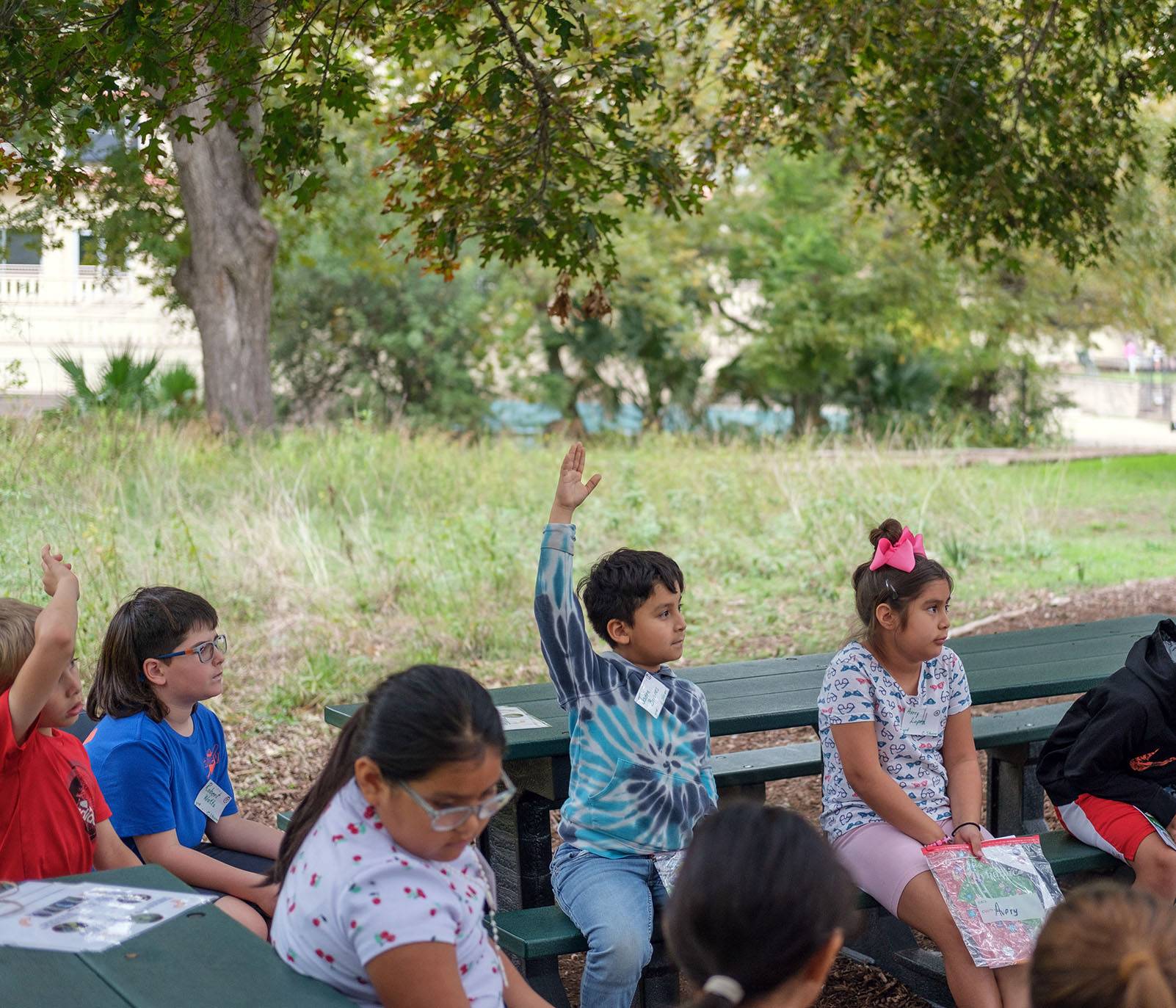
During the course, students design educational activities for the Meadows Center. In the fall semester, they create learning stations around Spring Lake for field trip tours for San Marcos third graders. (Each fall, H-E-B sponsors field trips to the Meadows Center for every third-grade class in the San Marcos Independent School District.)
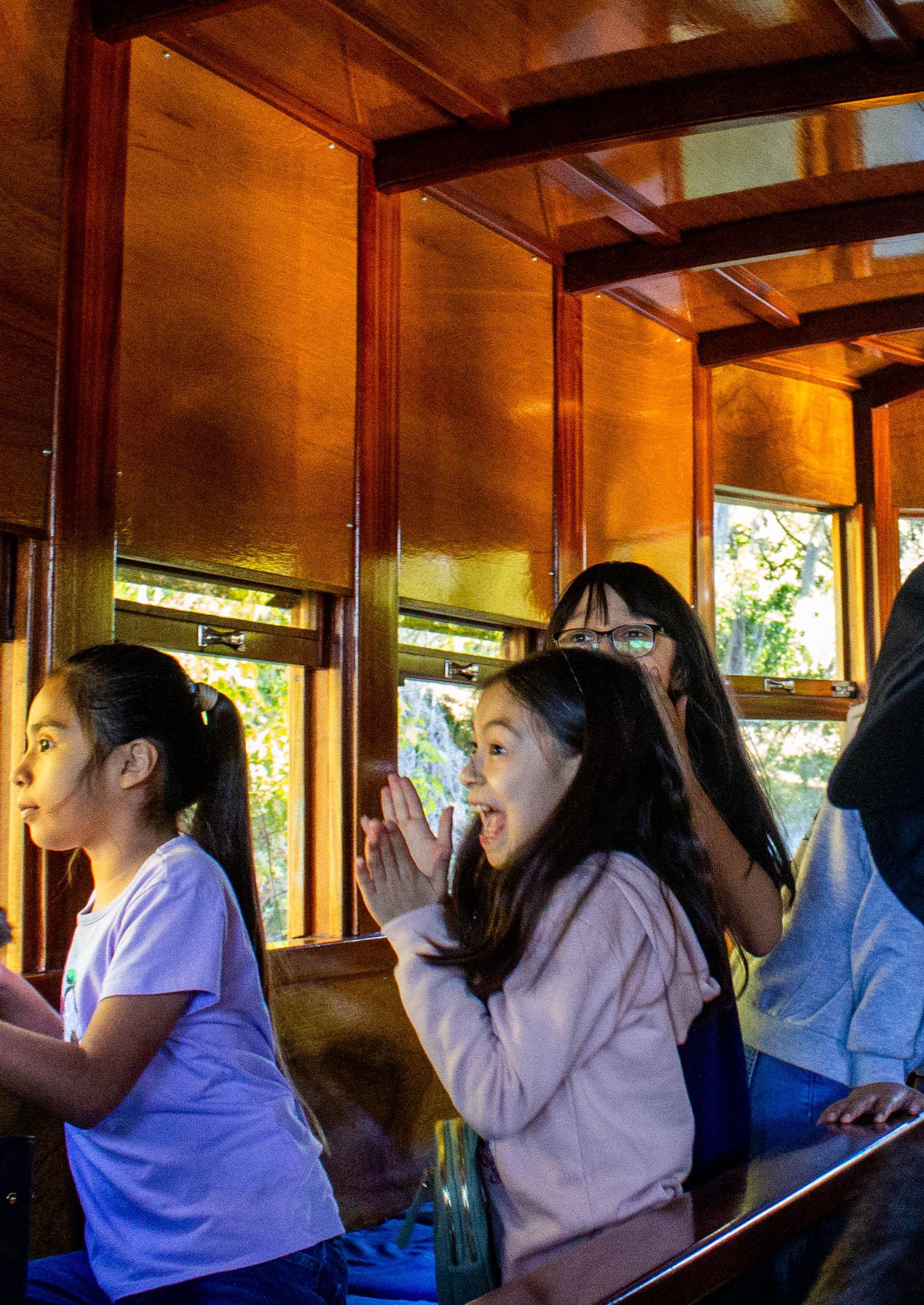
Third grade students enjoy a glass-bottom boat tour
“We work with the pre-service teachers to determine the learning objectives we want their activities to hit,” Price says. “We have check-ins, we talk about interpretive techniques, how to ask good questions, and how to actively involve their students in the learning experience through curiosity-driven approaches. Teaching outdoors is a very different experience than teaching in a traditional classroom setting. This experience stretches the pre-services teachers in a new way.”
In the spring semester, students in the course create learning stations for children at the Meadows Center’s annual Earth Day celebration. At the most recent event, for example, the learning stations introduced children to pollinators with activities such as creating native seed balls, matching plants with their pollinators, and using fans to test seed dispersal.
“I love that it gives our students that practical experience with not just creating a learning activity, but then implementing it and reflecting on it,” Forsythe says. “A lot of our elementary and middle level teachers are a little bit scared of science and STEM. By having this positive experience during Earth Day facilitated by the Meadows Center, it’s really transformative for their identities as teachers and for their career paths.”
Price says nurturing future science teachers fits naturally with the Meadows Center’s mission to connect people with the environment and water.
“First and foremost, we really want students that visit us to form a relationship with the environment,” she says. “We want them to learn a lot, but we also want to spark interest and curiosity with the outdoors that can hopefully blossom into something even bigger. Education is a really important tool in securing a sustainable future for the environment.”
Students study Spring Lake water creatures and plants
Meadows Center Empowers Teachers with Summer Workshops on Water, Environment, and Science at Spring Lake
The Meadows Center for Water and the Environment not only provides a training ground for future teachers, it also hosts classroom teachers for continuing education workshops that explore the Spring Lake environment.
Each summer, the Meadows Center welcomes educators—mostly from elementary schools—for workshops focused on teaching about water, the environment, and science.
The center typically hosts one workshop per summer, while also offering reservations for teacher tours. The workshops are aligned with state standards and fulfill teachers’ continuing-education requirements.
Bess Price, education manager at the Meadows Center, says the teacher workshops emphasize scientific observation and analysis.
“We want to bring teachers outside, because if we want kids to feel like the environment matters and that nature is worth protecting, we want their teachers to also have that buy-in and understand that as well,” she says.
The workshops also cover the state of water in Texas.
“We encourage teachers to find out where their school’s water comes from, so that they can turn water from being an abstract topic into something that’s highly relatable and more concrete for kids,” Price says. “It’s not a magical substance that comes out of the faucet—it’s rooted in something much larger. We want to empower kids to have that information.”
Matt Joyce
Manager, Marketing & Communications
Matt Joyce is the editor of Hillviews and a writer and editor for TXST's Division of Marketing and Communications.