Homegrown Energy

TXST alum Chris Reyes and his company, Material, are revolutionizing energy storage with 3D printed batteries for use in drones, medicine, defense, and wearables

Anyone who relies on battery-powered electronics has experienced the inconvenience and frustration of drained batteries. But to hold charges longer, batteries generally need to be larger and heavier—forcing manufacturers to choose between prioritizing battery life and offering the lightest, sleekest product. 

Texas State University graduate Chris Reyes and his company, Material, are working to eliminate that tough choice. At its headquarters at TXST’s STAR Park technology incubator, the startup is developing a new type of long-lasting, rechargeable, 3D printed batteries. With recent funding from private investors and government contracts, Material is poised to expand in the next half decade, revolutionizing energy storage for industries ranging from defense to medicine and wearable electronics.

Material’s innovative 3D printing process can make batteries of any shape, Reyes explains, which eliminates the need for a separate battery pack: The battery is built into the device itself. What’s more, at a time when political and economic volatility have raised the cost of traditional battery components, Material is building its batteries entirely from domestic ingredients. 

“Our batteries are made here, the machines that make the batteries are made here, and the chemicals are all made here,” says Reyes, the startup’s cofounder and chief technology officer. “It’s nice to be able to build a solution for batteries here in America.”  

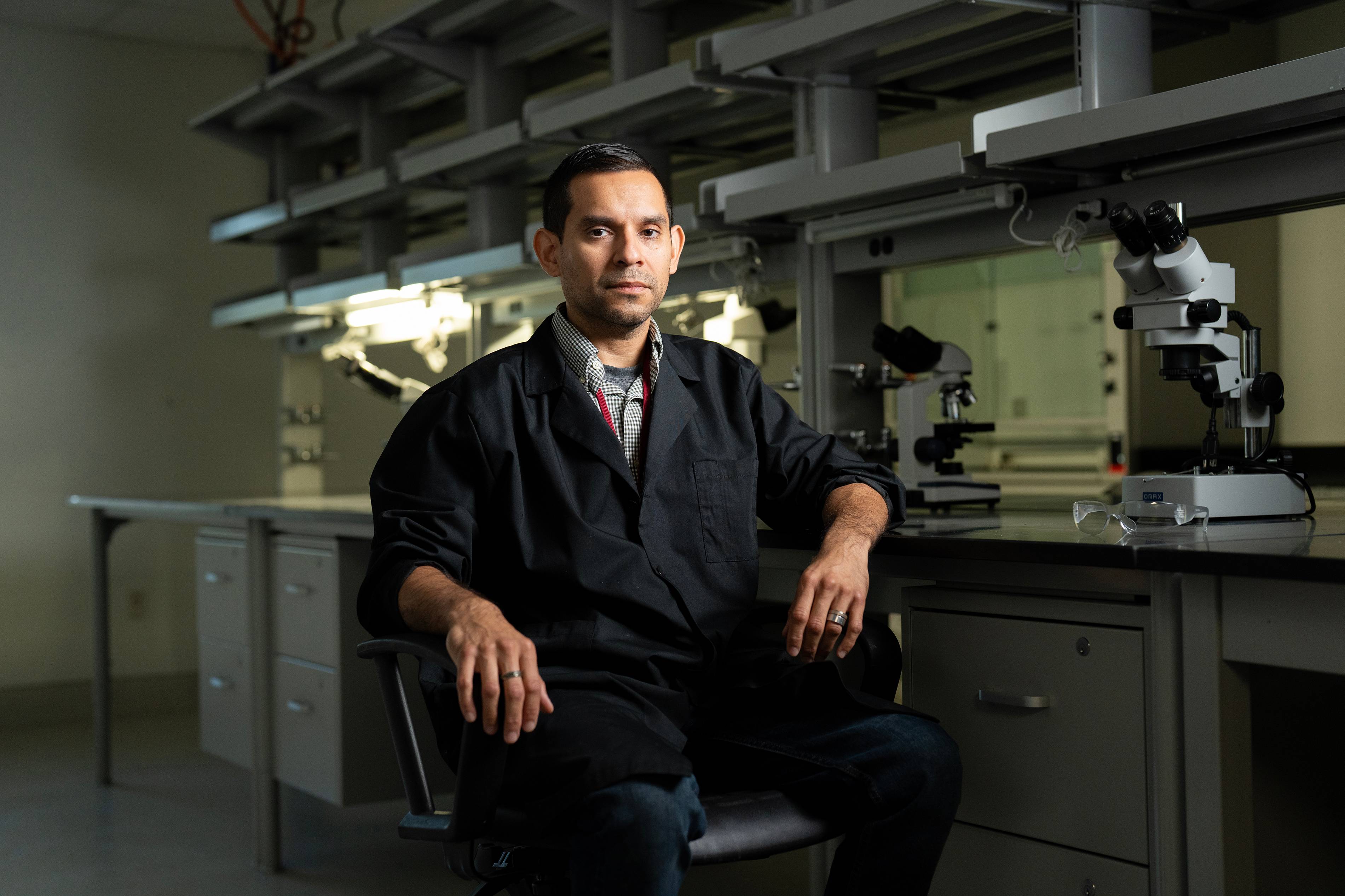
chris reyes sitting in lab setting
TXST alum Chris Reyes, cofounder and CTO of Material

Reyes grew up in Corpus Christi, one of four siblings raised by a single mother who encouraged her children toward higher education. After an unsuccessful start at another university, Reyes spent several years working in construction and the oil and gas industry before a workplace injury prompted him and his wife, Zava Reyes, to return to the classroom. They both completed two years at San Jacinto College in Pasadena and transferred to TXST, where Reyes graduated in 2014 with a degree in applied mathematics.

While studying in San Marcos, Reyes participated in Partnerships for Research and Education in Materials, a national initiative to develop the materials science workforce that includes students from minority-serving institutions such as TXST. He also worked in the lab of Dr. William Brittain, Regents’ Professor of chemistry and biochemistry, who helped Reyes win a competitive Research Experience for Undergraduates at Duke University.  

Reyes went on to earn his Ph.D. in chemistry from Duke and completed a postdoctoral fellowship at Rice University, keeping in touch with Brittain. “One of the biggest things that came out of Texas State is the mentorship,” Reyes says. “I always wanted to be a scientist, but coming from the background I did, I didn’t really know how to get there—and he knew how.”

After completing his postdoc at Rice, Reyes worked in the semiconductor industry and spent several years building advanced quantum device prototypes. He also met Devon Fanfair, a managing director of Techstars, a startup accelerator, who introduced Reyes to Miles Dotson, now Material’s head of product. Dotson, in turn, connected Reyes with Gabe Elias, who became the company’s CEO. Together, the trio launched Material in April 2023.

A former TXST professor, Dr. Jennifer Irvin, helped Reyes secure space at STAR Park. The facility—whose name stands for Science, Technology and Advanced Research—supports the commercialization of research conducted by faculty and by companies that partner with the university through collaborative research or by hiring students. Material counts three TXST students among its full- and part-time employees. 
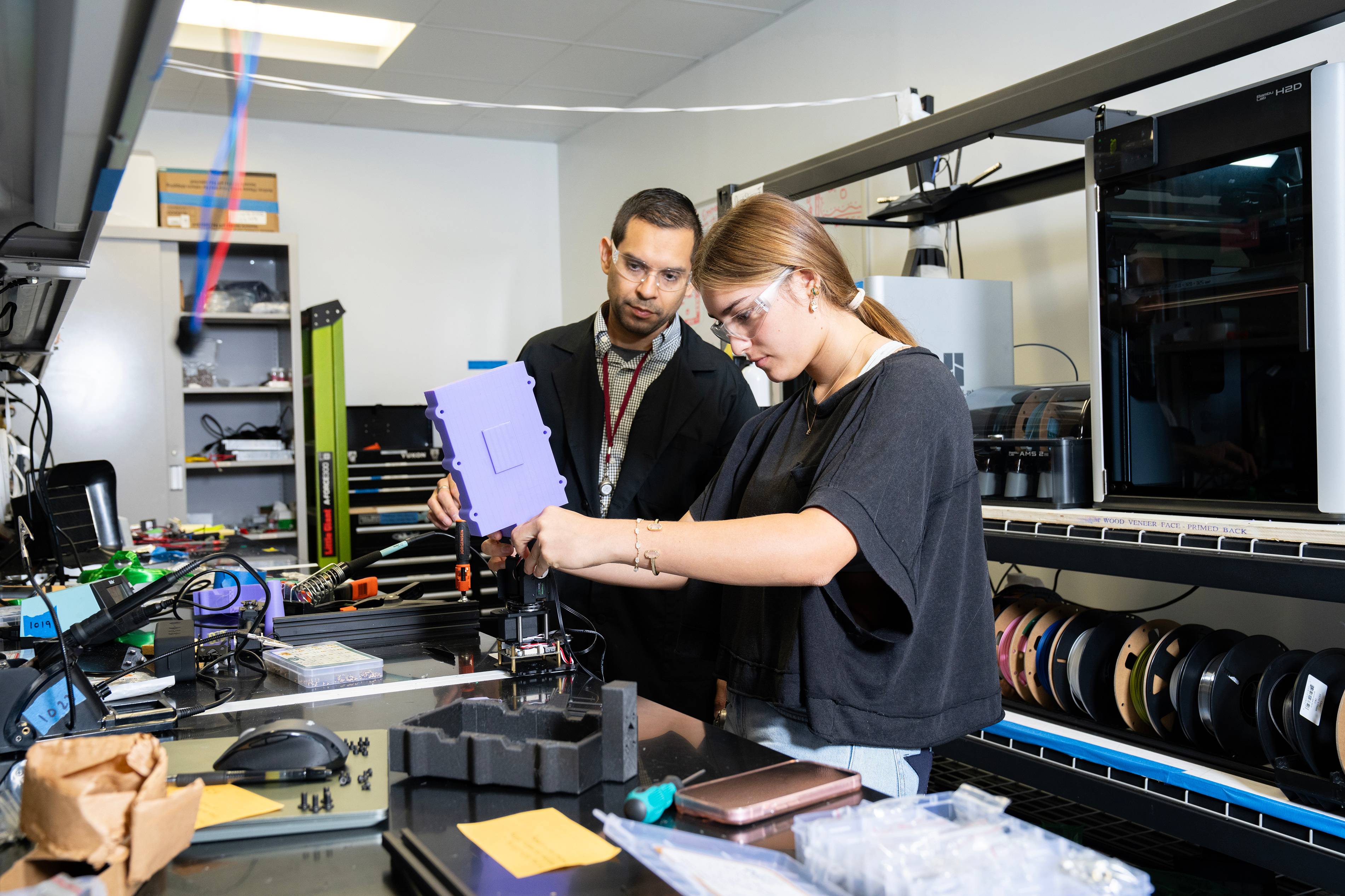
chris reyes and female student working in lab setting
Reyes and a high school intern work on battery production.

“The company that Dr. Reyes is running is a true example of the type of companies we love to have as tenants at STAR Park,” says Harold Strong, STAR Park’s executive director. “He is very creative, very smart, and he’s using this experience of being an entrepreneur and starting companies from tech to inform his interns.” 

In Material’s two lab spaces at STAR Park, Reyes and his team are developing the components of the company’s 3D printed batteries. Reyes has invented a chemical process for synthesizing copper nanowires, filaments roughly a thousand times thinner than a human hair. (Under a microscope, they look less like wires than coagulated clumps of tiny sticks.) The nanomaterials, which carry the battery’s electricity, can be 3D printed into any shape and then solidified with a laser. The process eliminates roughly half the metal that would be used in a traditional battery of the same size, in which the conducting components would be coated onto thin sheets of metal that are rolled into a cylinder. Instead, Reyes’ batteries can be made in any custom shape.

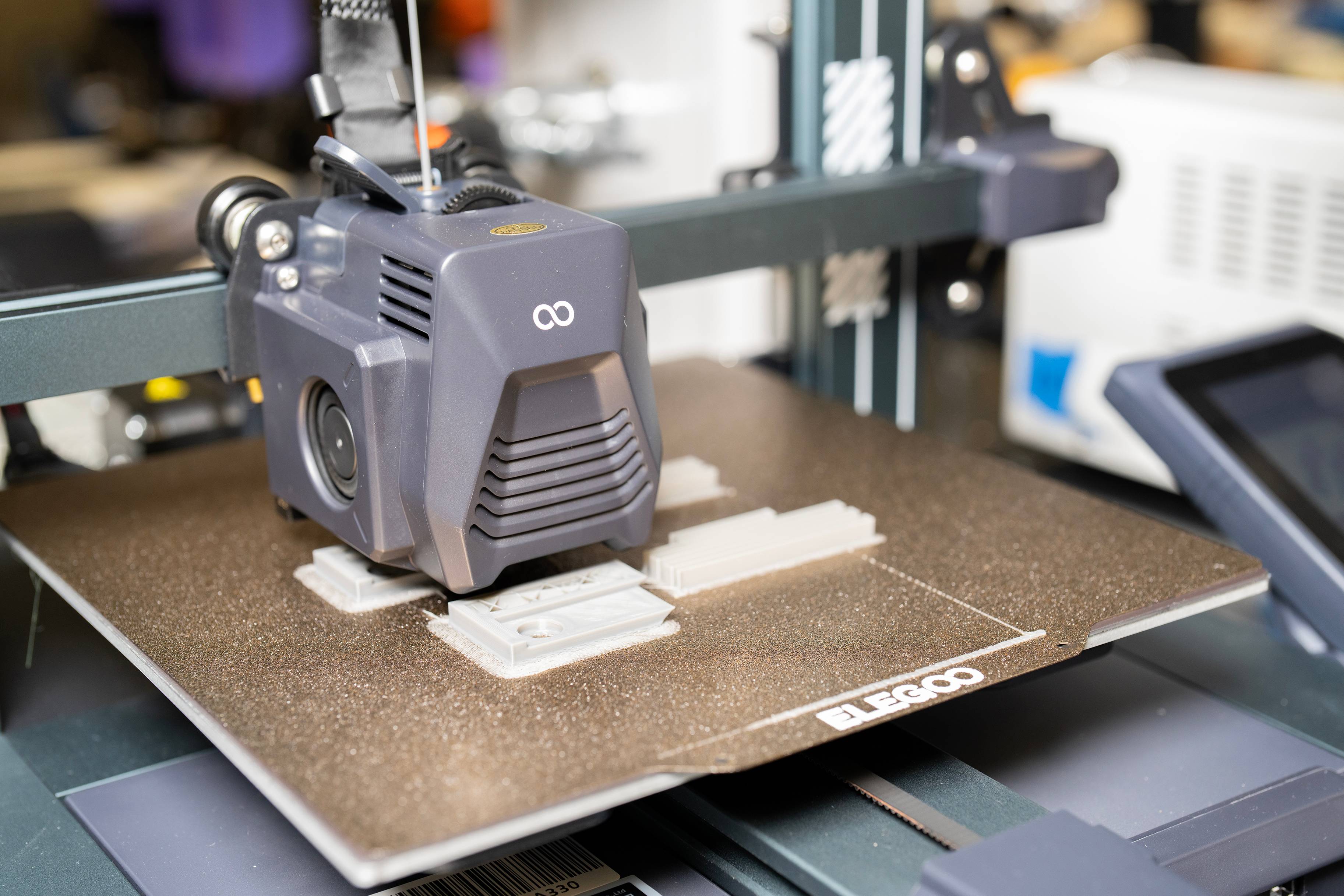
To do so, Reyes built a custom 3D printer that can print layers of high-strength plastic as well as layers of the nanomaterial solution that form the battery’s positive and negative sides and the separator between them. With this invention, instead of manufacturing a battery pack that goes into a device, Material can print a device that is, itself, the battery.  

sdf
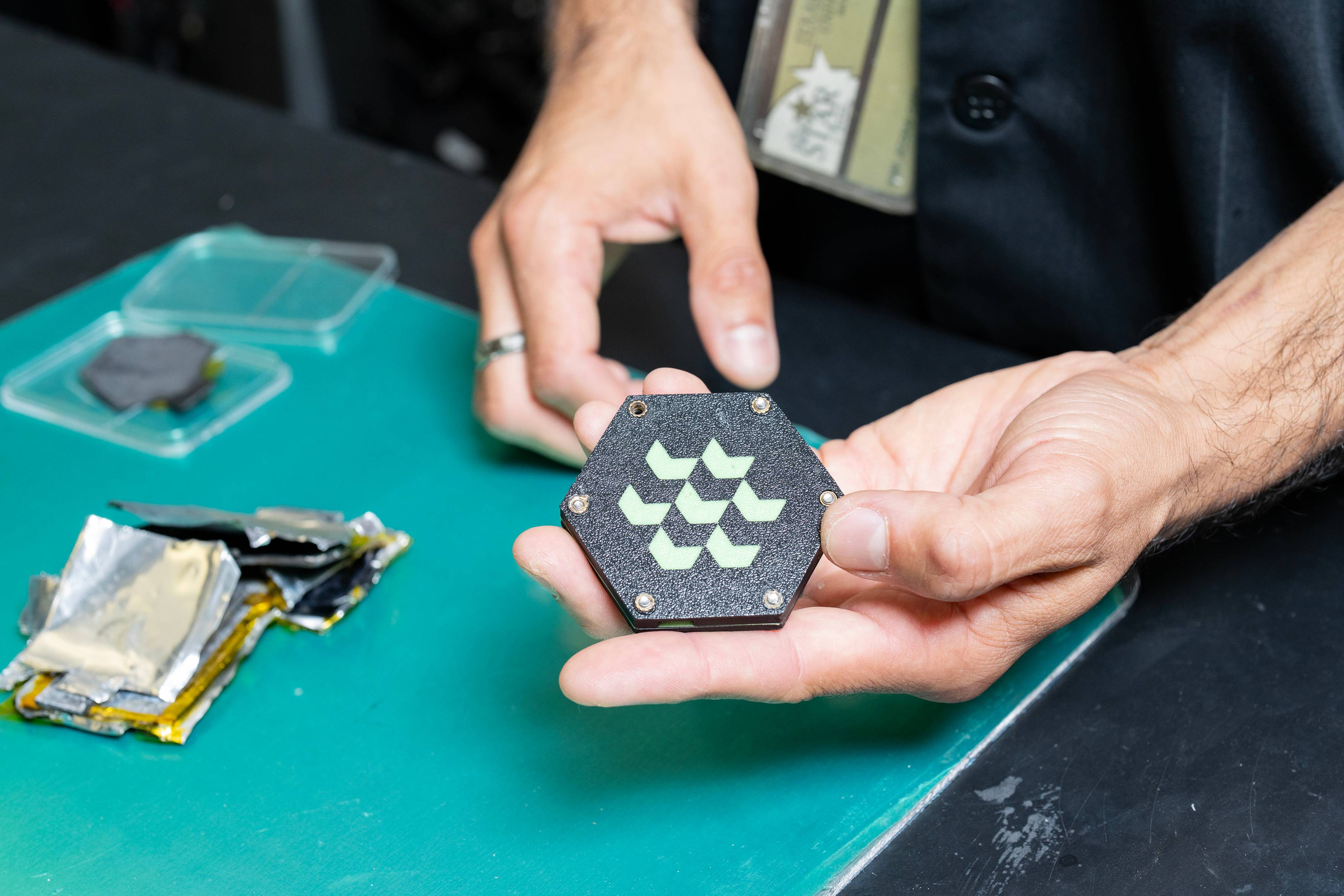
man holding 3d printed battery in hand
3d printer
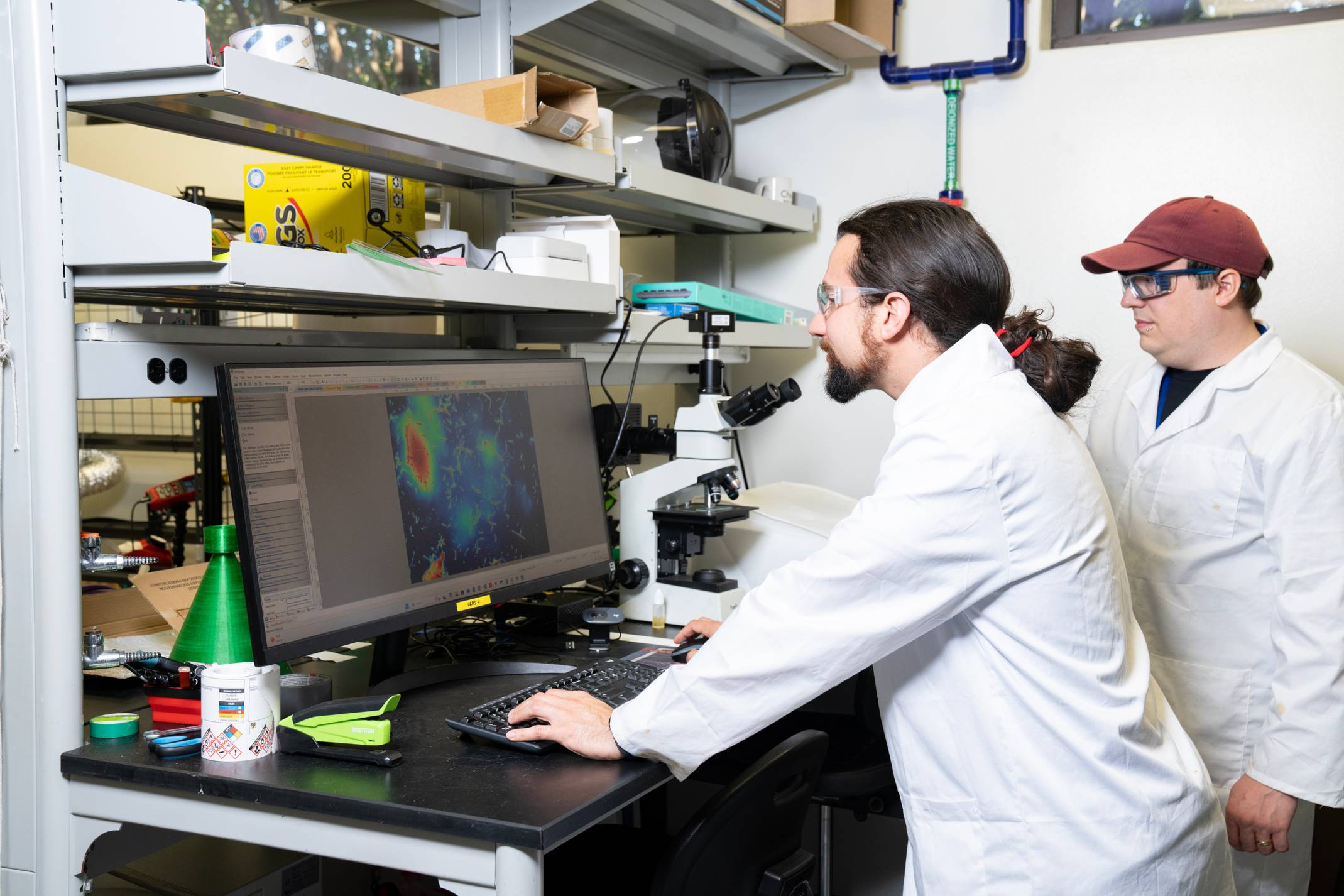
two men in white lab coats looking at computer
Scott Barrett, left, a Ph.D. student, and Dr. Josh Ivy.

Reyes gives the example of augmented reality/virtual reality headsets, drones, and robotics. Bulky, short-lived battery packs limit the technology of such devices and restrict their design and performance. “We’re integrating batteries directly into devices and turning the entire structure into the battery,” he says. “This means longer run-times, lighter devices, and freedom from traditional battery pack constraints."

Material is supported by the New Jersey-based startup development program HAX, which put six figures into the company and connected the founders with additional investors. Also, the U.S. Air Force has awarded Material a $1.25 million grant to develop drone batteries. Historically, the military has had to choose between long-lasting batteries and a lightweight design in drone technology, but Material is creating a drone frame that integrates the battery into the frame. The innovation will benefit not only the military but also civilian companies that use drones, such as land surveyors.

In the next few years, Reyes anticipates significantly scaling up production of the nanowires while reducing the cost of their components. Assisting him in that goal is his intern Scott Barrett, a doctoral student in the TXST Materials Science, Engineering, and Commercialization Program, which pairs science and technology scholarship with training in entrepreneurship.  

Barrett conducts research with Brittain, Reyes’ mentor at Texas State, who referred Barrett to Reyes when he began looking for an internship. Barrett runs the reactions that create the nanowires and is scouting less expensive, domestically available raw materials for that process. “I’m getting firsthand experience of how research and development works on the small scale, and taking that forward to create something that could be industrial,” he says.

Barrett adds that interning with Reyes has helped him understand how industry functions. “As a student, it’s important to have the opportunity to learn how a startup works,” he says.

“An internship will give you that hands-on experience that you would never have just working in the lab at school.”  

Play Video

The Battery Evolves

Chris Reyes explains his company's batteries and the role of STAR Park.


Robyn Ross

Austin-based independent journalist Robyn Ross has written for many university magazines as well as Texas Monthly and The New York Times.